The Long Walk to the First Sunrise: New Year’s Morning on Kilimanjaro
Walking to the Roof of Africa: Kilimanjaro on New Year’s Morning
“We, the people of Tanganyika, would like to light a candle and put it on the top of Mount Kilimanjaro, which would shine beyond our borders, giving hope where there was despair, love where there was hate, and dignity where before there was only humiliation.” -An excerpt from “The Torch on Mount Kilimanjaro” by Julius Nyerere
Before the Climb: Coffee, Water, and the Lower Slopes
At the base of Kilimanjaro, the mountain does not yet feel like a mountain.
It feels like life.
The lower slopes spill outward in a wide belt of cultivation where the volcanic soil grows almost anything placed in it. Banana trees lean over narrow paths. Small farms fold into one another along the hillside. The air is warm and heavy with the smell of earth and leaves, and clouds drift slowly across the upper slopes like a curtain drawn halfway across the sky.
Before we climbed toward ice, we spent a day walking through the world that grows beneath the mountain.
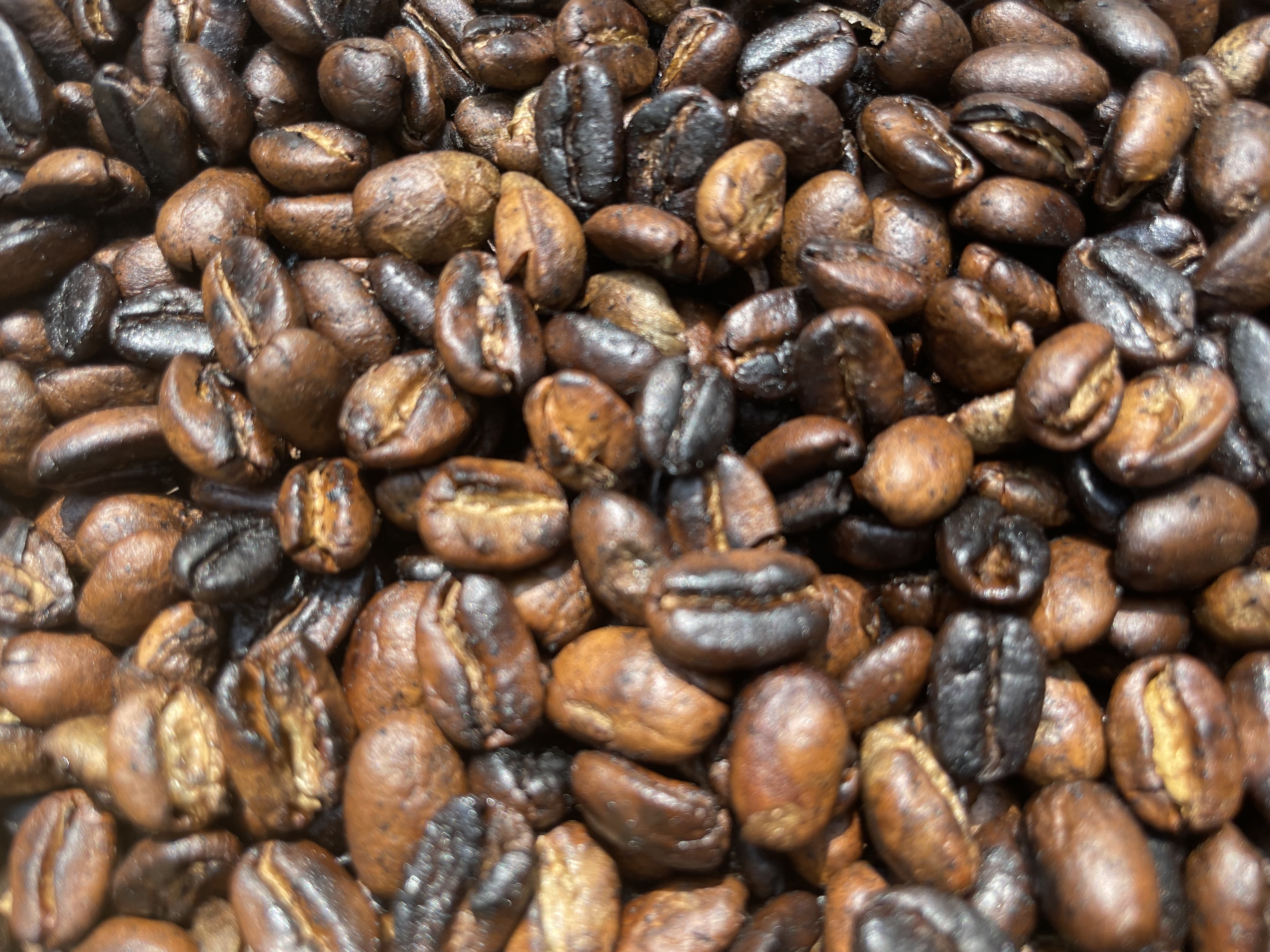
A small coffee plantation tucked into the foothills welcomed us in the way so many places do — not with spectacle, but with patience. Our guide picked a handful of red coffee cherries from a branch and passed them around. When you bite into the fruit, it is surprisingly sweet — sticky and bright, nothing like the bitterness we associate with the drink that follows.
Inside the fruit are the beans, pale and unremarkable, waiting for transformation.
The process unfolded slowly:
pulping the fruit away
washing the beans
drying them in the sun
Later they were roasted over a small charcoal fire while we stood in a loose circle around the pan, listening to the beans crack open with small popping sounds — as if they were alive and protesting the heat. Someone shook the pan in careful circles while smoke rose upward in thin blue ribbons.
Then the grinding.
Then the brewing.
We drank the coffee grown on the mountain we were about to climb.
It felt like a quiet introduction — the mountain offering something first, before asking anything of us.
The next morning we walked higher into the foothills to a waterfall hidden in the forest. The trail wound through dense green corridors where fig trees spread their roots across the path like tangled fingers and vines hung from branches in looping arcs. The soil was dark and soft beneath our boots, volcanic and fertile, holding centuries of growth and decay.
When we reached the falls, water plunged out of the forest canopy in a single white column and shattered into mist on the rocks below.
The spray hung in the air like breath.
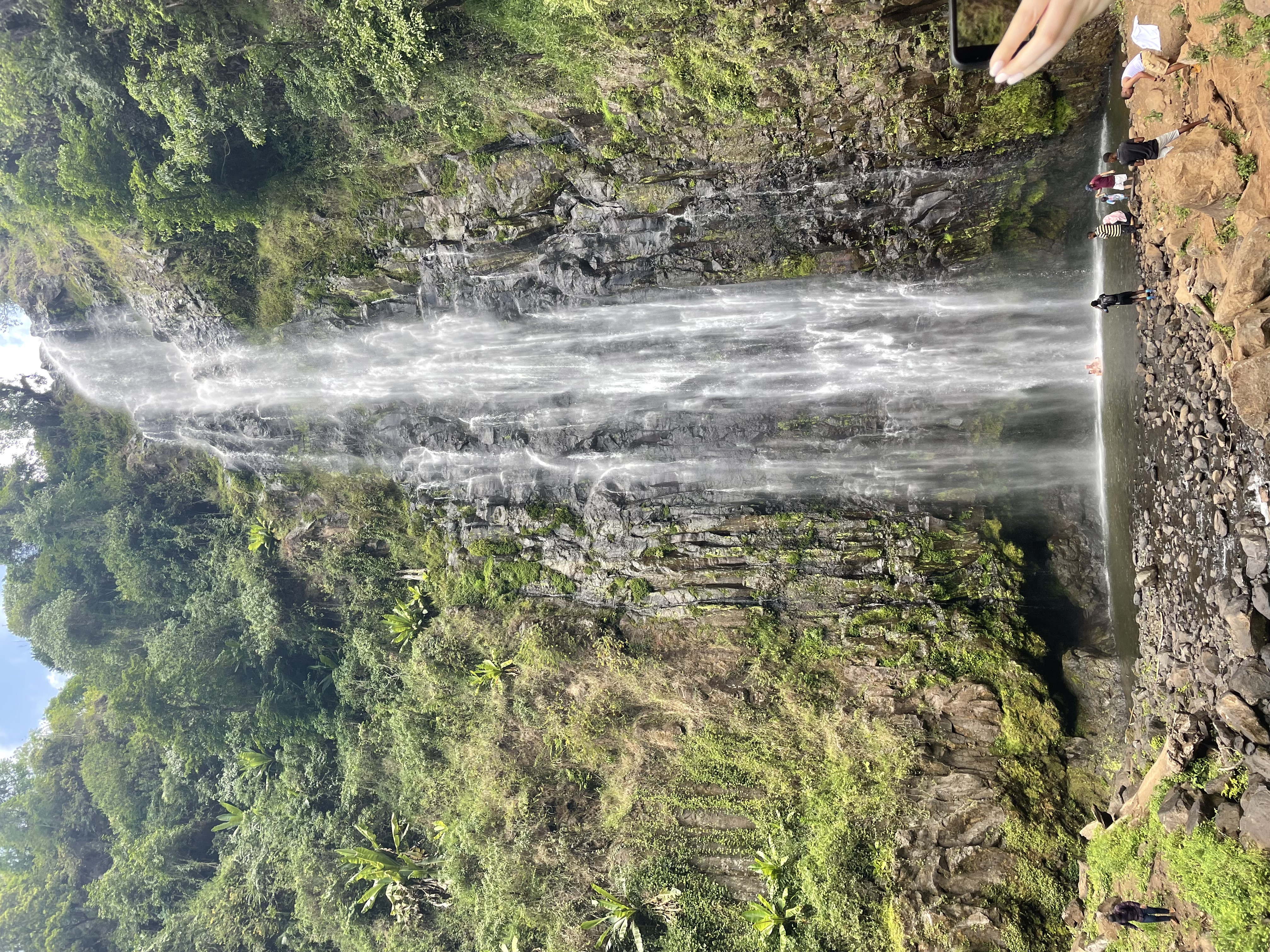
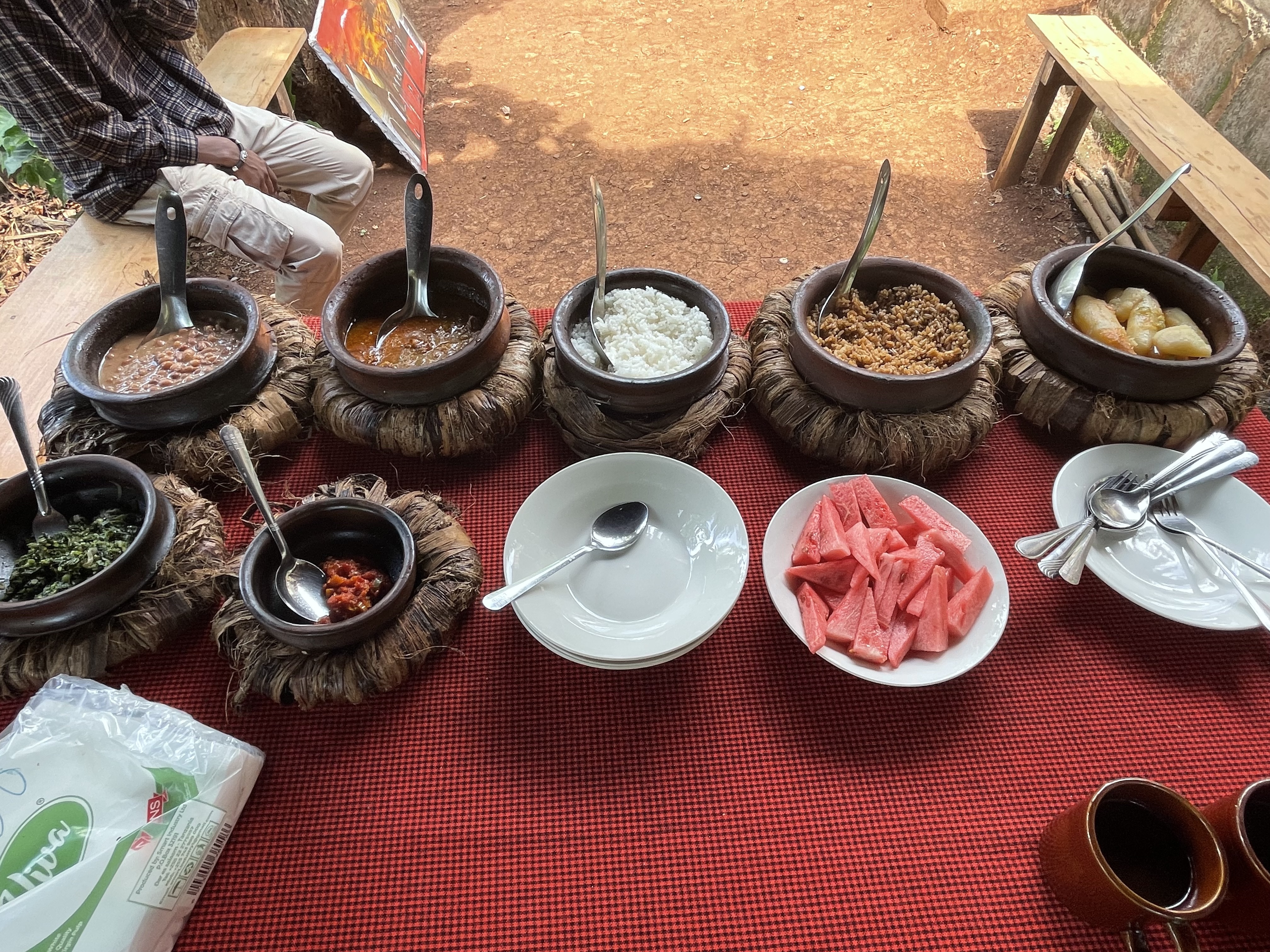
We stood close enough that the mist soaked through our jackets and settled into our hair. It felt less like standing beside water and more like standing inside weather, the air thick with movement and sound.
Looking up into the falling water, it was hard to imagine that only days later we would be walking somewhere dry and silent and nearly lifeless.
But that is the strange geography of Kilimanjaro.
It contains entire climates within itself.
And walking up it means walking through them all.
Climbing Through Climates
Climbing Kilimanjaro is often described as walking from the equator to the Arctic. It is not an exaggeration.
The journey upward unfolds through ecological zones stacked one above another like layers of atmosphere, each with its own textures, temperatures, and rhythms of life. The first days pass through rainforest.Here the trail is damp and shaded, a green cathedral where moss covers the trunks of ancient trees and every branch seems to host another layer of living things — lichens, orchids, tangled vines. Colobus monkeys leap quietly overhead while birds echo through the canopy with calls that feel older than the mountain itself.The air is thick and humid, and the forest seems endlessly regenerative. Leaves fall and vanish into the soil almost immediately, returning themselves to the cycle of growth. Higher up, the forest slowly loosens its grip on the mountain.
Trees shrink and spread apart. The dense canopy opens into a wide landscape of heather and moorland where the plants begin to look strange — evolutionary improvisations shaped by cold nights and thin air. Giant groundsels rise above the fog like tall green candles, their thick leaves protecting a reservoir of warmth against the freezing temperatures that arrive after sunset. Lobelias cluster along the slopes like sculptures made from living geometry.
Clouds drift through this zone in slow waves, sometimes opening long enough to reveal the plains of Tanzania spreading endlessly below. Then, almost without warning, the vegetation disappears. The mountain becomes desert. Not the desert of sand dunes and wind-carved ridges, but a high, volcanic desert — ash-gray soil and fractured rock stretching in all directions beneath a sky so wide it feels structural. Nothing moves here except wind and people.
Water becomes scarce.
The air grows thin.
Every step feels slightly more deliberate.
It is a place stripped to essentials: rock, light, breath. And above even this landscape lies the final zone: the summit, where ice once dominated the crater rim and glaciers spread outward across the mountain’s highest slopes.
This is where we were heading.
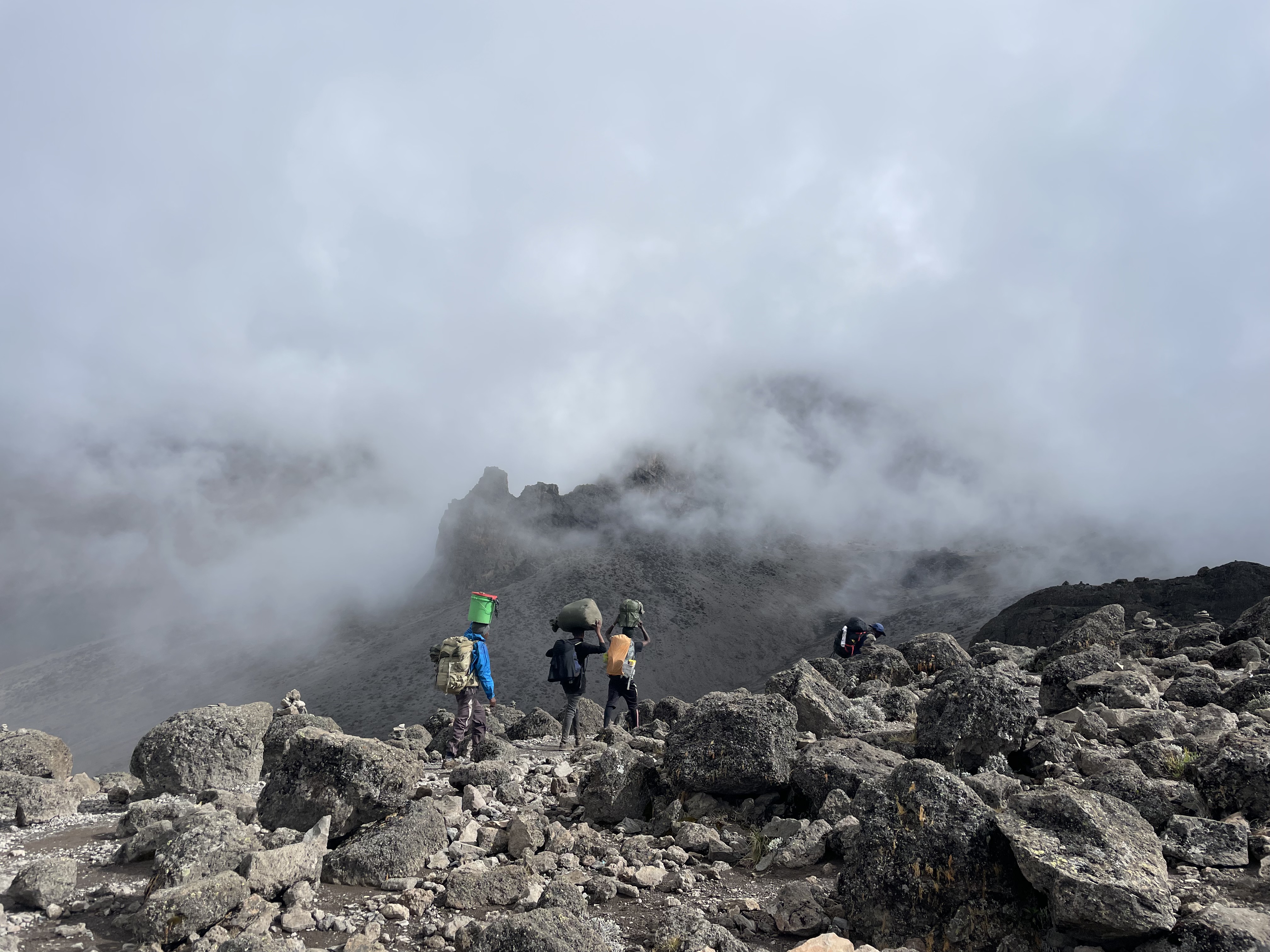
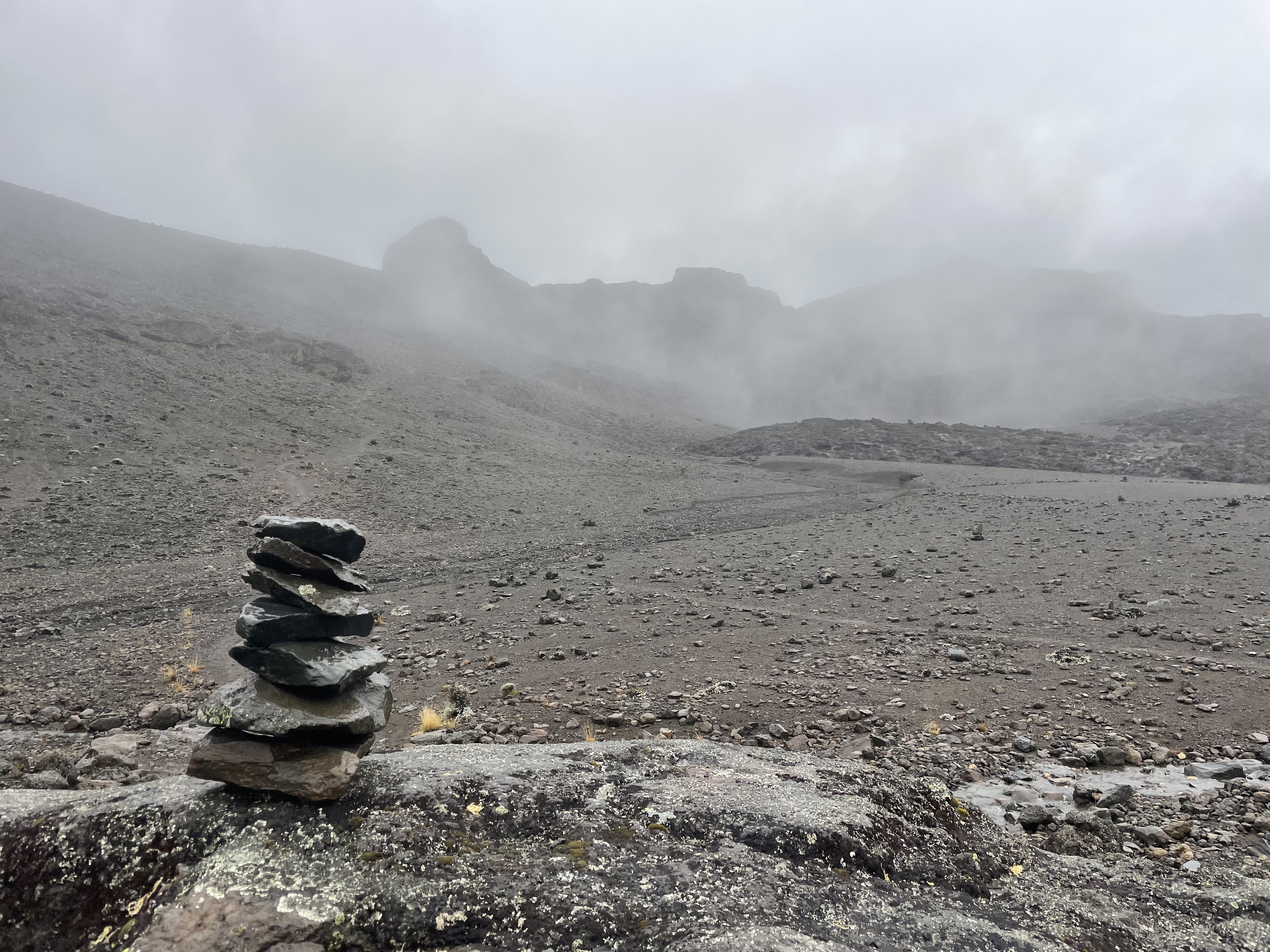
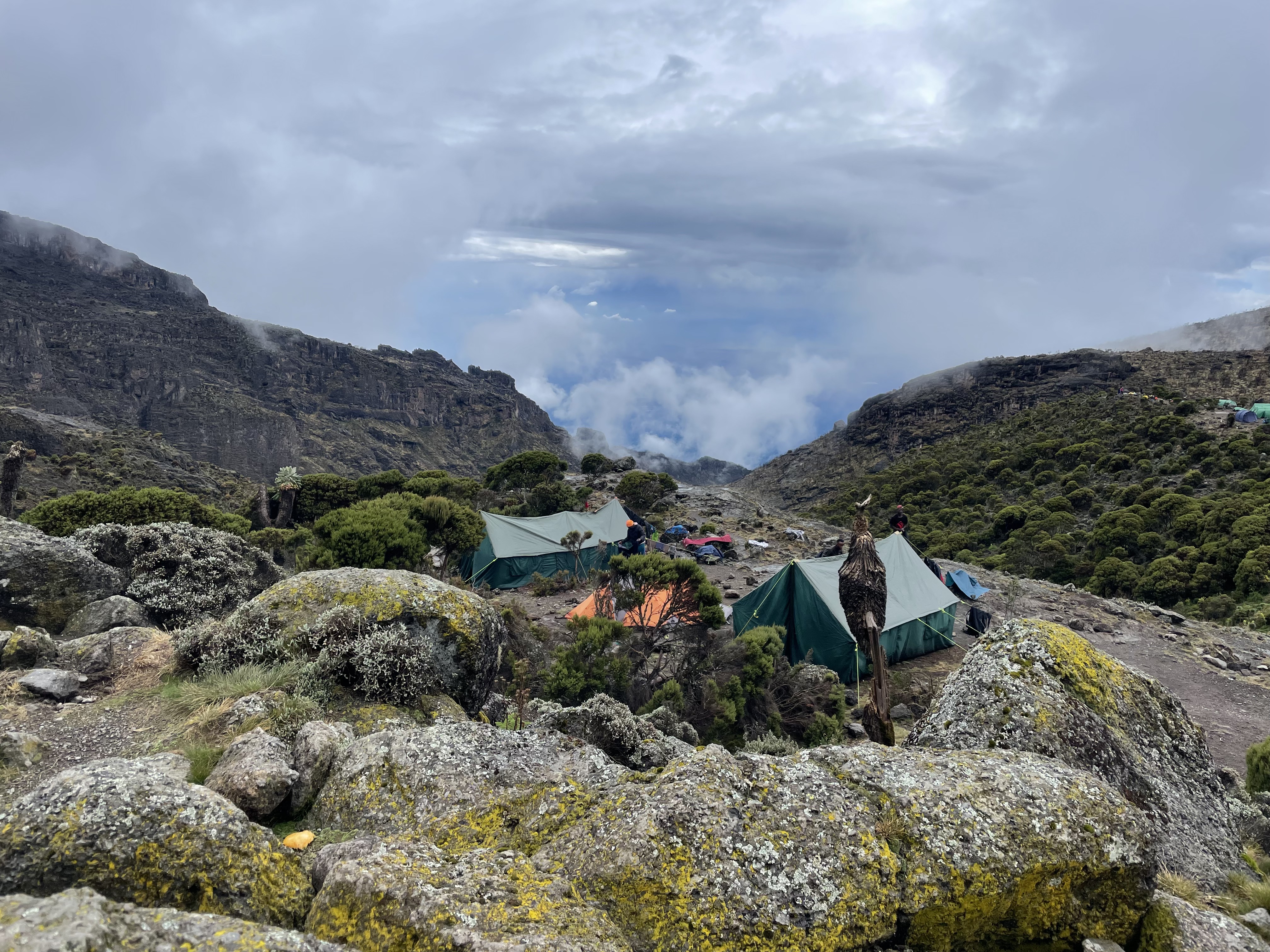
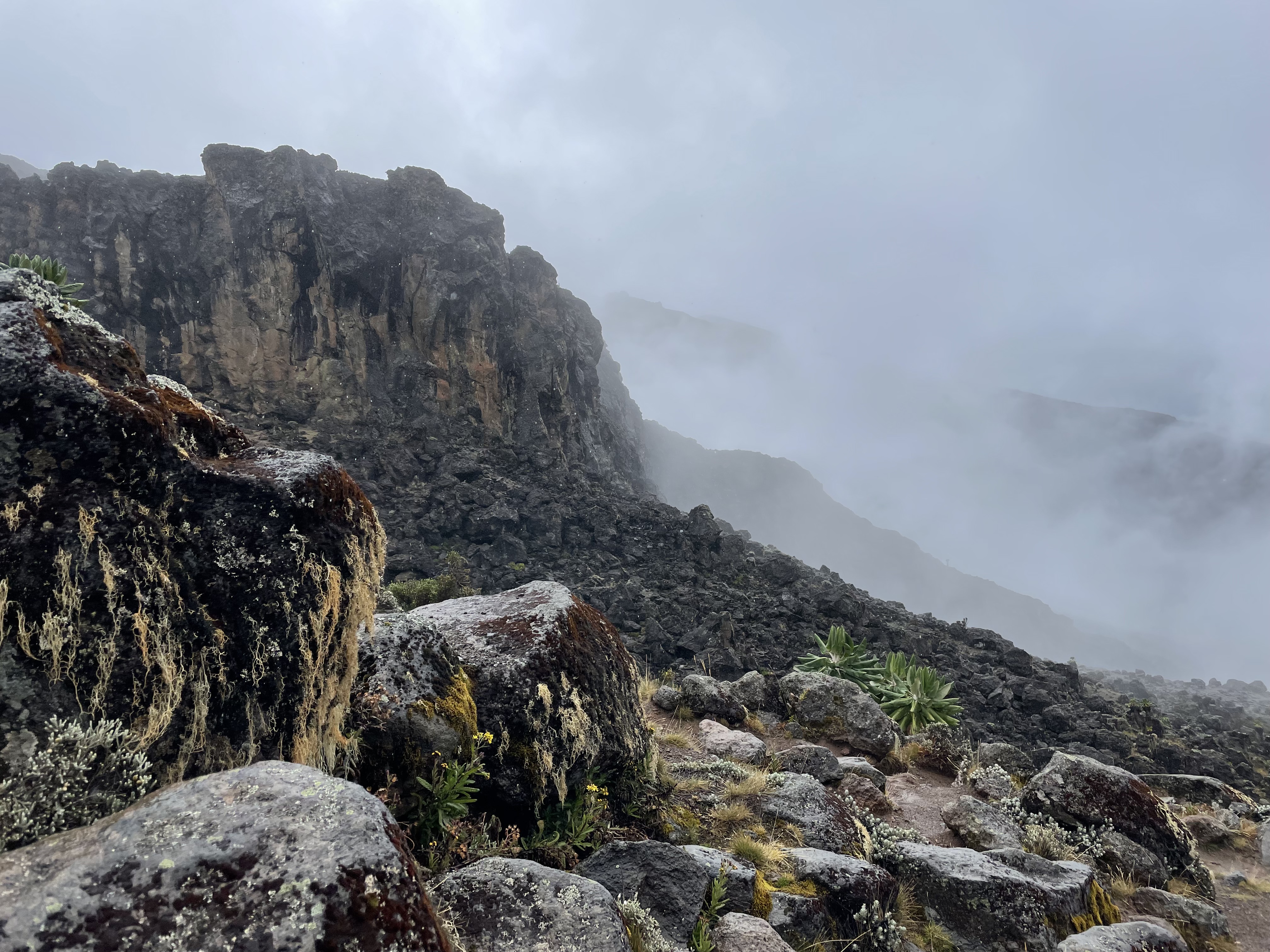
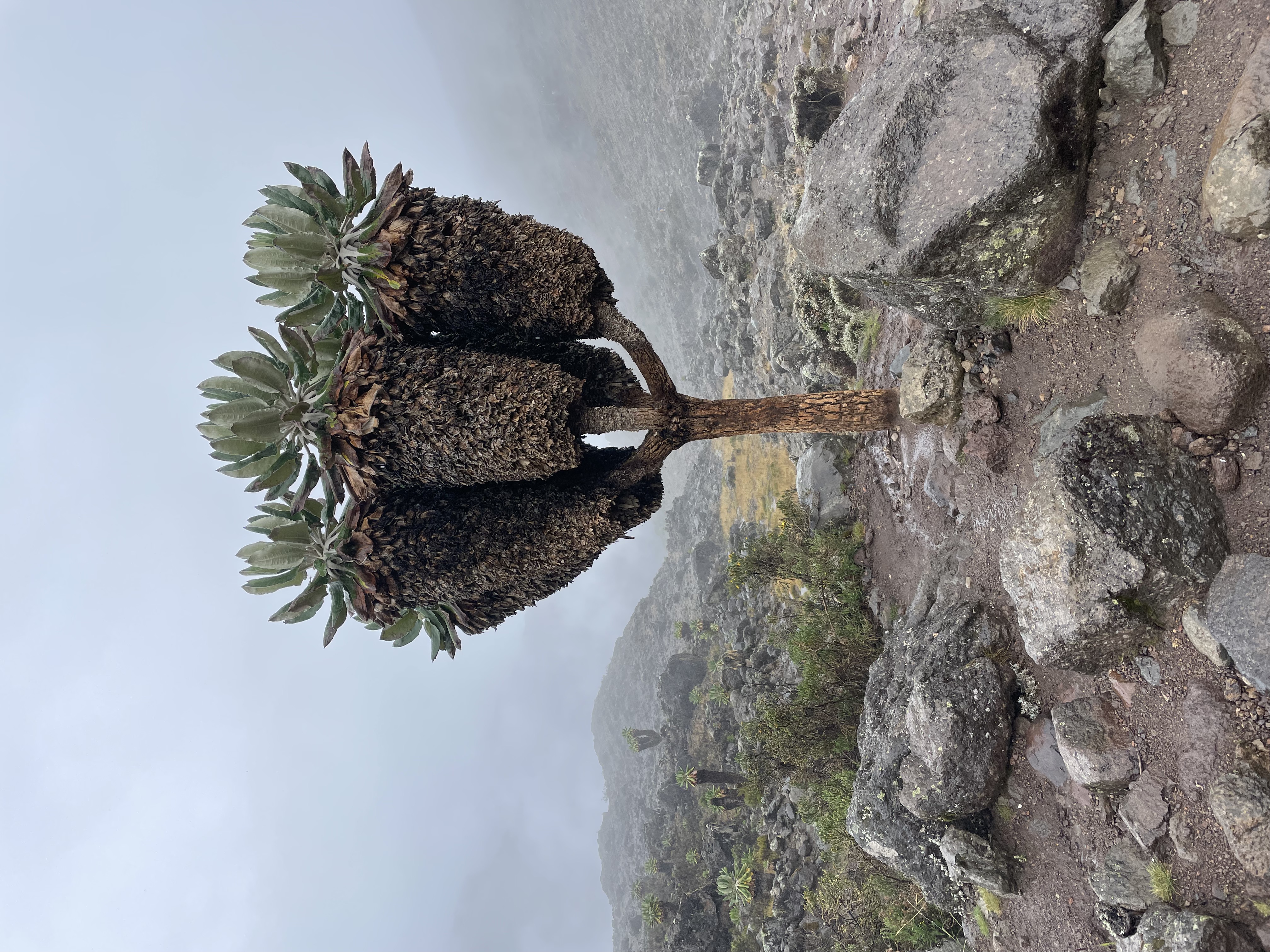
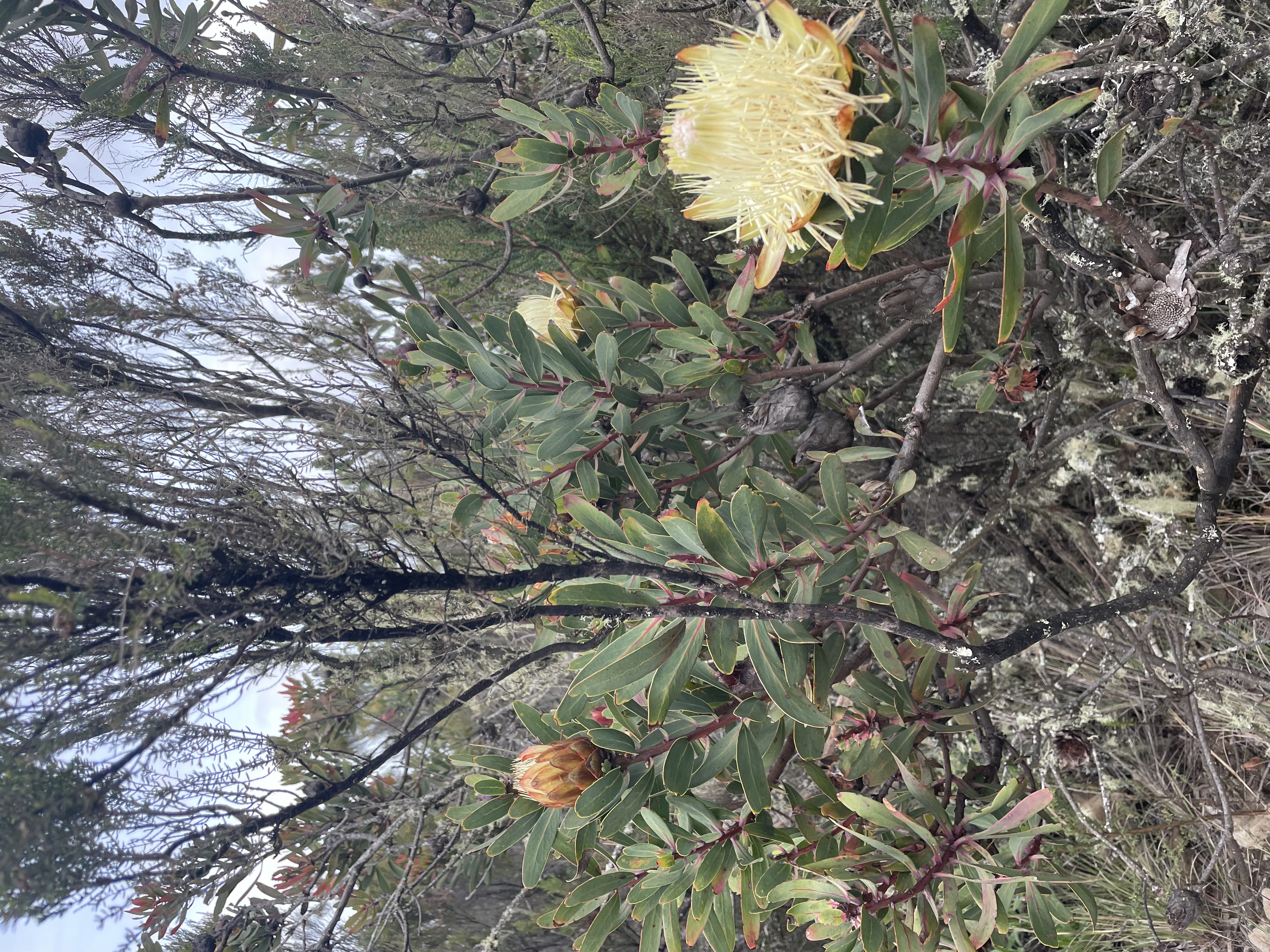
But long before we reached it, the mountain had already begun to teach us something about scale, about how quickly environments change when altitude compresses distance, and how fragile those environments can become. You can walk through entire climates here in the span of a few days. And the final one is fading.
Trail Family
Over the days, the mountain quietly rearranged us.
What began as a group of strangers, different countries, different rhythms, different reasons for being there, slowly became something else. Not all at once, and not through any single moment, but through the accumulation of small, shared things. Passing snacks along the trail without asking.
Waiting at turns in the path until everyone rounded the corner. Learning each other’s walking pace, each other’s silences.
There is a particular kind of closeness that forms in places where everyone is slightly uncomfortable. Where sleep is thin, where the air is scarce, where each step requires just enough effort to strip away the usual distractions of daily life. On Kilimanjaro, conversation comes in fragments.
A few words between breaths. A quiet joke at lunch. A glance that says you’re doing okay without needing to say it aloud. And then, without ever naming it, you begin to move as a unit.
A trail family.
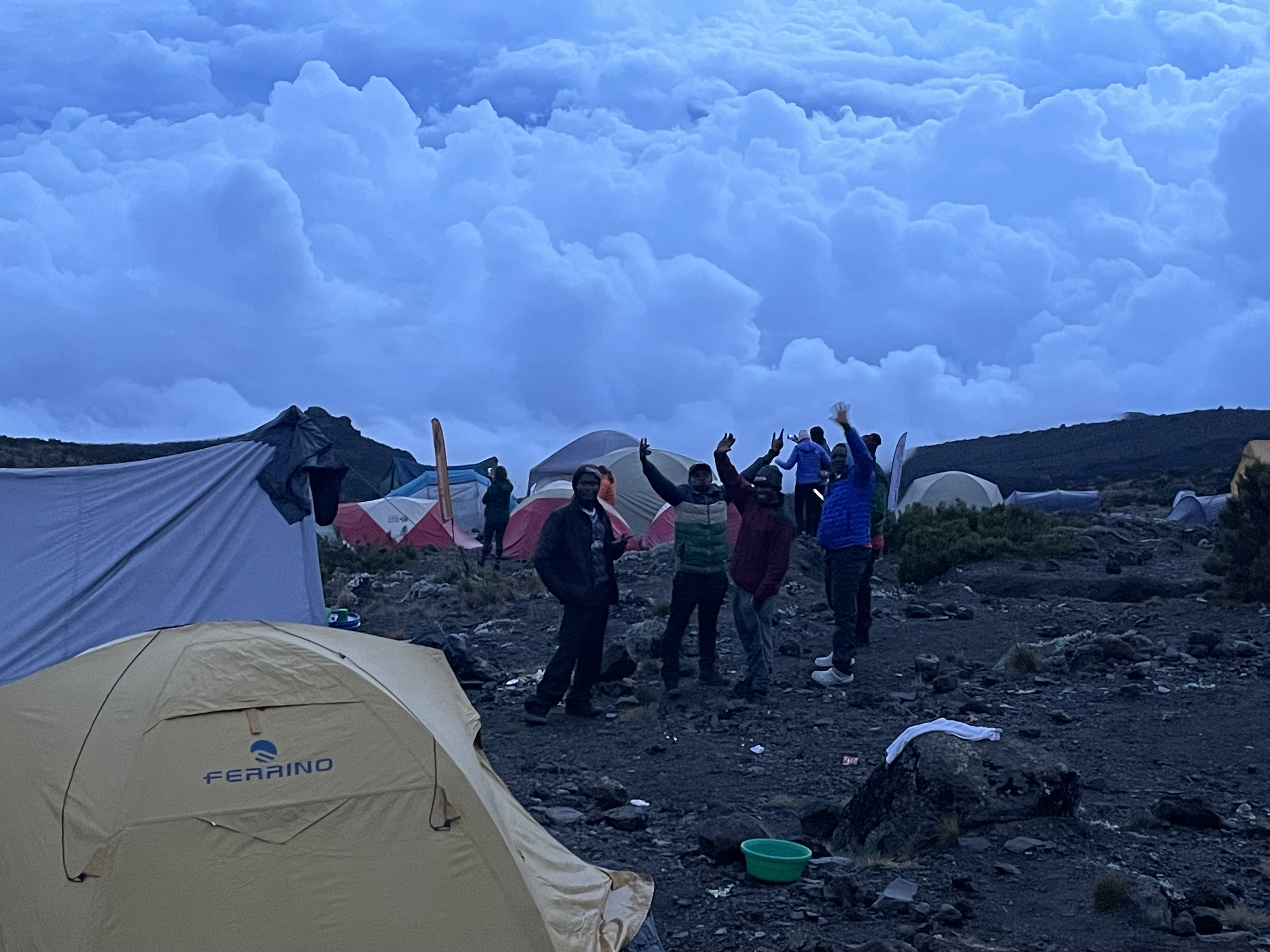
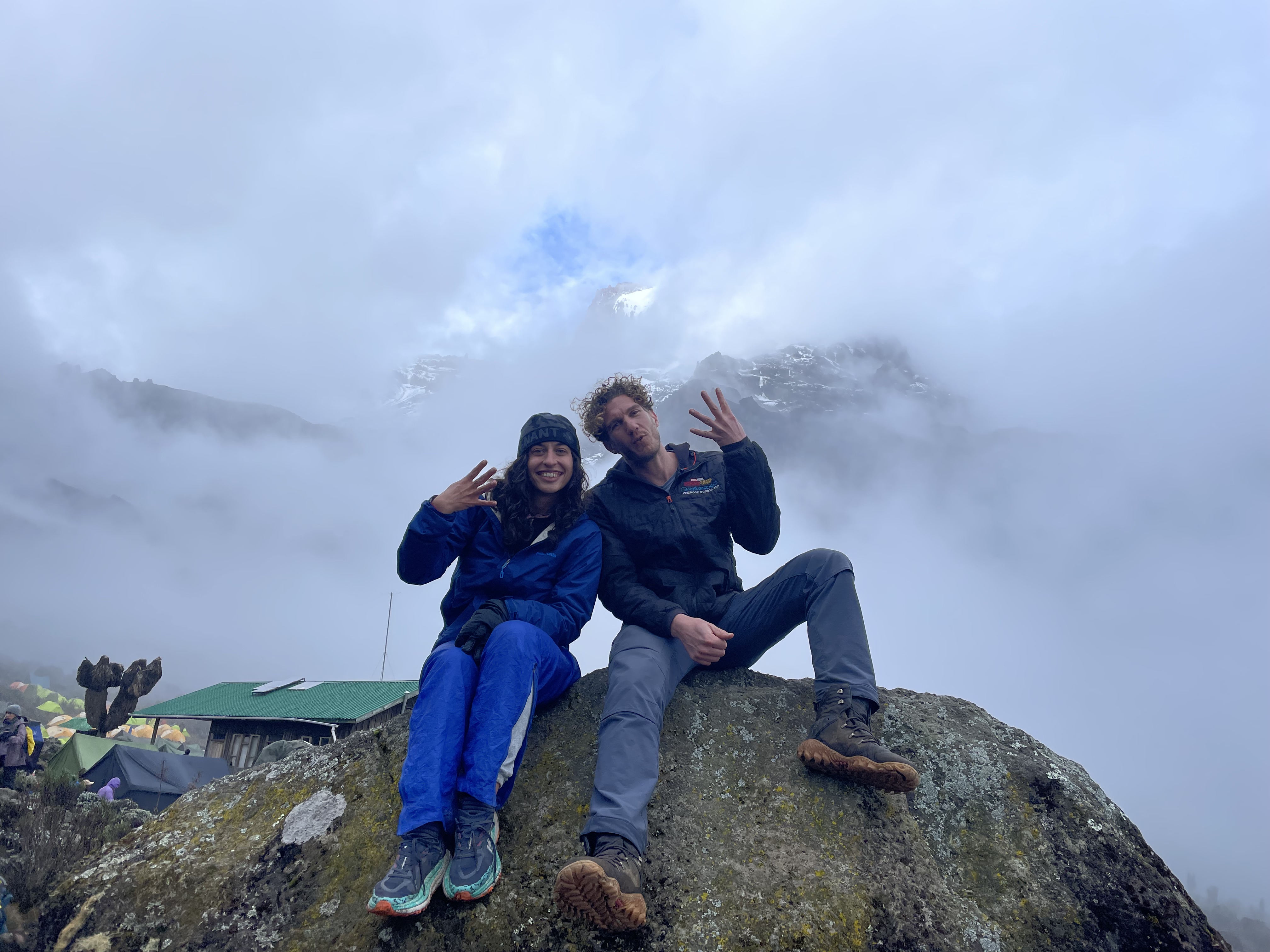
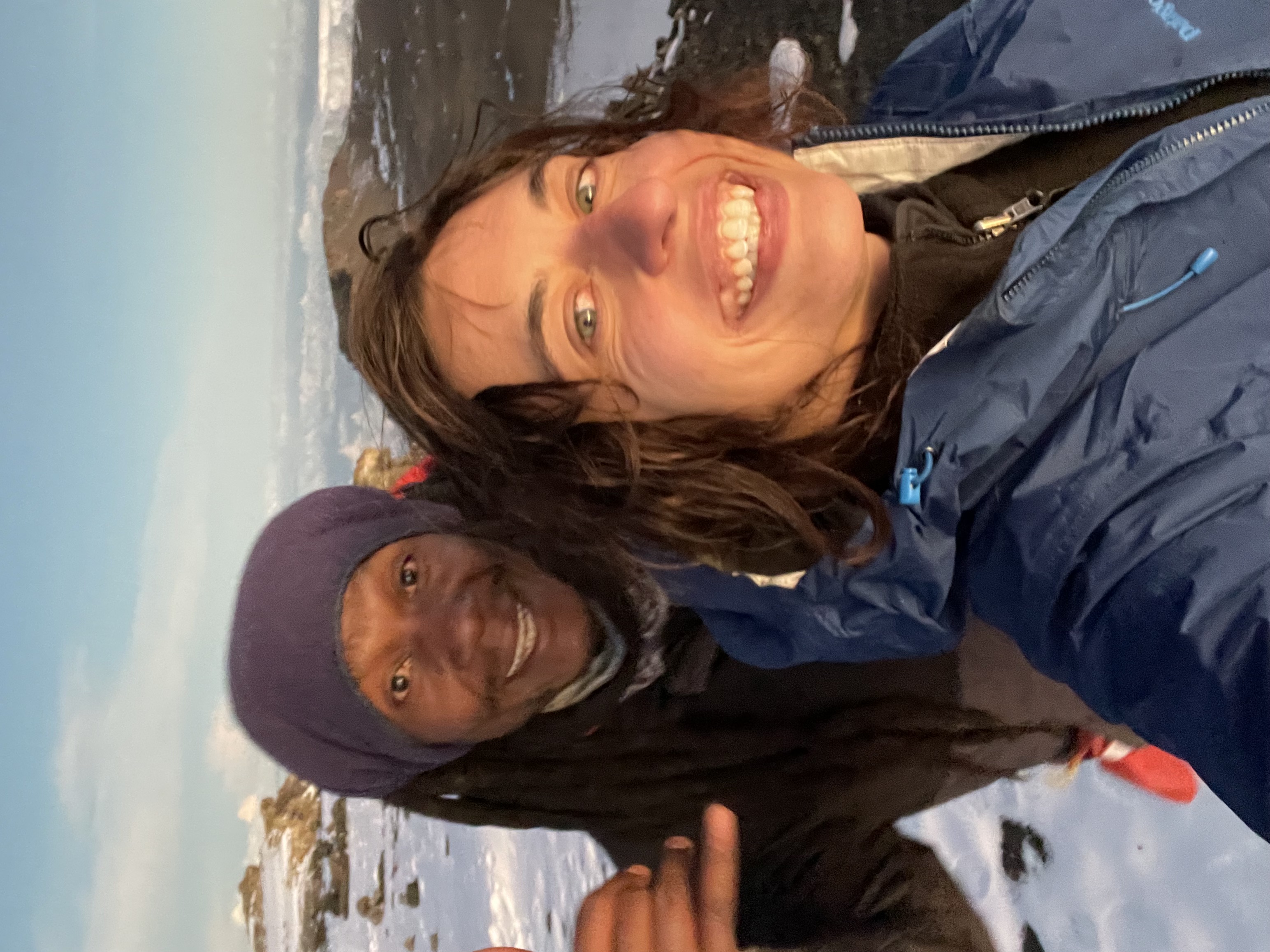
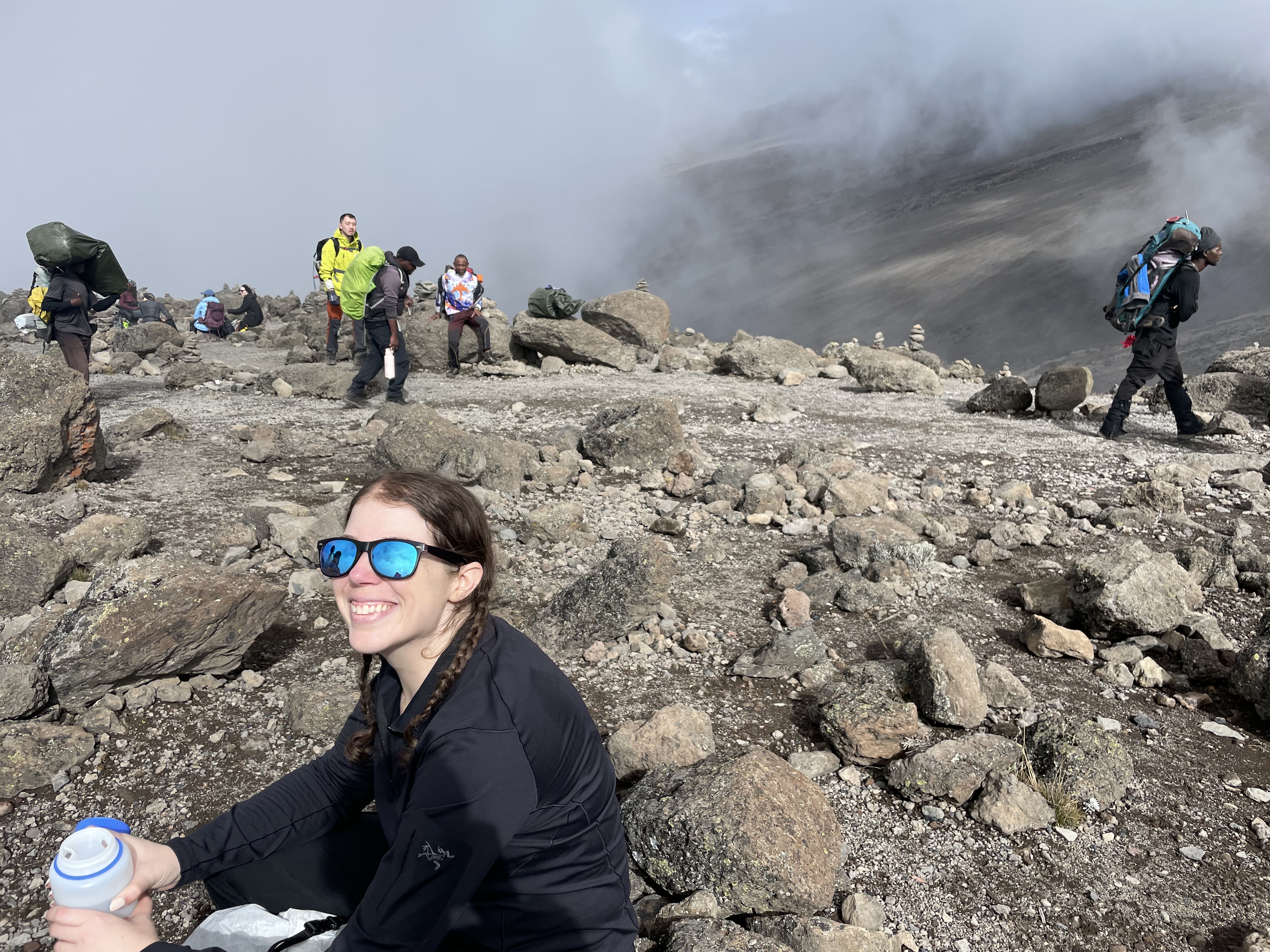
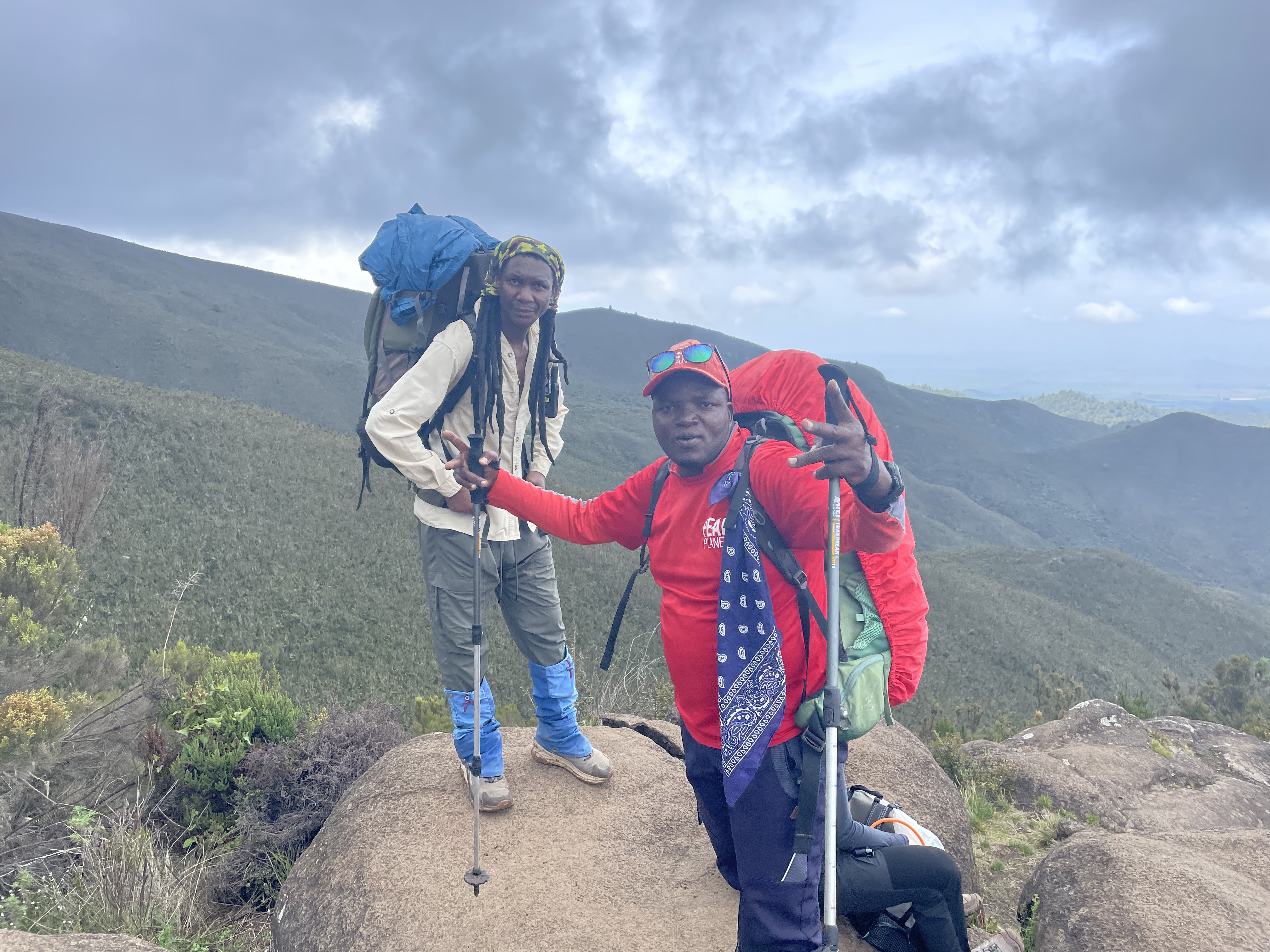
Bound not by history, but by direction. By the simple agreement to keep going upward together. By the understanding that no one reaches the summit alone, not really. On summit night, this became even clearer. In the darkness, with only headlamps and breath to guide us, we were no longer individuals scattered across a slope. We were a line, steady, slow, connected.
Each person carrying their own weight. Each person quietly supporting the others.
There is something about the mountain that makes this kind of connection feel both fleeting and permanent at the same time. You know you will eventually go your separate ways. But for now, for these few days suspended between earth and sky, you belong to one another.
–
Summit Night: The Quiet Arrival of a New Year
Summit night begins in darkness.
We left camp just before midnight on December 31st, stepping into the cold with headlamps glowing in a long, quiet line along the trail. Above us the sky was impossibly clear, the Milky Way stretching across the horizon in a pale river of stars. The world had narrowed to a rhythm:
step
breath
step
breath
The air was thin enough that even small movements felt deliberate. Every few minutes we paused to steady ourselves while our guide repeated the same gentle reminder.
Pole pole.
Slowly.
The phrase carries more meaning than it seems to at first. On Kilimanjaro it becomes a philosophy of movement, a reminder that patience is the only pace that works at altitude. The mountain rose slowly beneath our feet. Below us, tiny constellations of headlamps wound upward across the slope — each light marking someone else making the same slow pilgrimage through the night. At some point, without ceremony, the year changed.
No countdown.
No fireworks.
Just the crunch of frozen scree beneath our boots and the quiet realization that midnight had passed somewhere between breaths. We were walking into the new year one step at a time. Hours later the horizon began to soften, the black sky fading into deep indigo and then into a thin band of amber light. When we reached the crater rim, dawn broke open across the plains far below us, spilling gold across the clouds.
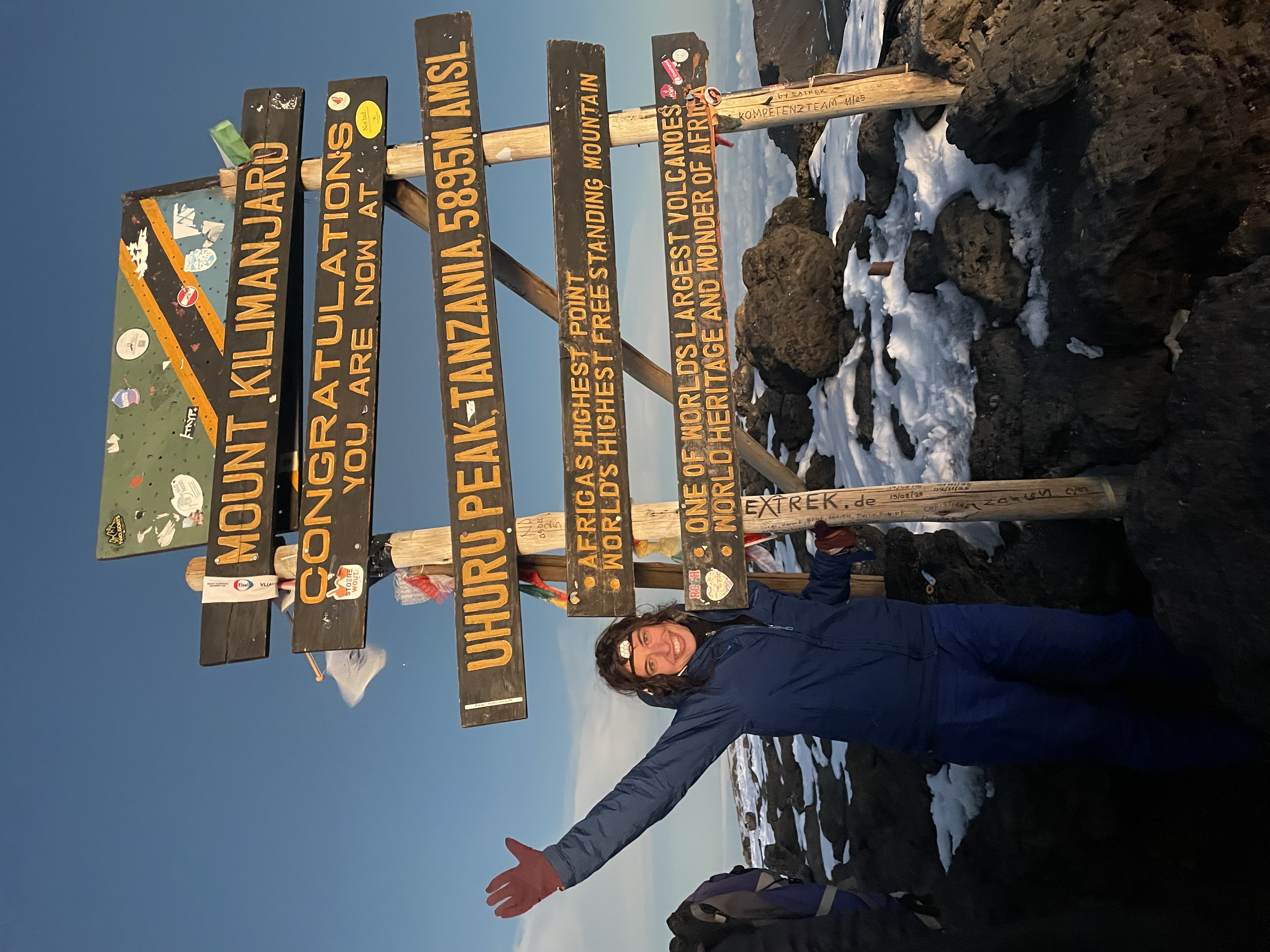
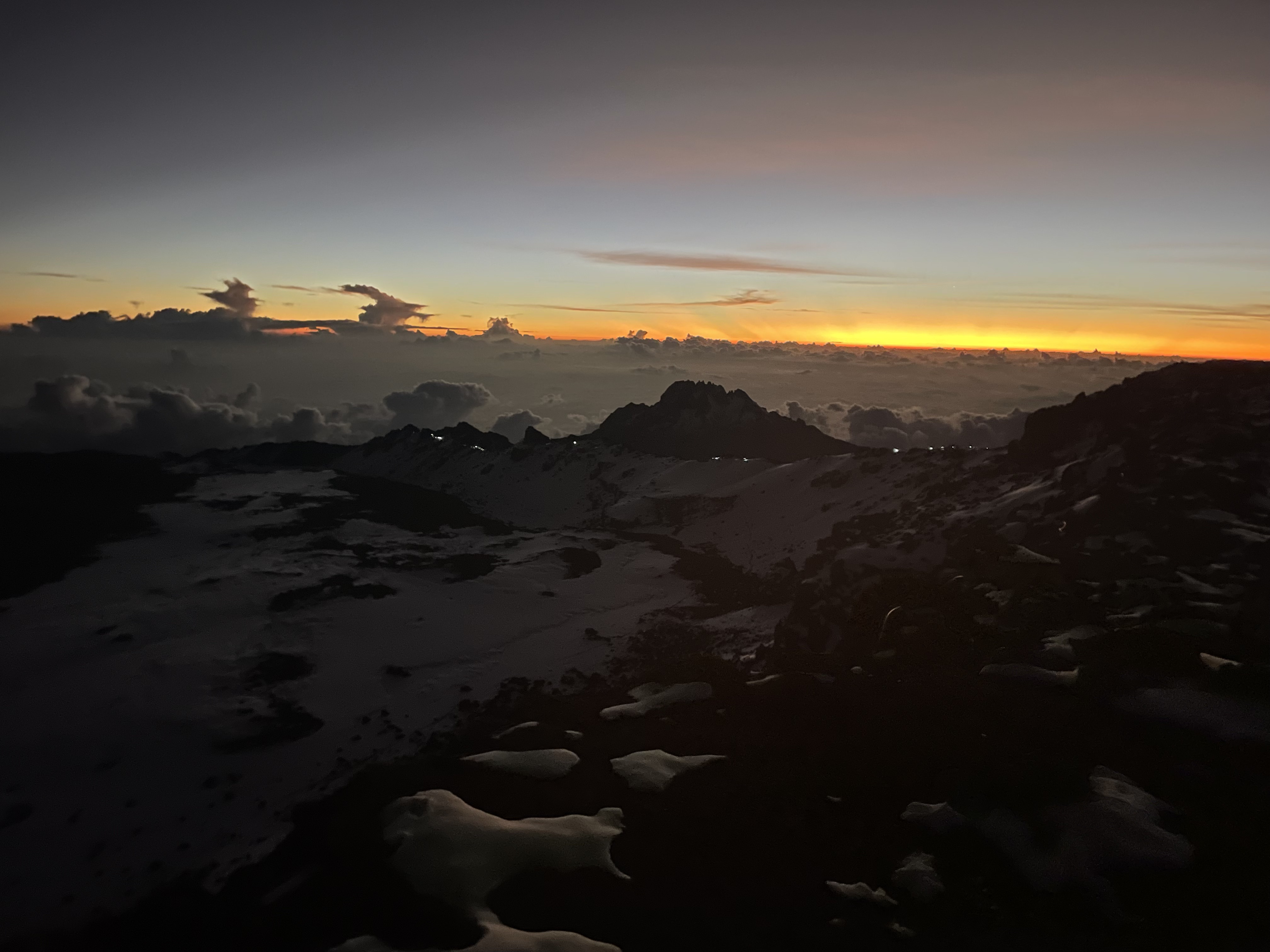
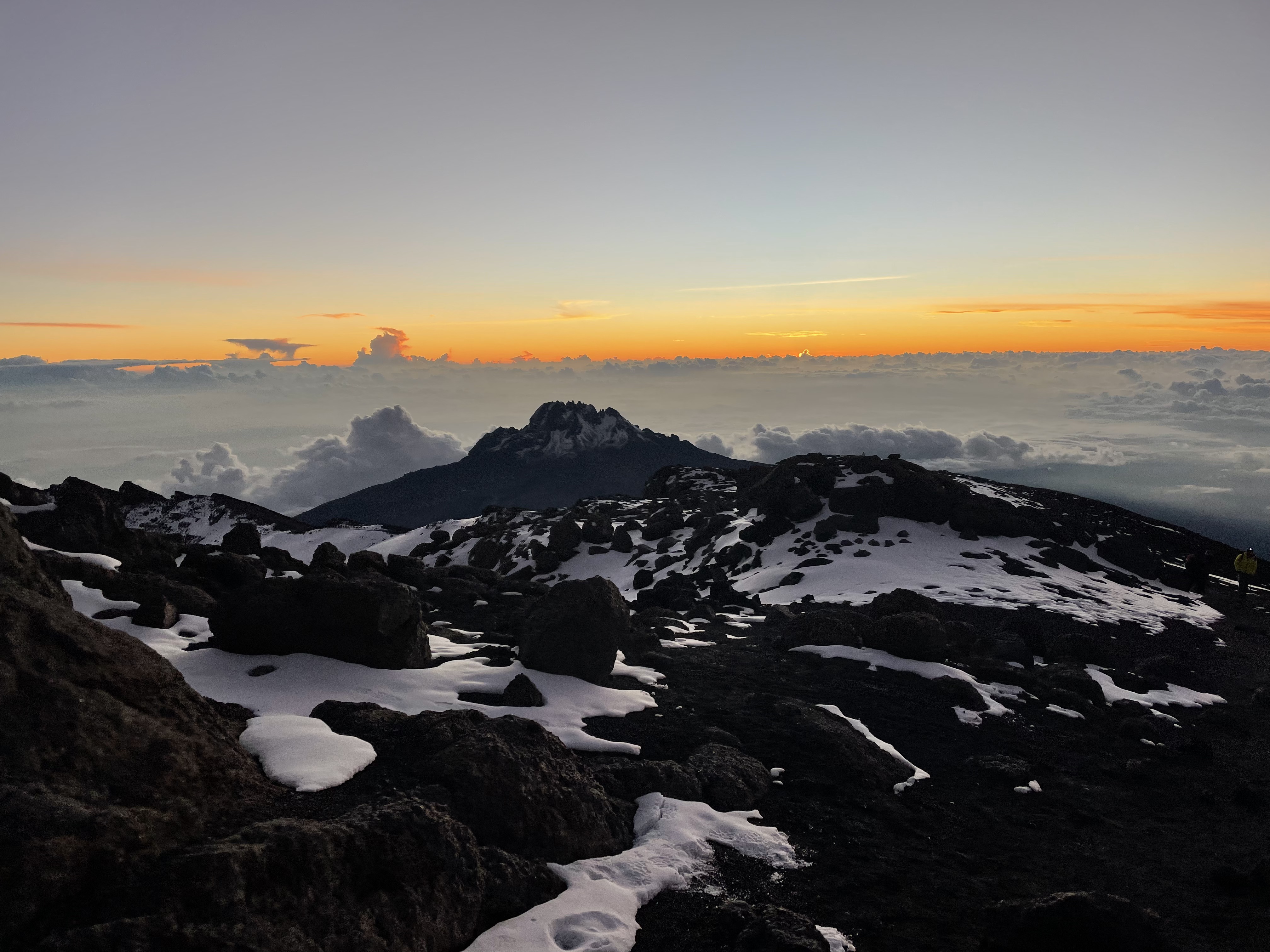
And there, rising from the summit plateau, were the glaciers.
The Ice That Remains
They appear suddenly.
Walls of blue ice standing upright against the sky, their surfaces cut into sharp angles and glowing faintly in the early light. They look less like glaciers and more like the ruins of something ancient — fragments of a much larger presence that once covered the summit.
A century ago, Kilimanjaro’s ice fields stretched across much of the crater rim. Today only isolated sections remain.
Scientists estimate that more than 80–90 percent of the glacier mass has disappeared since the early twentieth century. The ice is not only melting from warmer temperatures; it is also sublimating — turning directly from solid ice into vapor in the dry summit air. Changes in cloud cover and regional moisture patterns have reduced the snowfall that once replenished the glaciers each year.
In other words, the system that sustained the ice has begun to unravel.
Standing beside the remaining glaciers feels like standing beside something that knows it is temporary. The ice glows an almost impossible blue where the light reaches deep into its layers. Thin edges curl and fracture. Small pieces fall silently onto the ground and vanish into dust and sunlight.
These glaciers are not flowing rivers of ice anymore.
They are remnants.
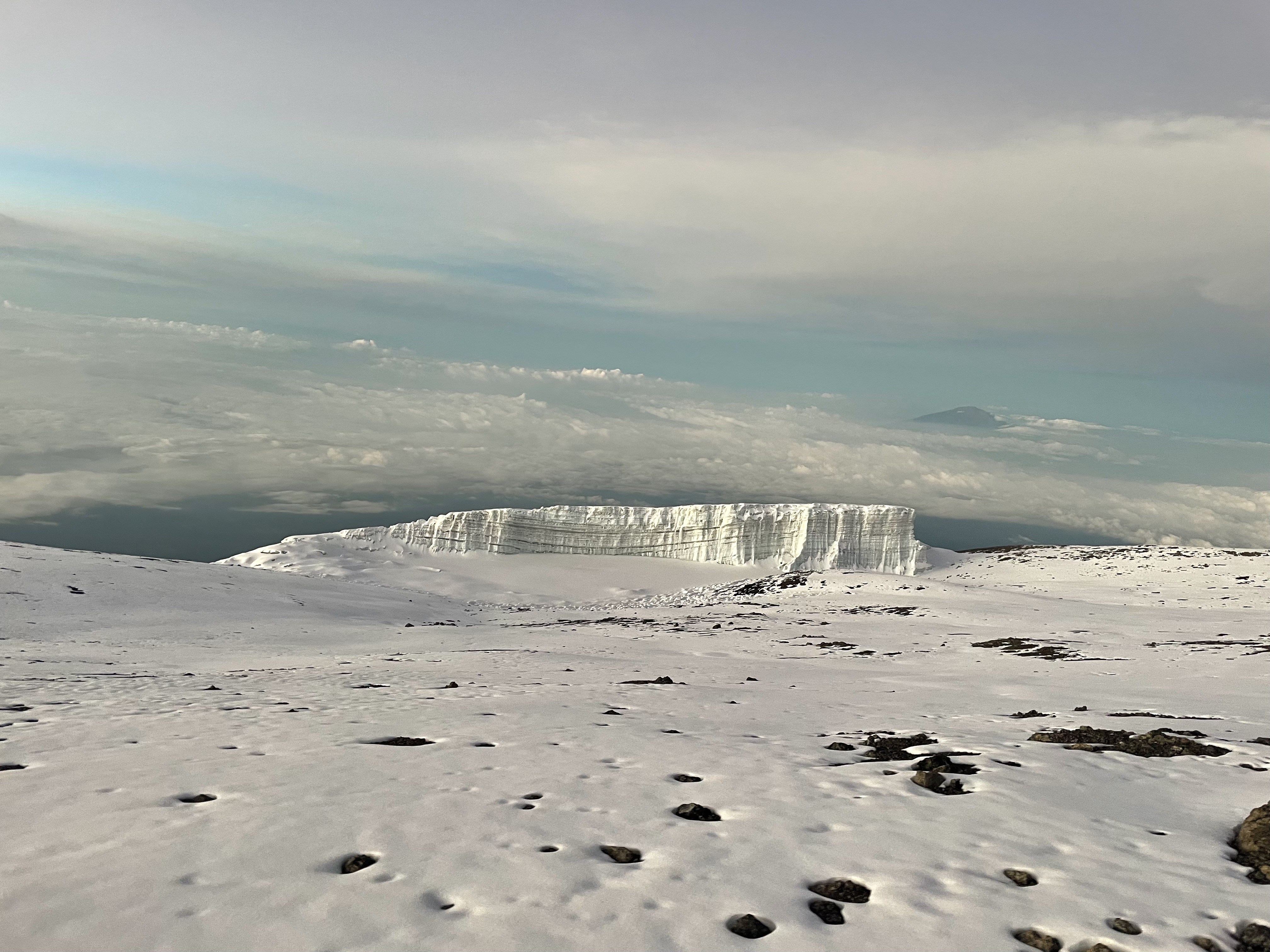
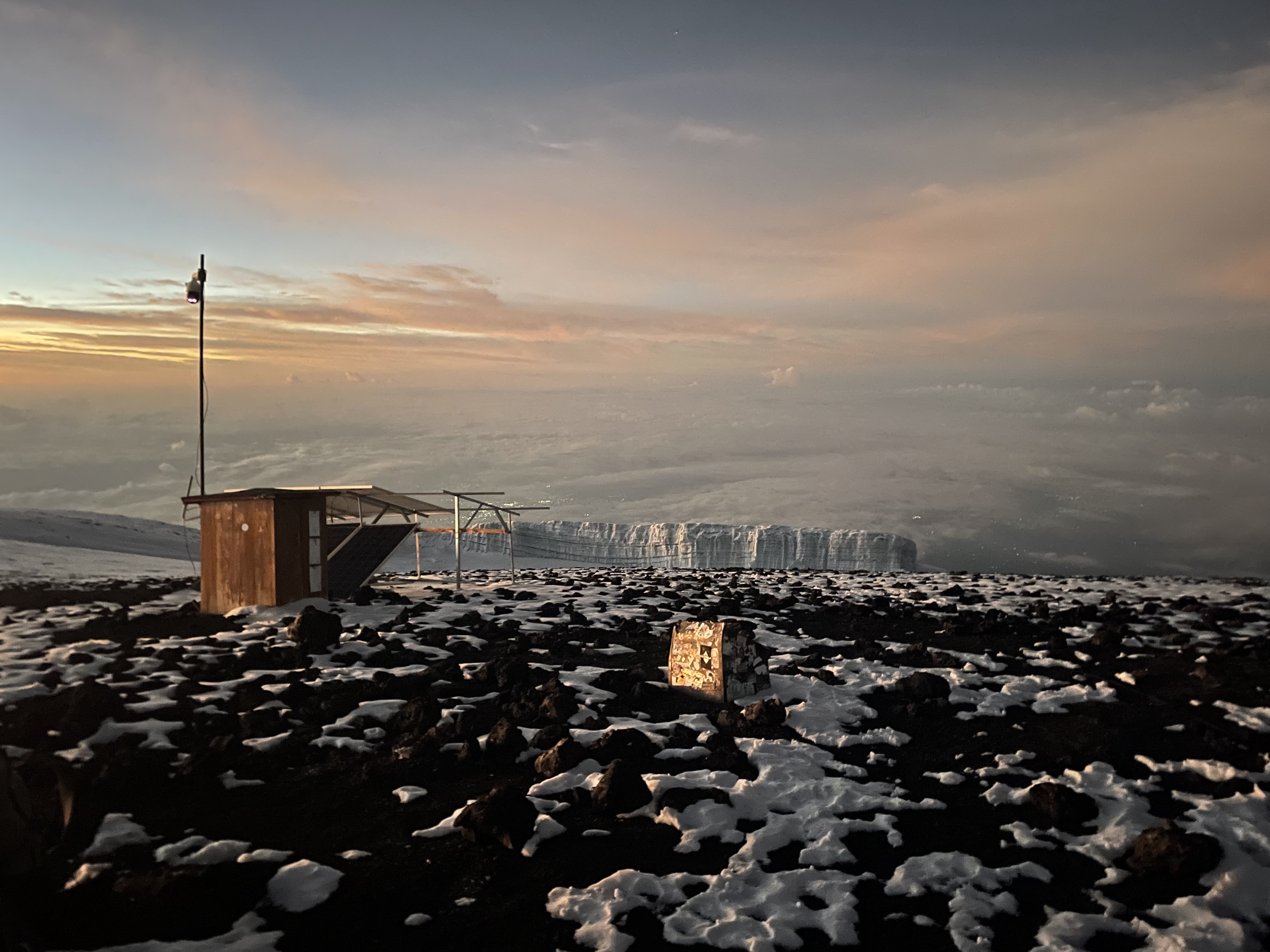
We stood at Uhuru Peak on the first morning of the year, looking out over the clouds while the shadow of Kilimanjaro stretched across the plains below like a second mountain made of darkness.
Somewhere far beneath us were the forests, the coffee farms, and the waterfall where we had stood days earlier with mist in our hair.
All of those climates layered below us again:
rainforest
moorland
desert
ice
It felt strange to celebrate a new year beside something so clearly nearing its end. And yet the moment itself felt suspended, neither beginning nor ending, but something quieter. A place where effort met arrival. Where the mountain had revealed its entire geography step by step. And where the first sunrise of the year illuminated not just the summit beneath our feet, but the fragile edge of the climate systems that shaped it. For a brief moment we stood above the clouds, on the roof of Africa, watching the light move across a landscape that holds entire worlds within a single mountain. And slowly, quietly, we began the long walk back down through them.
Down into thicker air. Into color. Into life returning in layers.
The summit is never the whole story.
It is only a moment, sharp and bright and fleeting, held between everything that comes before and everything that follows. What lingers longer are the quieter things: the rhythm of walking, the shared silence, the way a group of strangers became something like a family for a few days on a mountain. By the time we reached the lower slopes again, the air felt almost heavy, full of scent and sound and warmth. The same farms, the same trees, the same drifting clouds, but we were not quite the same people who had walked upward through them.
The mountain does not keep you. It lets you pass through.
But it leaves something with you, a recalibration of scale, of effort, of what it means to move slowly enough to notice the world changing around you. And maybe that is the real gift of Kilimanjaro. Not just standing on the roof of Africa at sunrise on the first morning of a new year, but learning, step by step, how to arrive there together.