Power, Peaks, and a Pioneering Spirit
Grüezi! Bonjour! Ciao!
These are the voices that drift along the Tour du Mont Blanc, where trails cross borders as easily as greetings. The past few weeks have been all-encompassing—long days in the lab with the Speed2Zero project, followed by longer days in the mountains. Slowly, Switzerland is beginning to feel like a home woven from both science and summits, a place balanced between research and ridgelines, equations and endurance.
Shall we begin?
Understanding and Preparing the Swiss Electricity System for Climate Extremes
Switzerland’s electricity system is often hailed as one of the cleanest, most reliable, and most interconnected in Europe. But beneath the surface of this alpine energy success story lies a grid that is increasingly being tested—not just by the push toward decarbonization, but by the deepening effects of climate change.
This post explores how the Swiss electricity grid works, the technical complexities of its hydropower-reliant portfolio, and how my research is helping to prepare for a future where extreme weather events may become the norm. For readers curious about how energy, climate, and policy intersect in a small but central European country, read on.
The Backbone of Swiss Electricity: Hydropower
Switzerland generates about 55–60% of its electricity from hydropower, leveraging its mountainous terrain and glacially-fed rivers. There are two main types of hydro plants:
- Run-of-river plants produce electricity as water flows through them, with little or no storage capacity.
- Reservoir-based hydropower stores water in alpine lakes (often at altitudes above 1,000 meters), allowing flexible dispatch to meet peak demand or provide reserve capacity.
Switzerland also operates a small number of pumped storage hydropower plants, which act like giant batteries. During periods of excess electricity (e.g., solar overproduction), water is pumped uphill to a reservoir. When demand spikes, that water is released back down to generate power. Major facilities include the Linth-Limmern and Grande Dixence systems.
Additionally, the country maintains strategic hydropower reserves, where select alpine reservoirs are held back to be dispatched only during emergency shortfalls. These reserves—around 500 GWh—are critical for winter reliability and grid security.
Grid Connectivity and Imports
Switzerland is not part of the European Union, but it plays a vital role in the Continental European synchronous grid, acting as a key transit country for power flows between France, Germany, and Italy. With over 40 interconnection points, the Swiss grid is among the most tightly integrated in Europe.
- In winter, Switzerland is a net importer of electricity—typically around 5 TWh annually—relying on nuclear and imports from France and Germany.
- In summer, it often exports excess hydropower or stores imported surplus energy using pumped hydro.
Swissgrid, the national transmission operator, ensures this delicate balance with real-time monitoring, forecasting tools, and contractual arrangements with European neighbors. However, Switzerland’s exclusion from the EU electricity market agreement since 2021 adds legal uncertainty to long-term import reliability.
The 2022–2023 Energy Crisis: A Wake-Up Call
During the drought of 2022, Switzerland experienced:
- Record low reservoir levels due to snowpack melt and prolonged dry periods.
- Nuclear outages in France and reduced German exports due to the Russia-Ukraine war.
- Worries about winter blackouts, leading the Swiss government to activate emergency measures, including the installation of backup gas turbines and contracts with large industrial consumers for demand reductions.
The Swiss Federal Office of Energy (SFOE) published a Winter Energy Reserve Plan, which included:
- Activation of strategic hydropower reserves (roughly 500 GWh held in alpine lakes).
- Creation of infrastructure for gas-based emergency generation.
- Negotiations with neighboring countries for emergency capacity.
- Incentives for voluntary electricity savings across residential and industrial sectors.
This situation underscored how even robust systems can be vulnerable to compound climate and geopolitical shocks. It also sparked renewed interest in enhancing resilience without compromising environmental goals.
A Grid Under Climate Pressure
Looking ahead, climate change poses systemic challenges:
- Glacier retreat and shifting precipitation could reduce annual water inflows and alter seasonal availability.
- Heatwaves and droughts strain generation, increase cooling loads, and reduce river flow for hydro plants.
- Persistent cloud cover and calm wind conditions (“dunkelflaute”) reduce renewable availability.
- Public resistance to new transmission infrastructure and pumped storage limits capacity expansion.
Moreover, Switzerland’s decentralized energy governance, with strong cantonal autonomy, means that infrastructure planning must align with both technical needs and local social acceptance.
Despite these risks, most energy models still use average climate inputs or optimistic scenarios. This creates blind spots in long-term planning and fails to capture the full spectrum of plausible disruptions.
My Research: Climate Resilience Stress Testing for the Swiss Grid
My work at ETH Zurich focuses on evaluating how the Swiss electricity system would perform under a set of physically plausible climate extreme scenarios, using high-resolution meteorological data and power system models:
- Multi-year droughts with below-average reservoir inflows and low hydropower generation.
- Extreme cold spells with surging winter heating demand and reduced imports.
- Compound events—such as simultaneous heatwaves, wildfire smoke reducing solar output, and geopolitical supply disruptions.
Through scenario-based modeling, I analyze:
- Power flow feasibility and potential transmission bottlenecks.
- Role of pumped storage and fast-ramping generation in system balancing.
- Risk of supply shortfalls and the effectiveness of hydropower reserves.
- Tradeoffs between ecological conservation and dispatch optimization.
My goal is to design stress-test frameworks that power system planners can use to prepare for tail-risk events—those that are low-probability but high-impact. These frameworks blend climate science, operational modeling, and system optimization to improve decision-making under deep uncertainty.
The Other Peaks: Running Into the Mountains
Research has kept me close to screens and simulation models, but Switzerland has a way of pulling you outdoors. The same mountains that define its energy system have also defined my time here.
Part II: Motion in the Mountains
If the lab gives me clarity of thought, the mountains give me clarity of being. They have become the second half of my time in Switzerland—where ideas leave the page and are tested against rock, snow, and air.
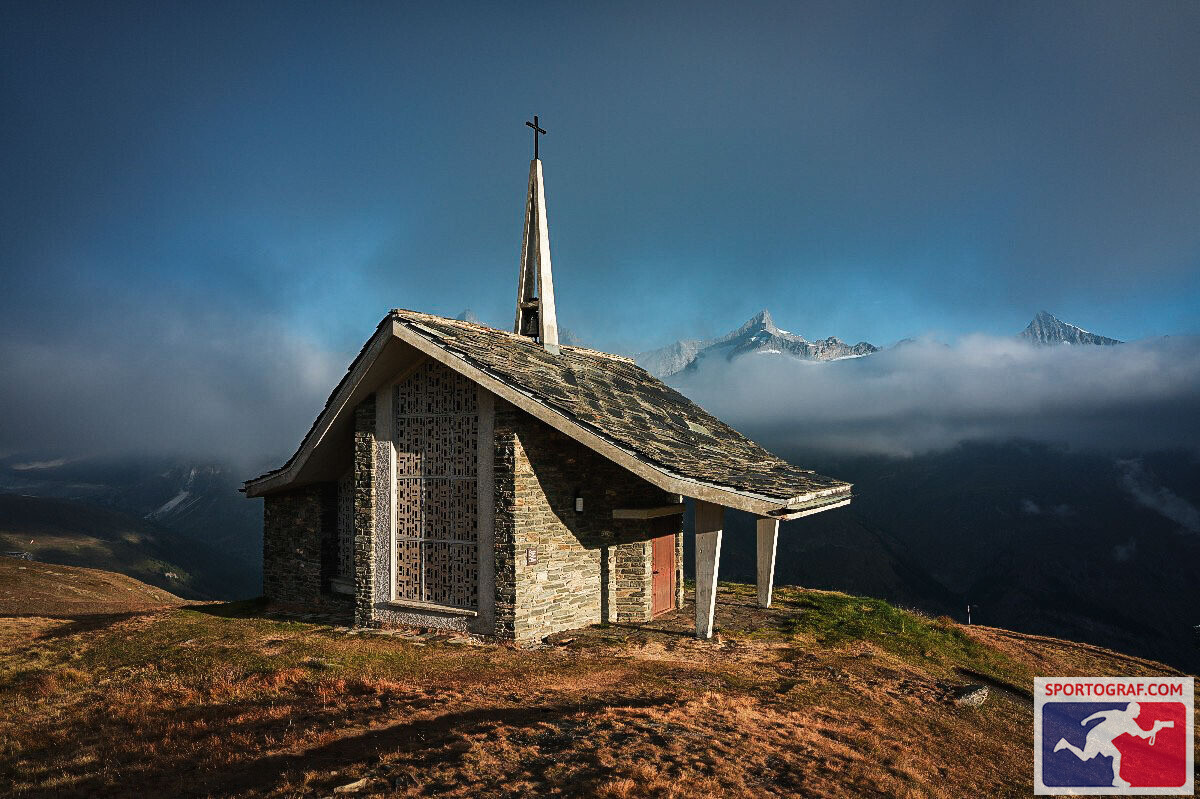
Swiss National Day is celebrated on Aug. 1st, which commemorates the Federal Charter of 1291. To celebrate the long weekend, I rode the train to St. Moritz, which has hosted the Winter Olympics twice. Here, I laced my running shoes alone and set out running into the Engadin valley and up in the nearby mountains, I did not get to many photos given the rain, but it was a grounding experience. The rain fell light and steady all weekend, misting the larches and softening the trail until it felt like I was moving through a watercolor painting. Then one day, this mist I wore like a cloak turned to hail and lightening. While being caught in a lightening storm in the alps was not something I planned, I took cover in a nearby rufugee, until the storm passed. Then set out again with a little more adrenline fueling this run! Overall, solitude had its own rhythm there: footsteps against wet earth, breath visible in the cool air, the sharp quiet broken only by the bell of a distant cow.
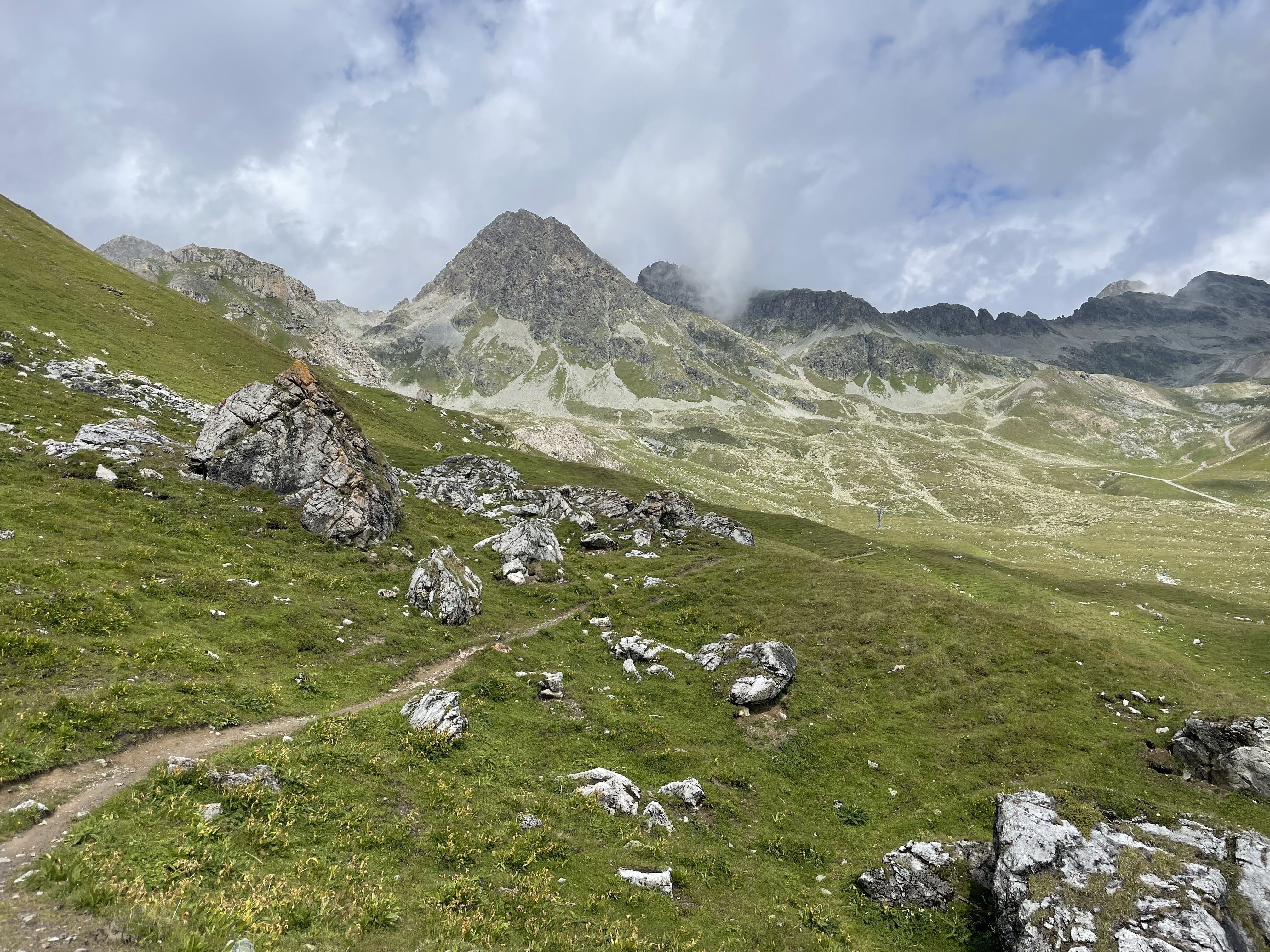
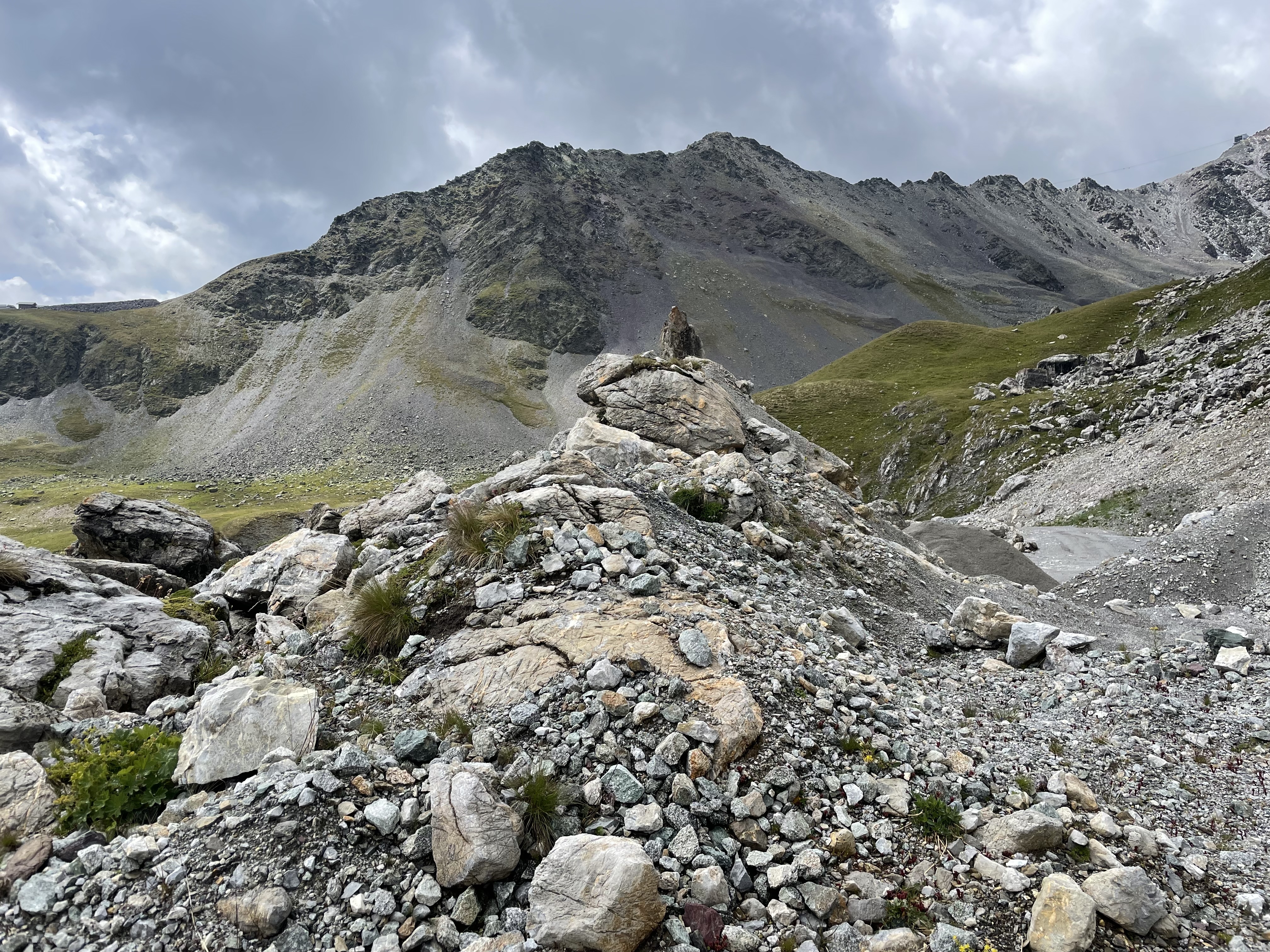
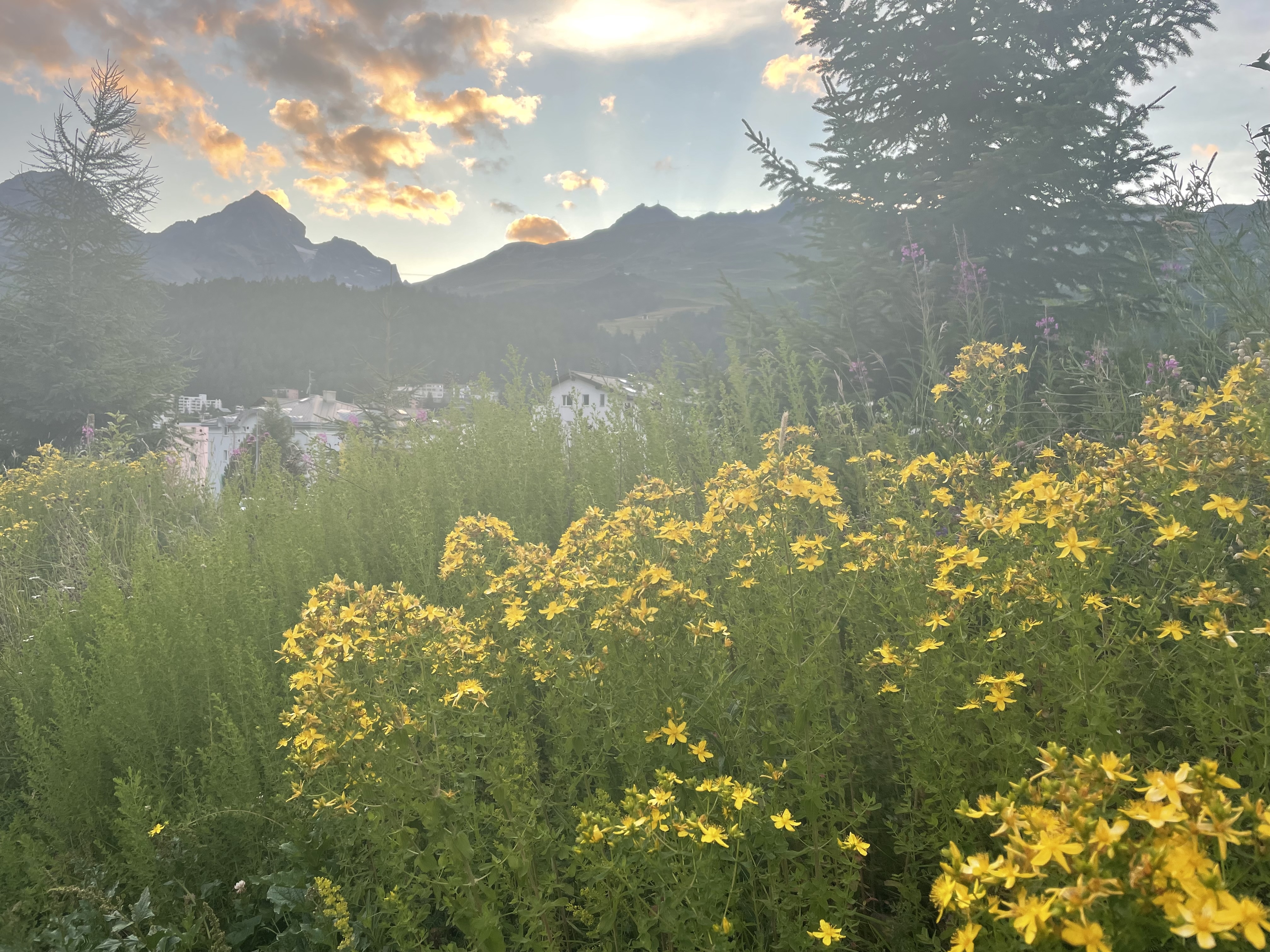
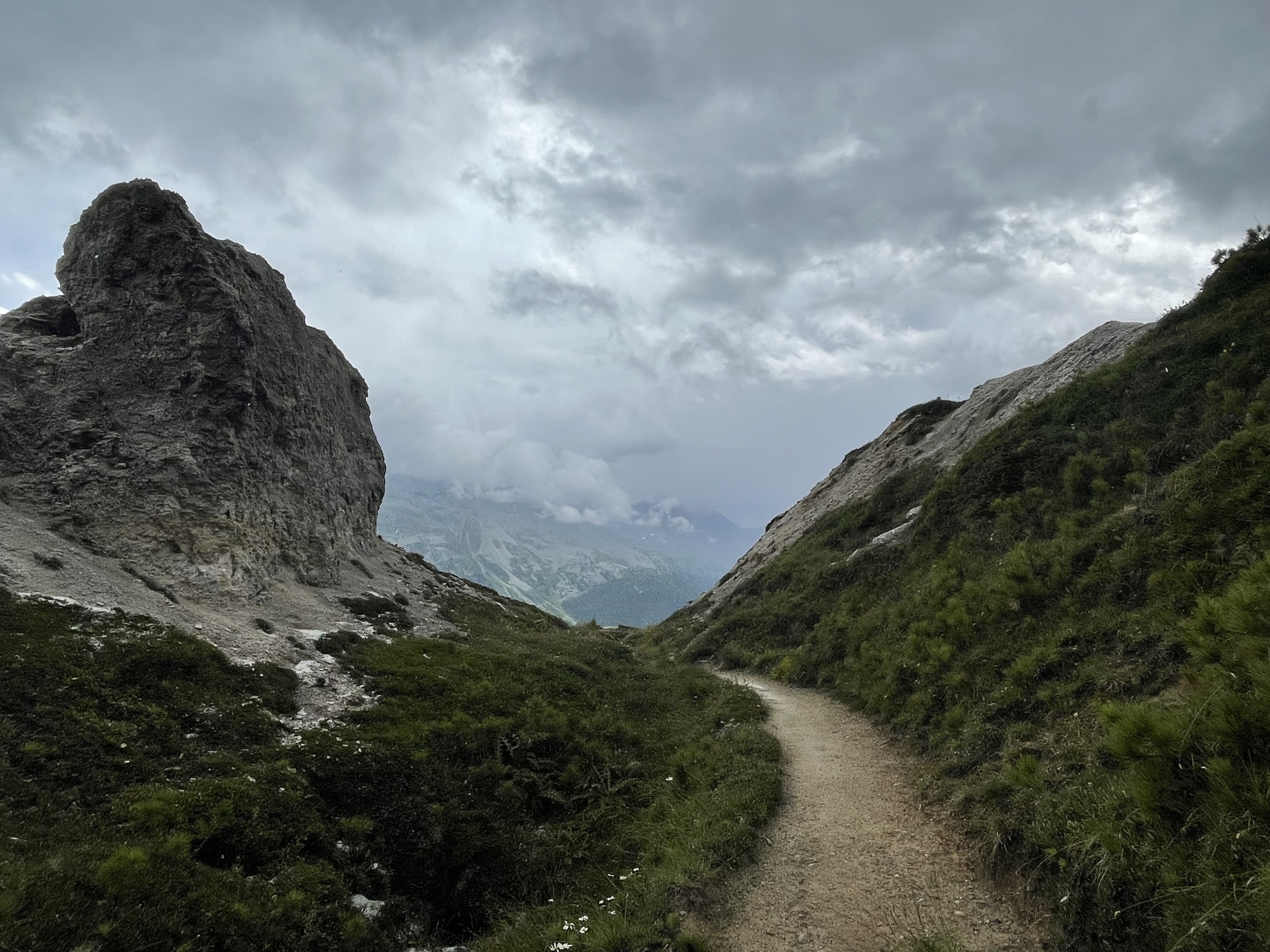
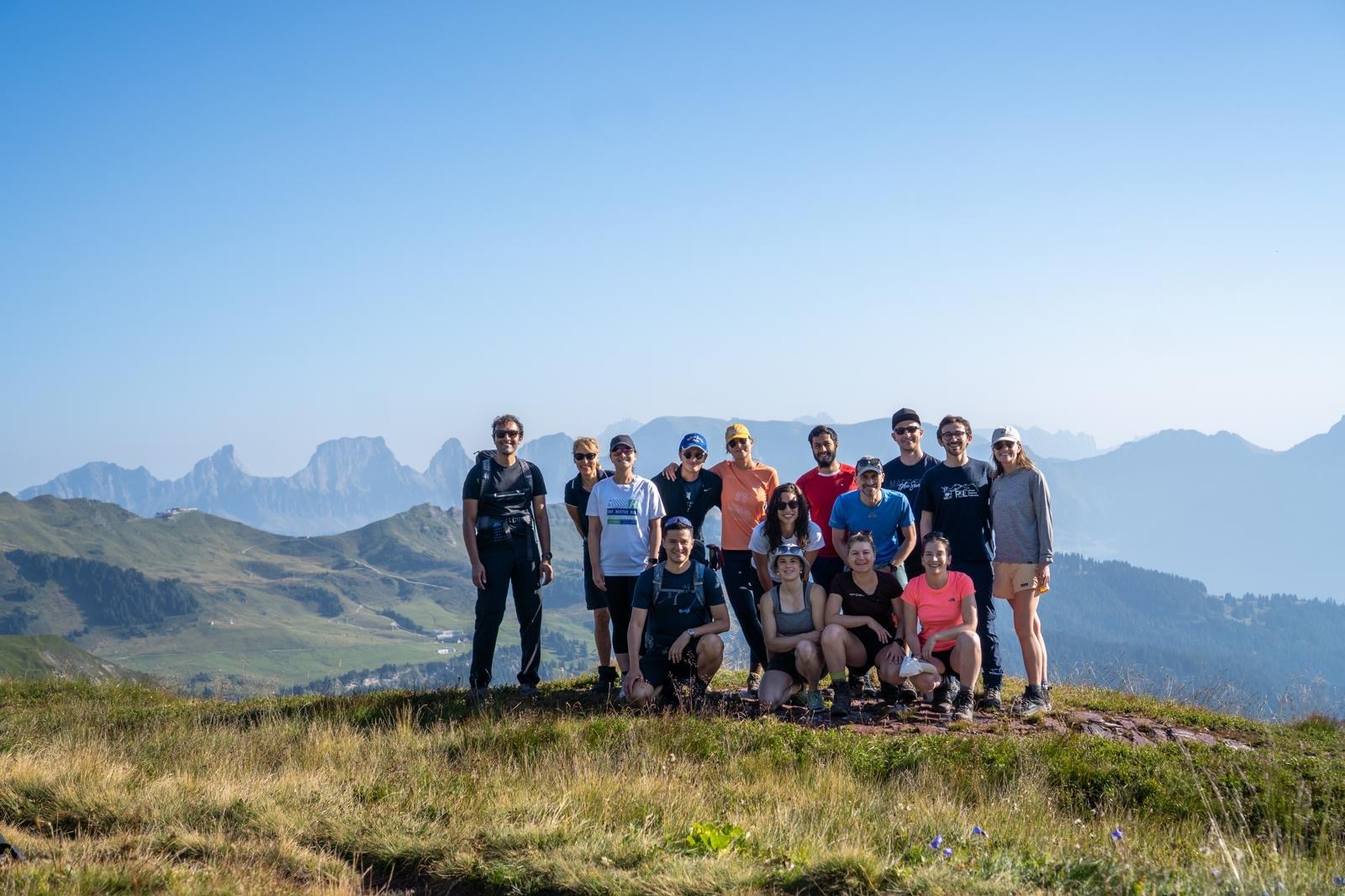
Later, the Power Systems Lab came together for a mountain weekend to do Spitzmeilen. These days were stitched with laughter, hikes, and long dinners where stories carried into the night. It reminded me that research communities are not only about ideas, but also about the bonds that form in wild, shared places. A lab of indiviudals from Switzerland, the U.S., India, Costa Rica, Germany, Italy, and France, drastically different lives but with more commonalities than differences.
The Tour du Mont Blanc was another test entirely. Over a few days I circled the white crown of the Alps, passing from Switzerland to Italy to France and back again. Nearly 170 kilometers and 10,000 meters of climbing: a pilgrimage of switchbacks, wildflowers, and morning light spilling down glacier valleys. Each day, the mountain demanded humility—through weather that shifted in an instant, through the power of long climbs, and through the awe of landscapes so vast they seemed to press time itself outward. Completeing TMB was something I had aspired to do for a long time, so that will be a highlight from my summer!
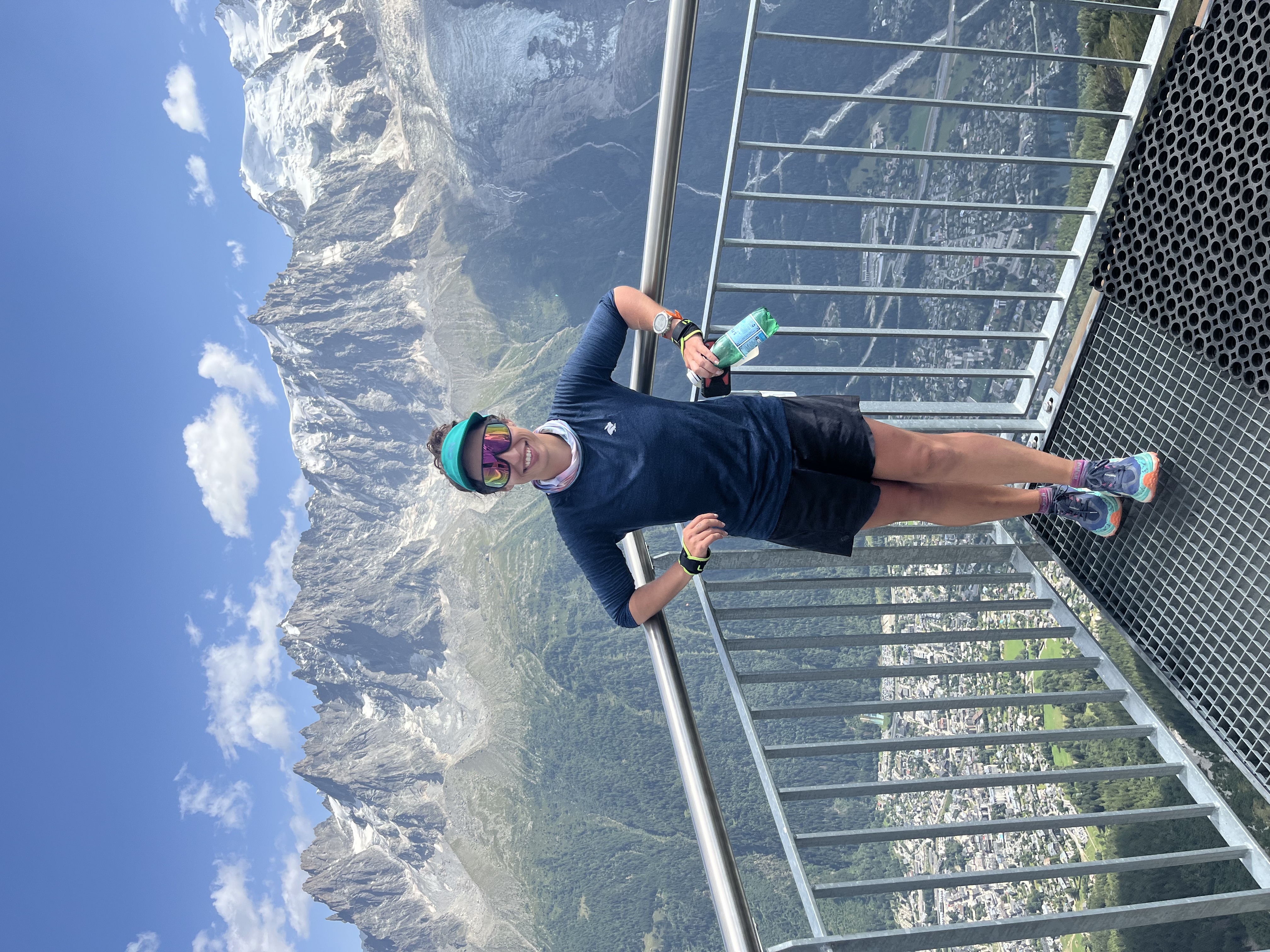
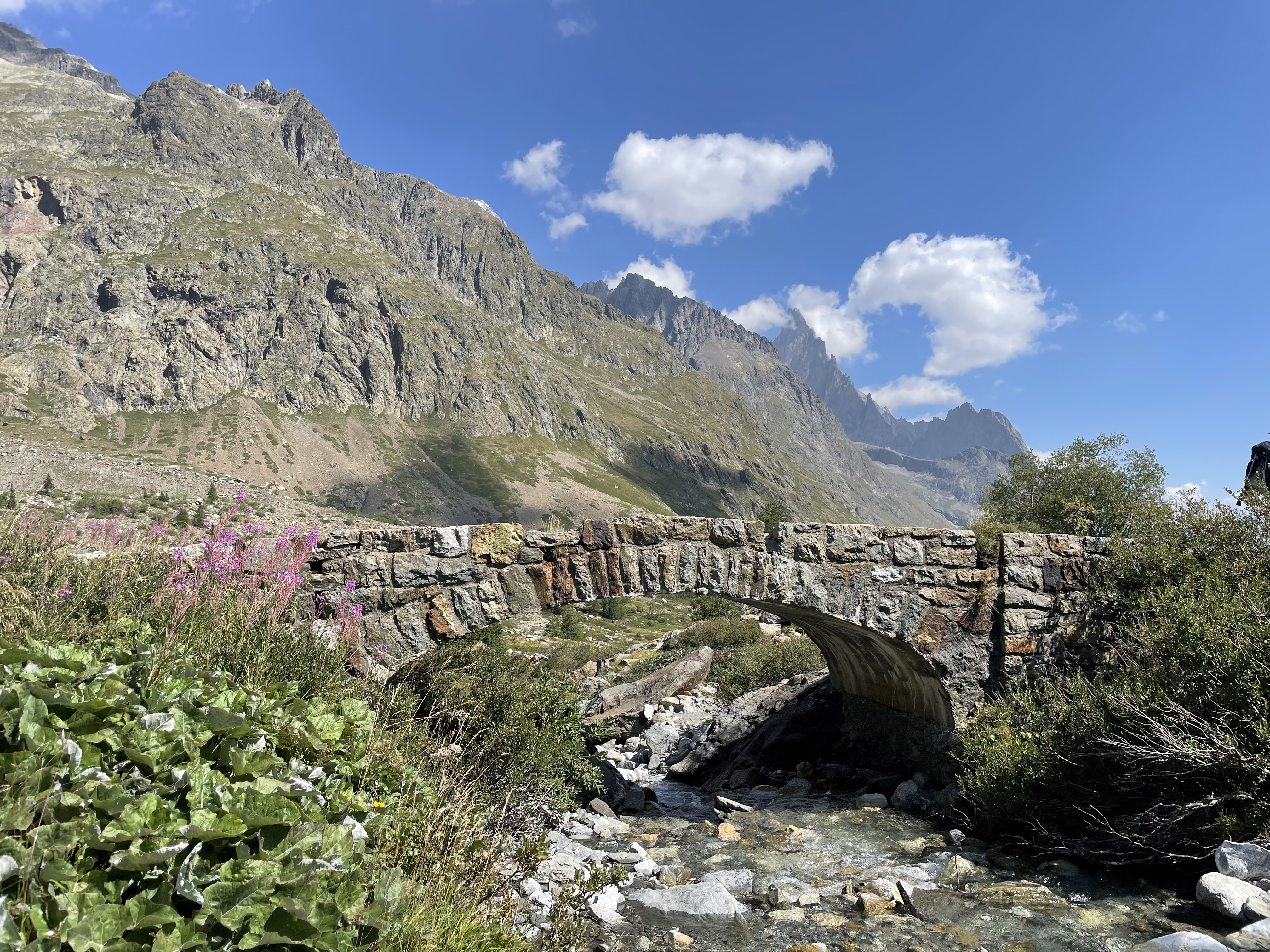
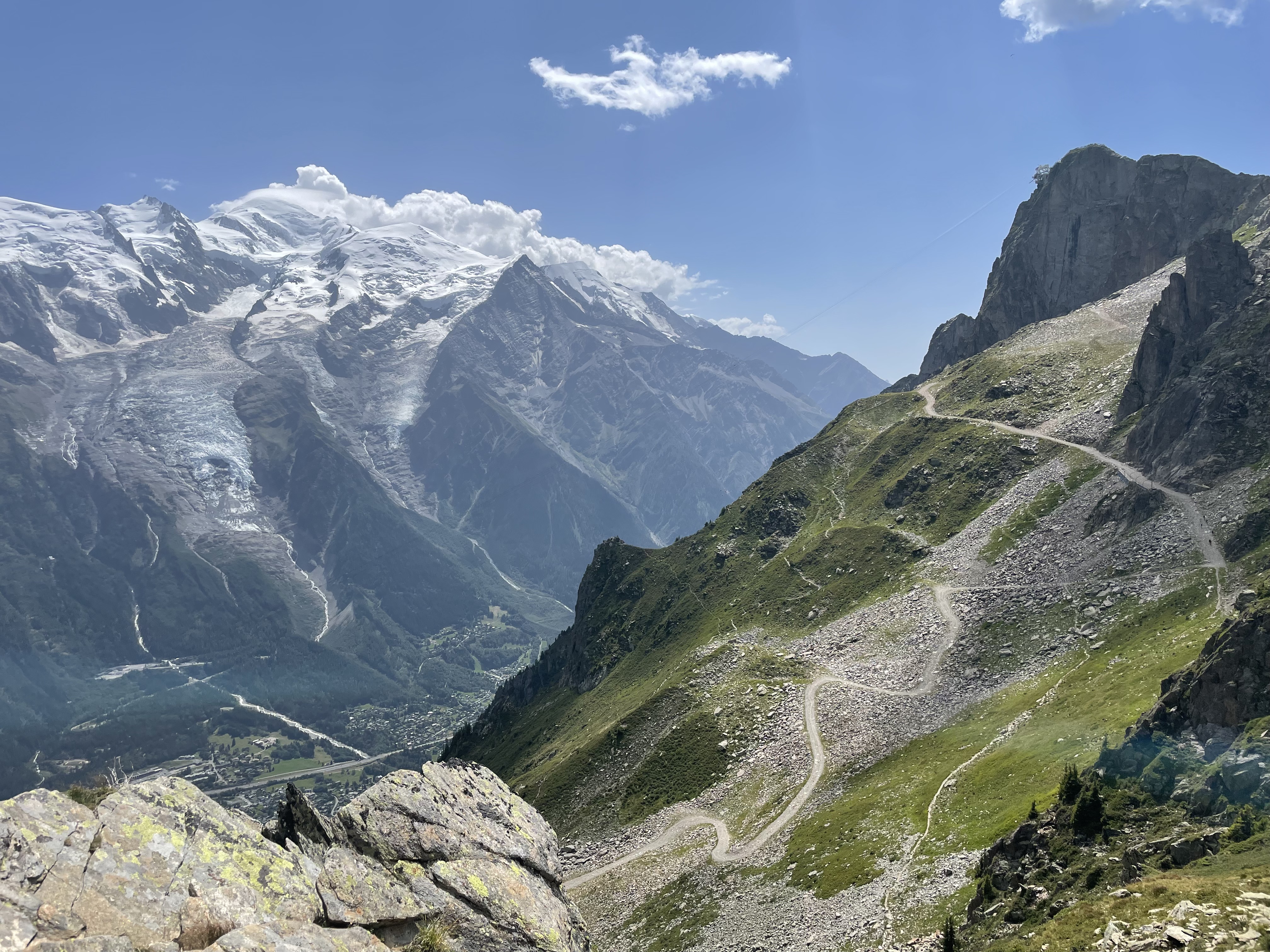
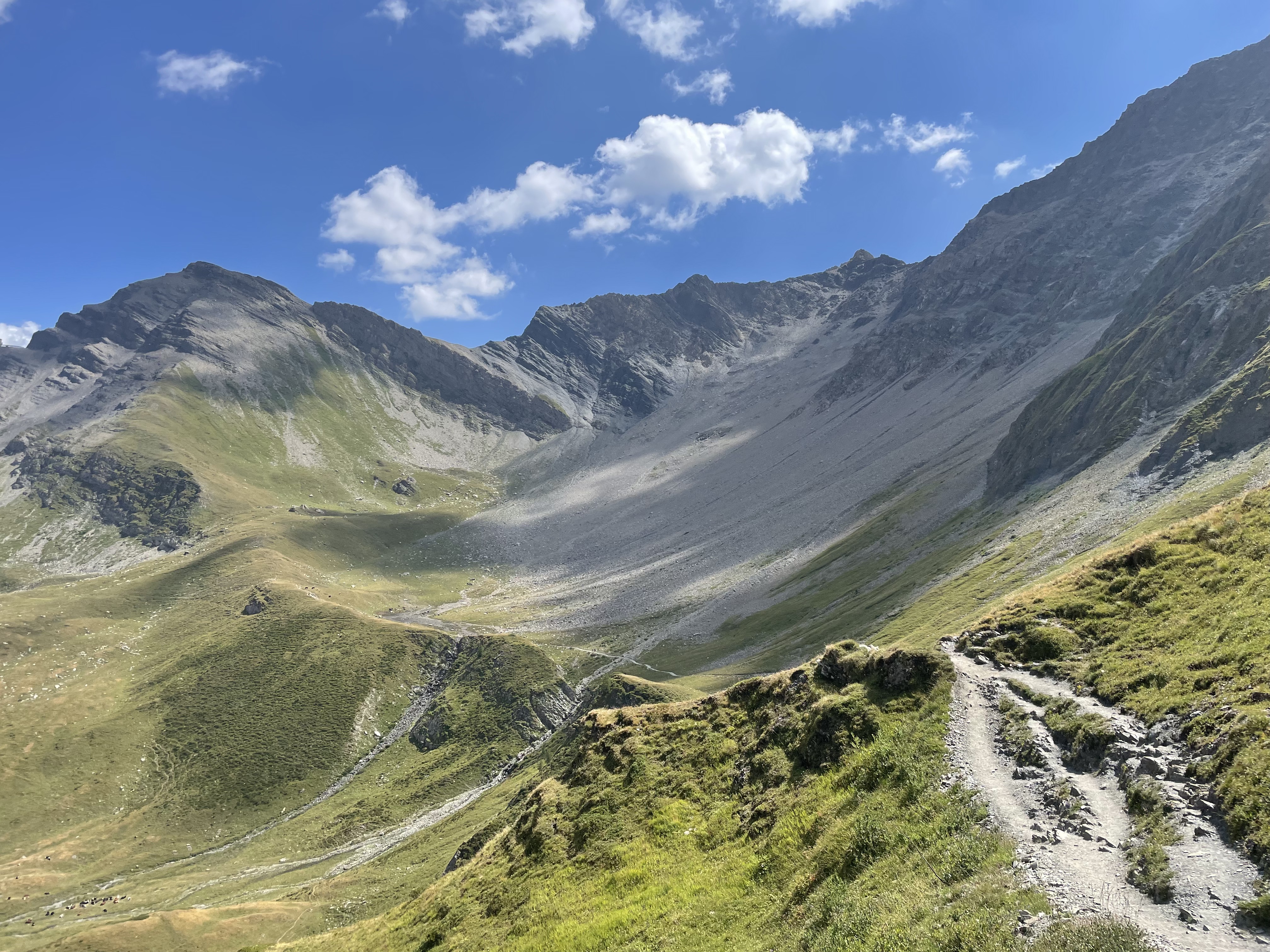
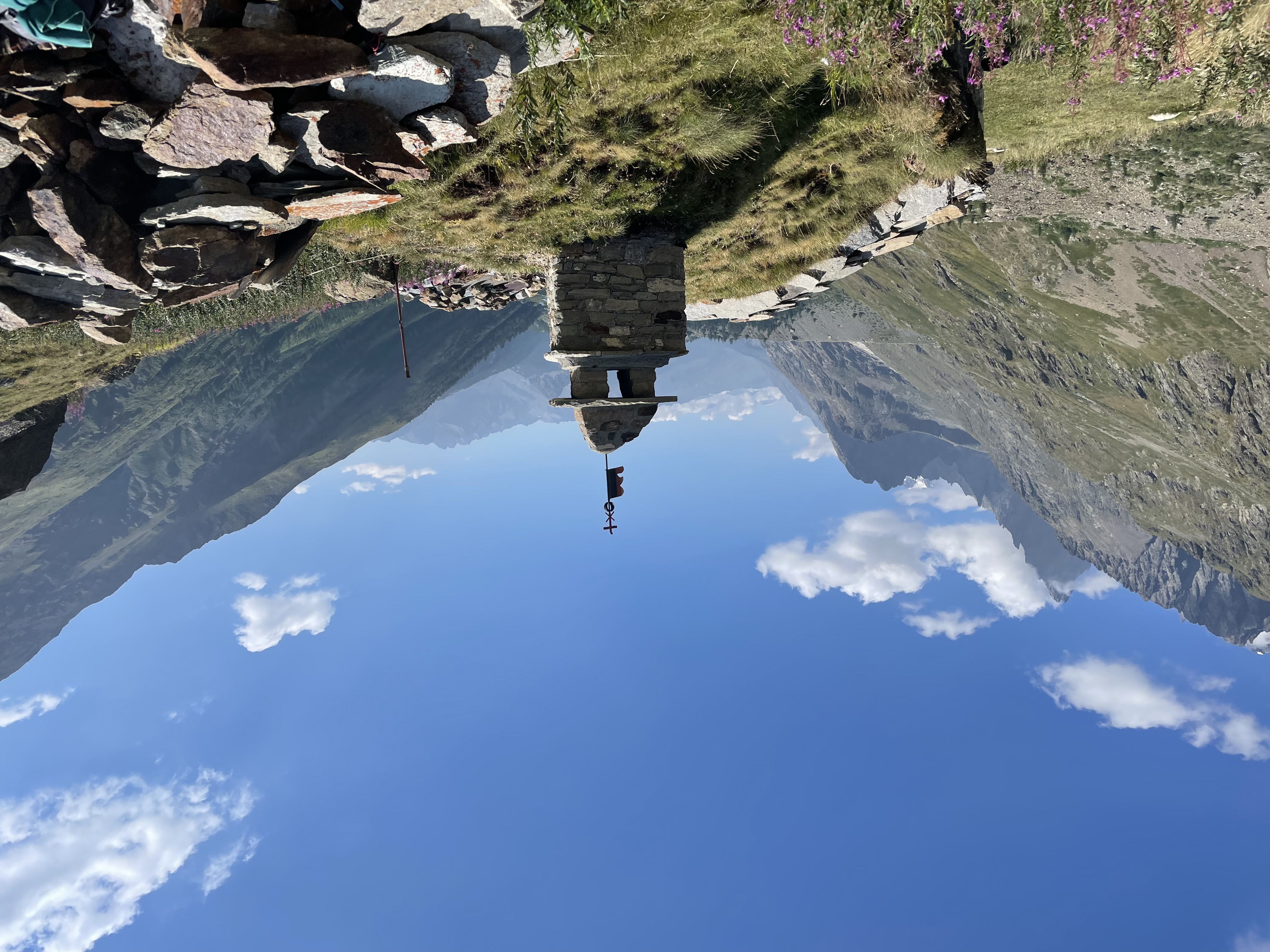
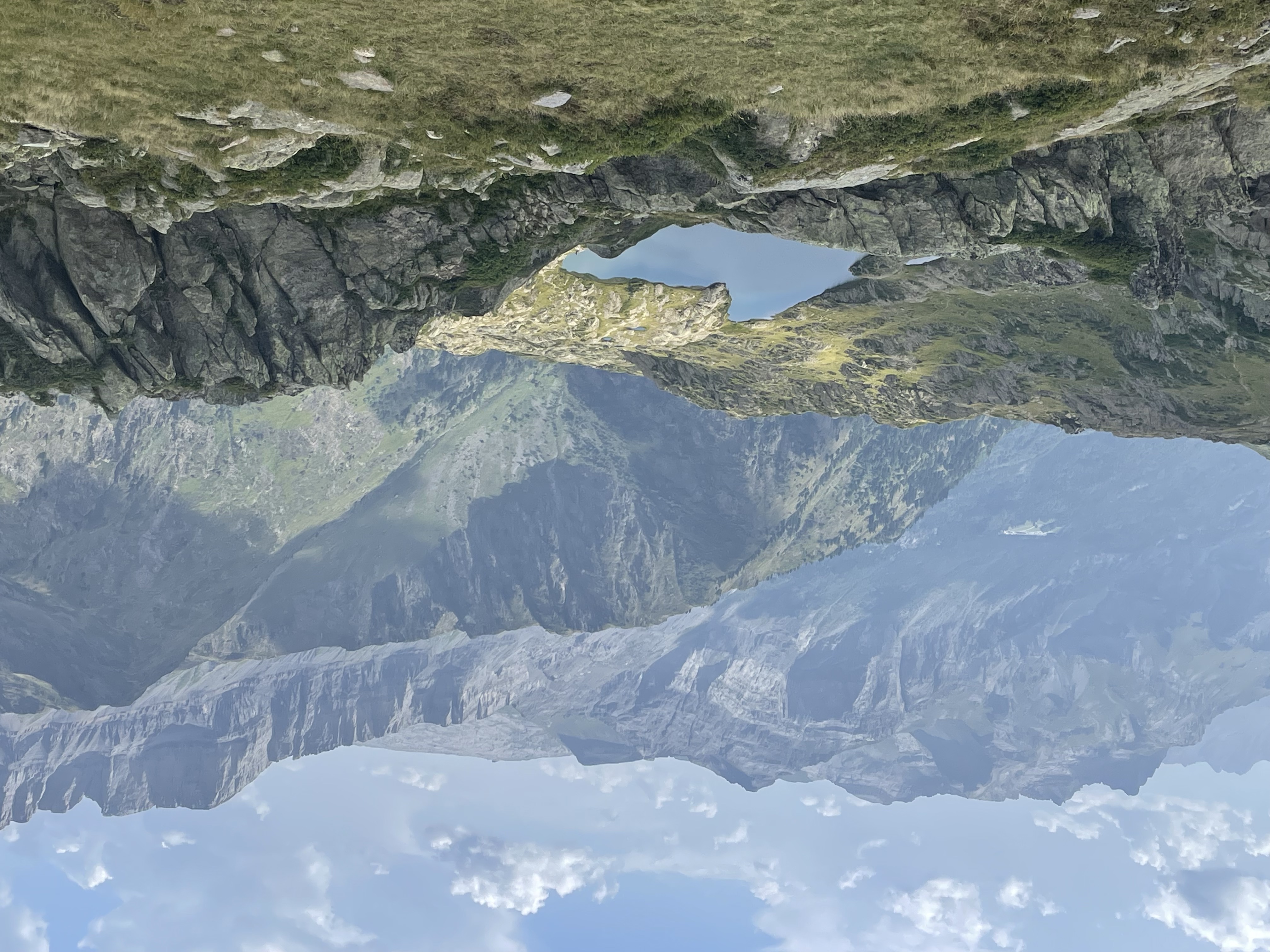
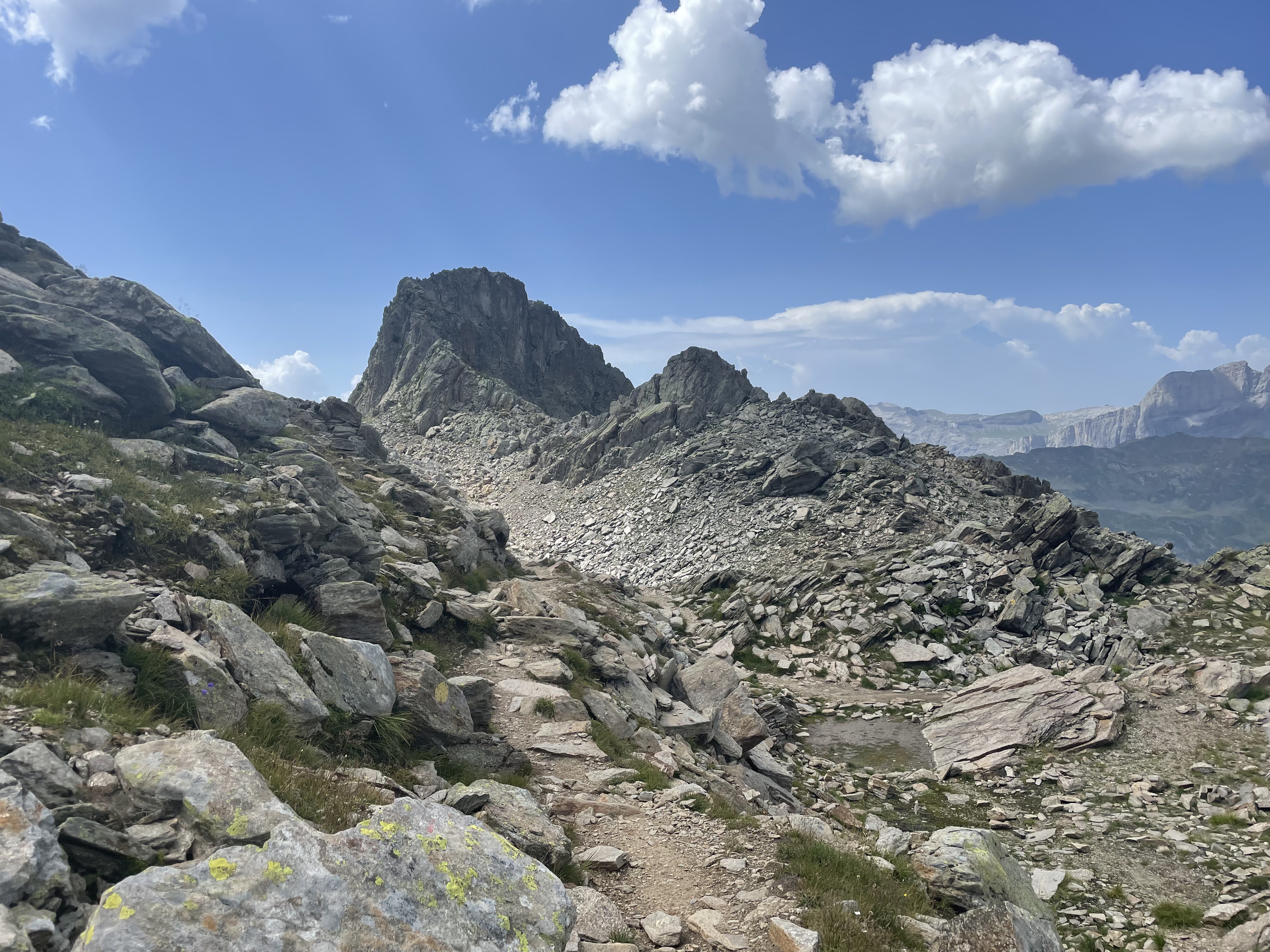
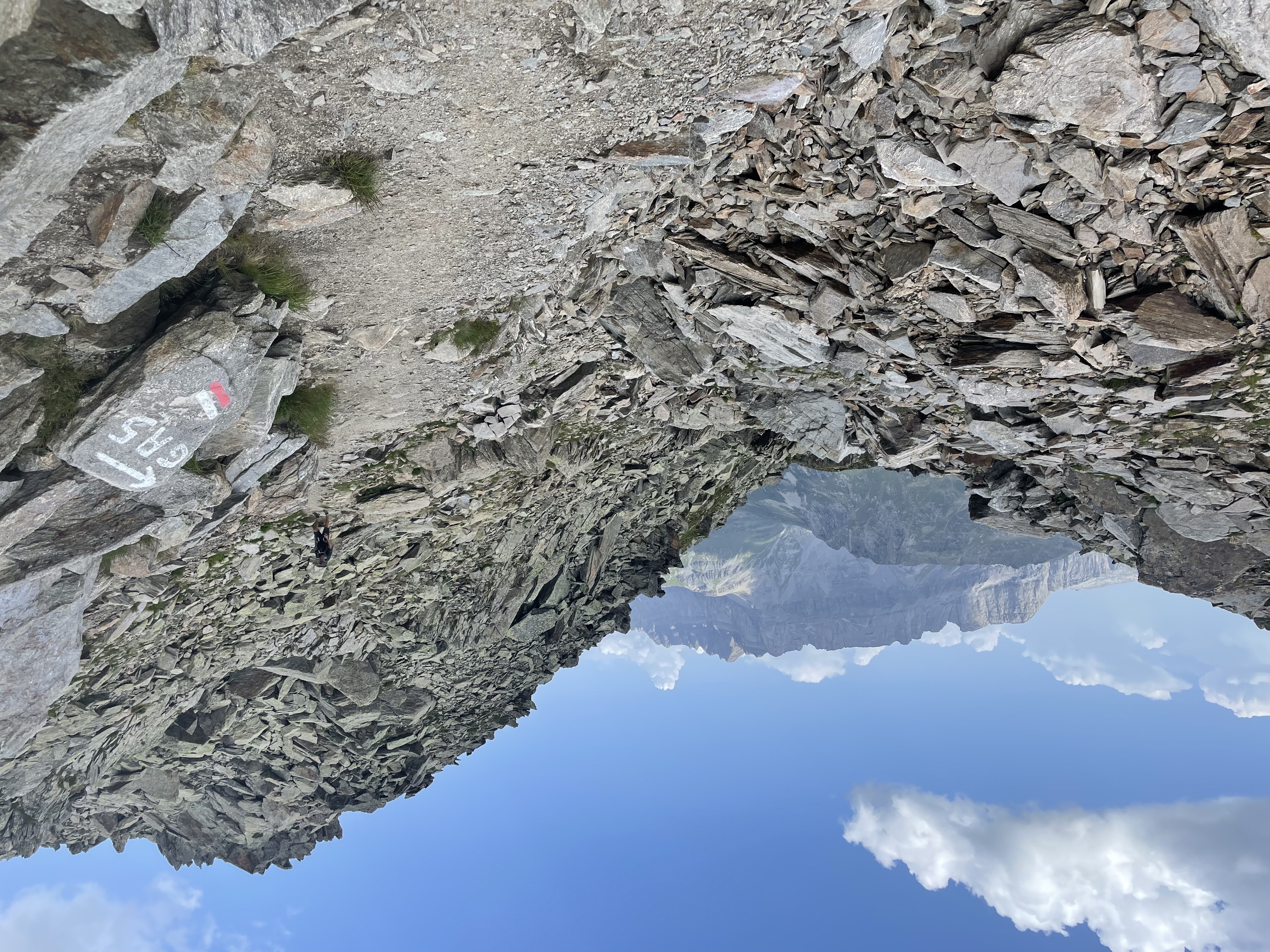
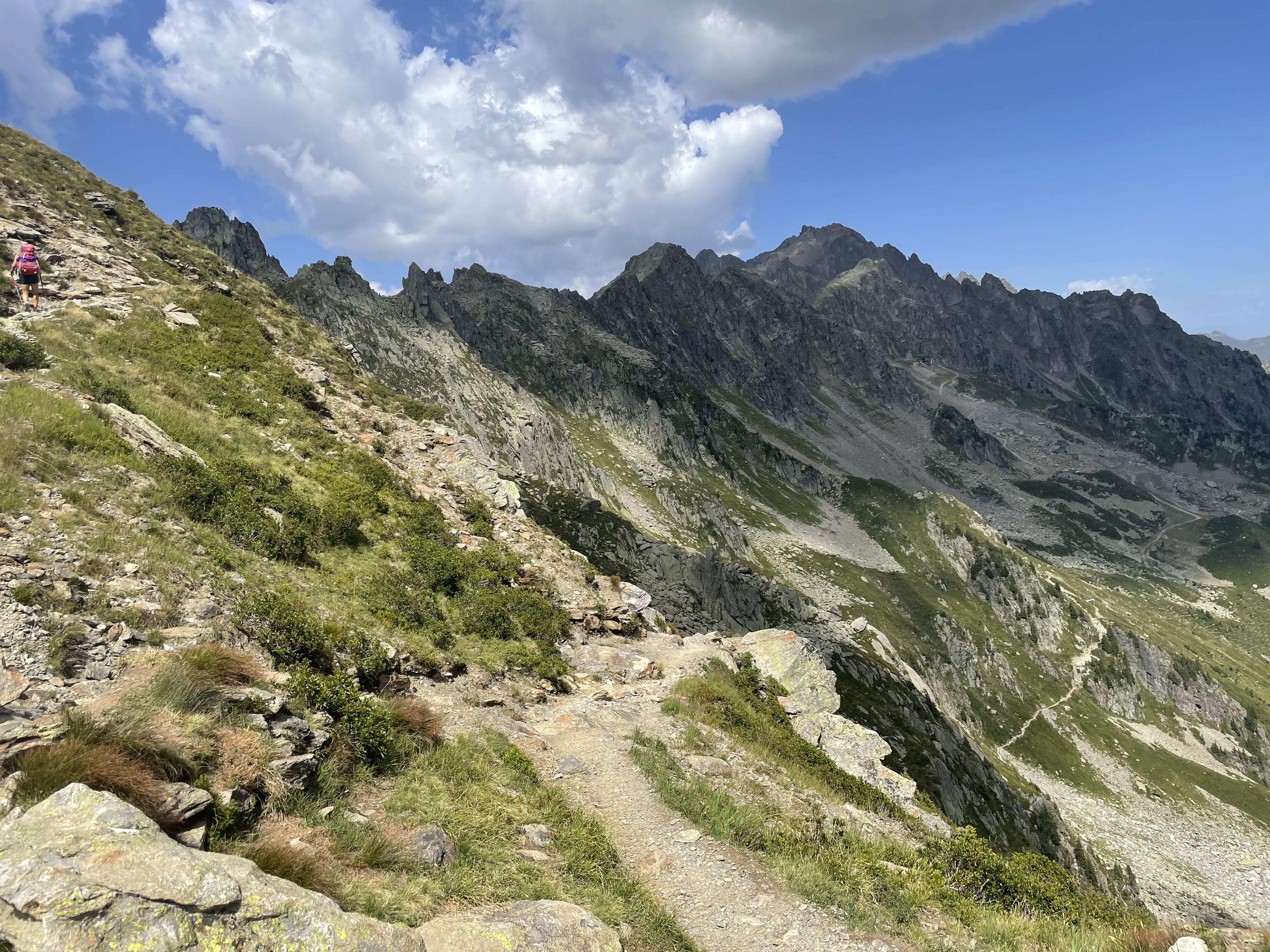
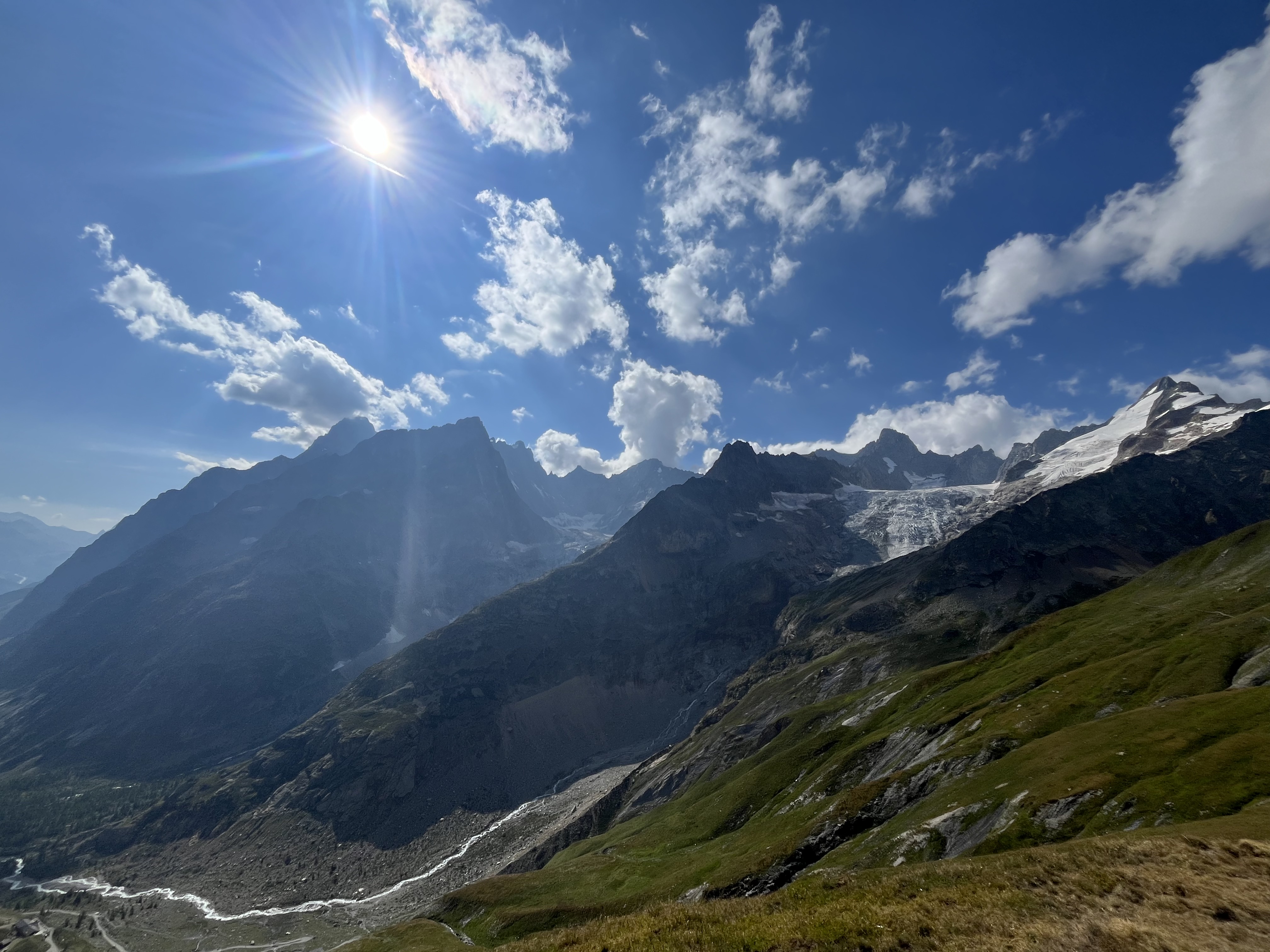
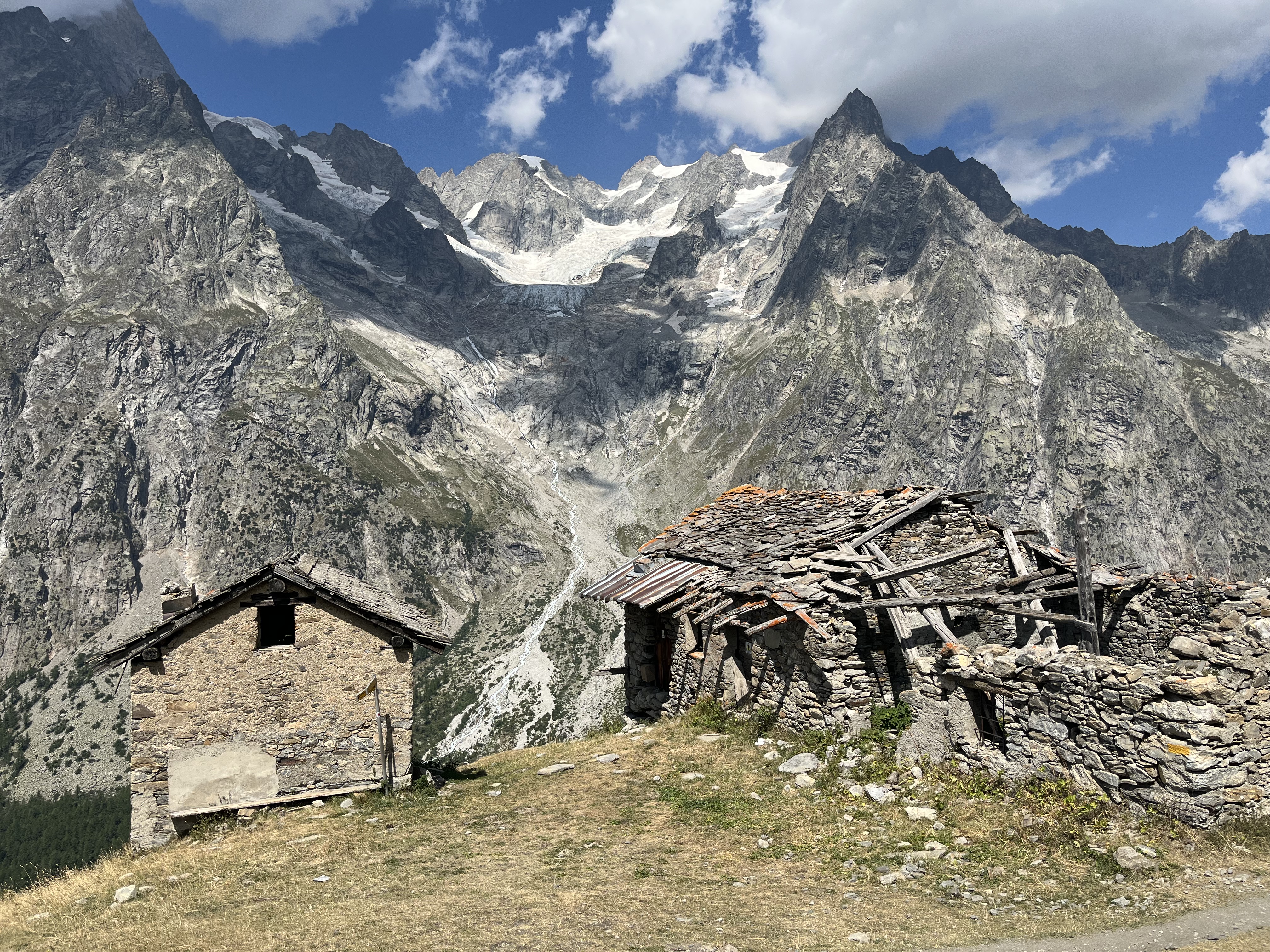
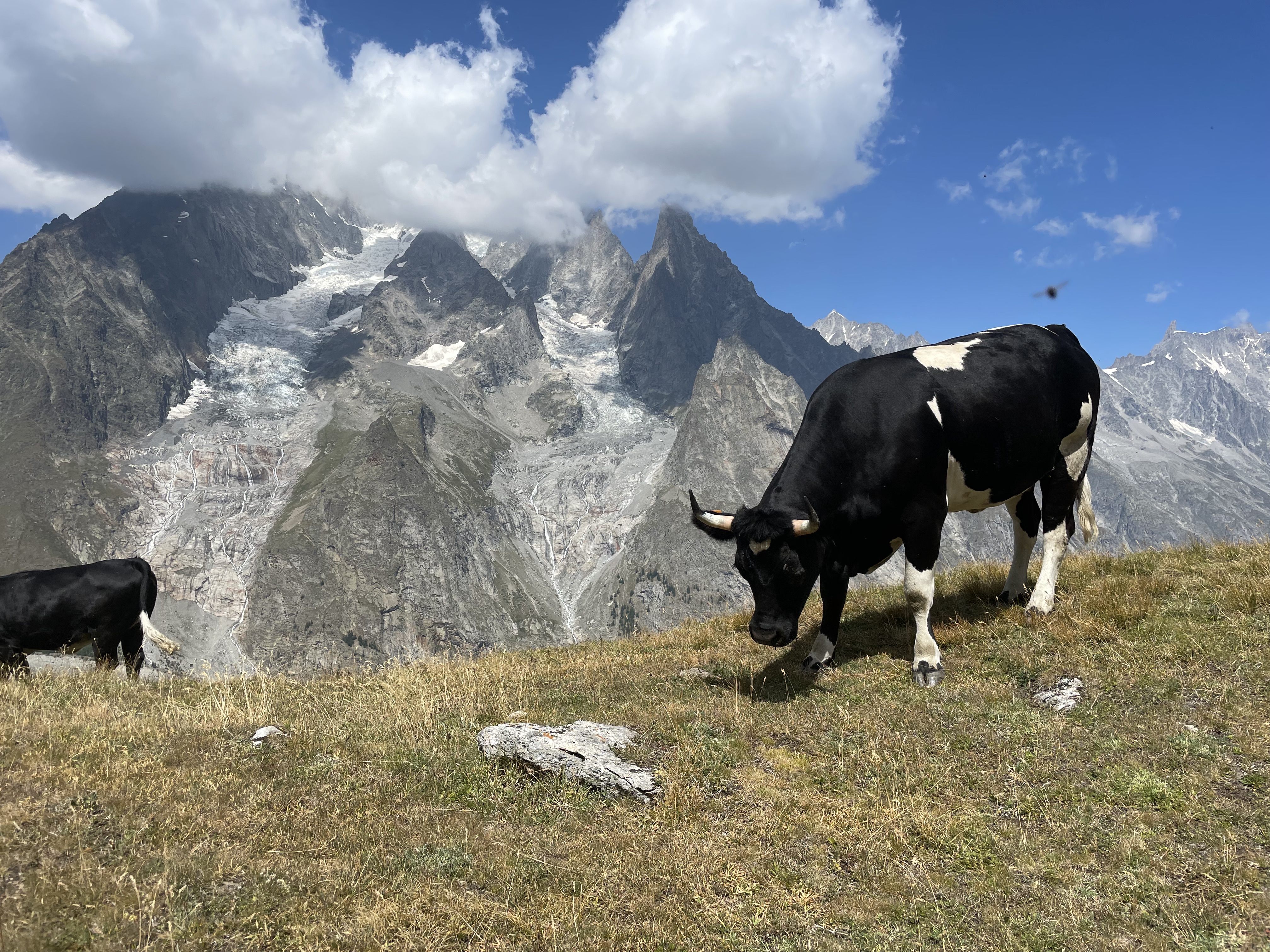
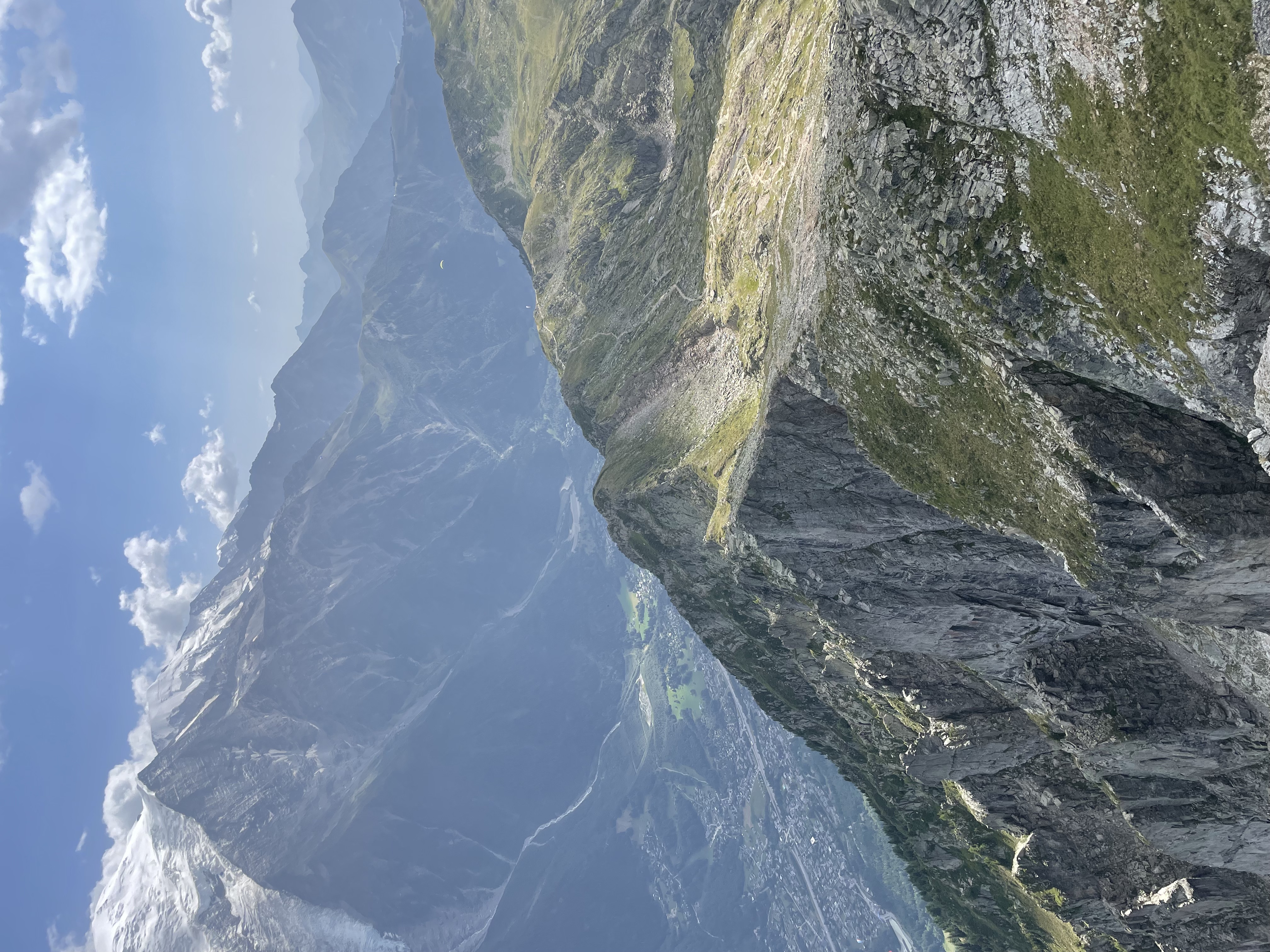
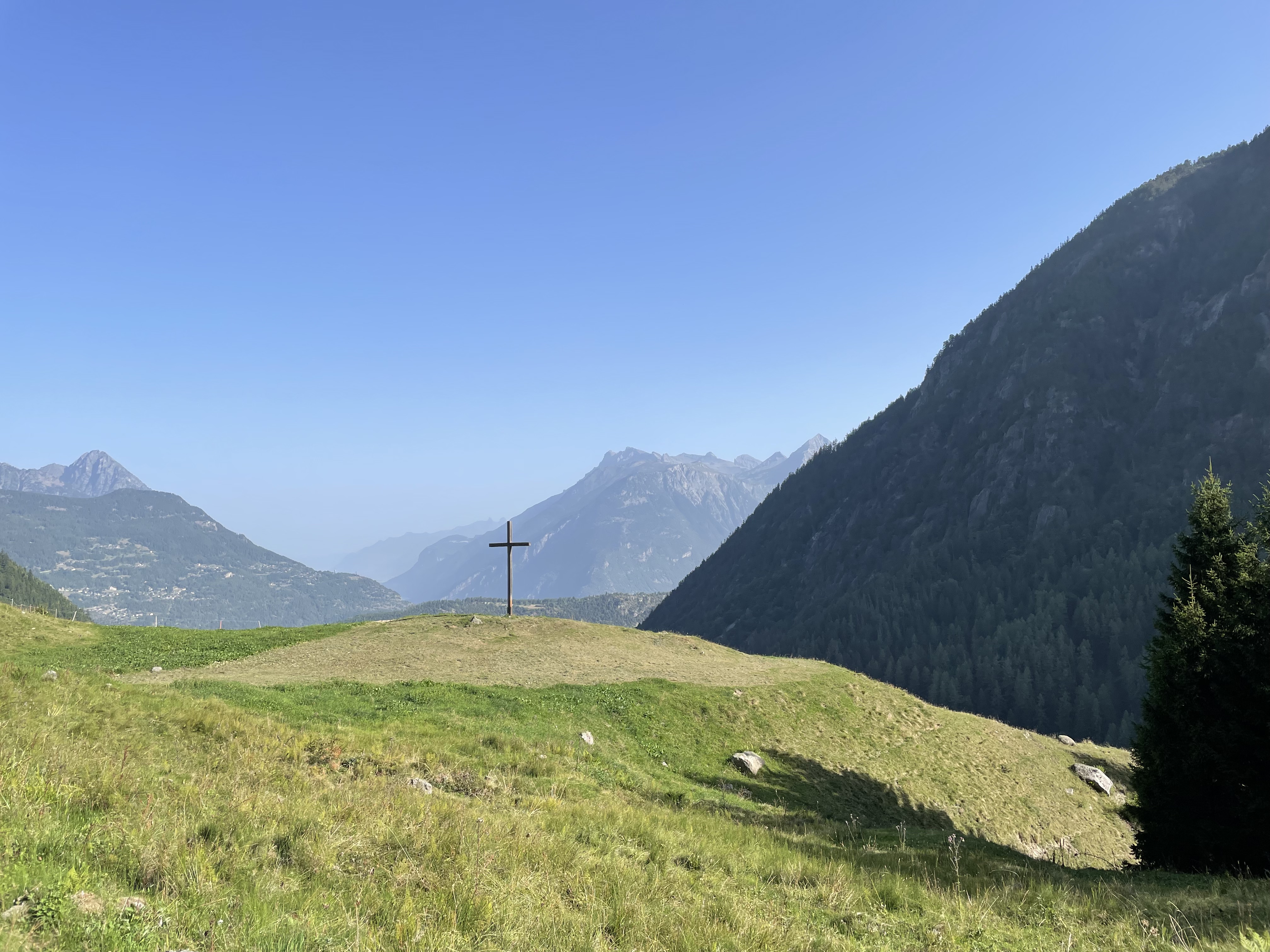
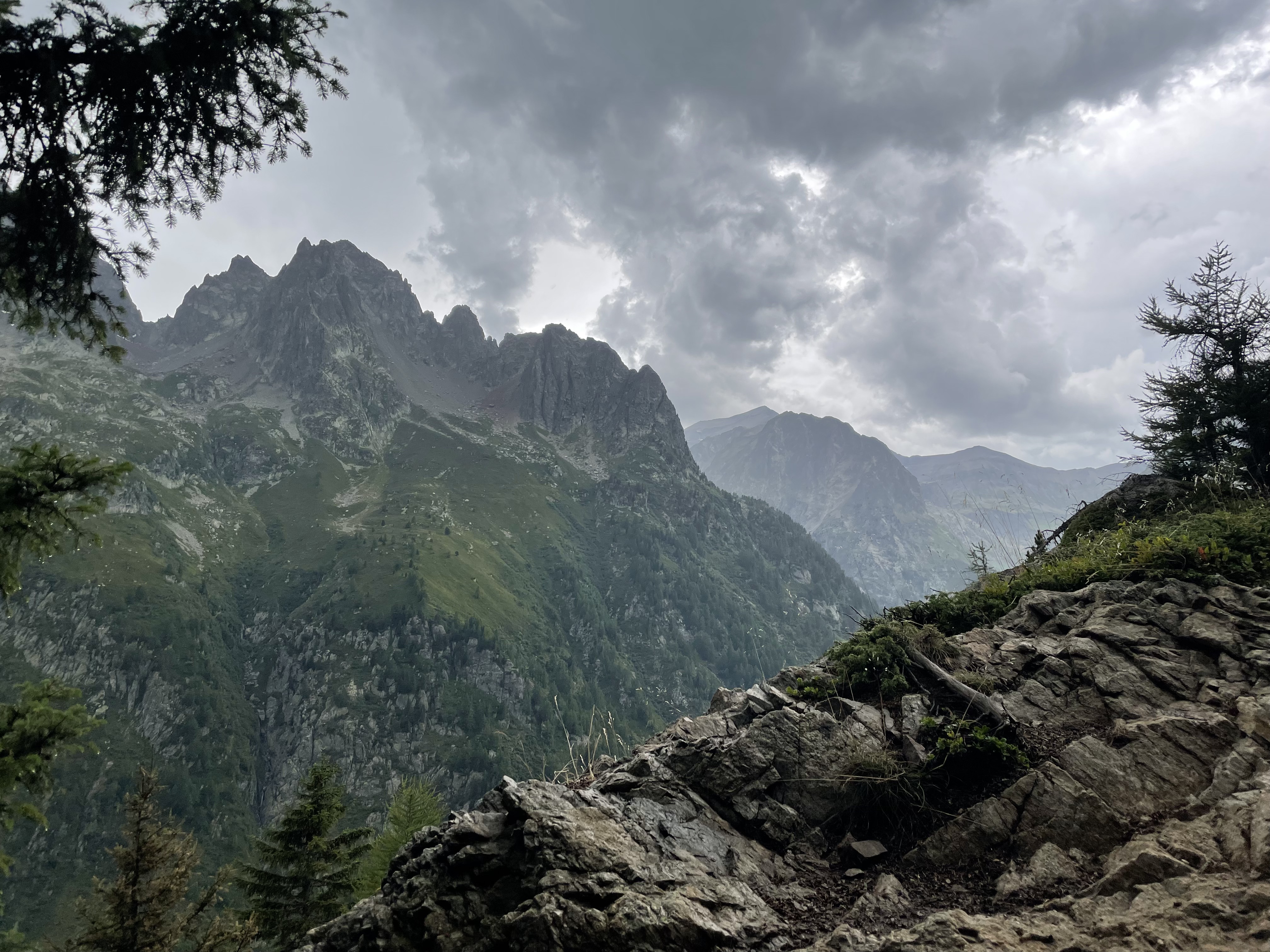
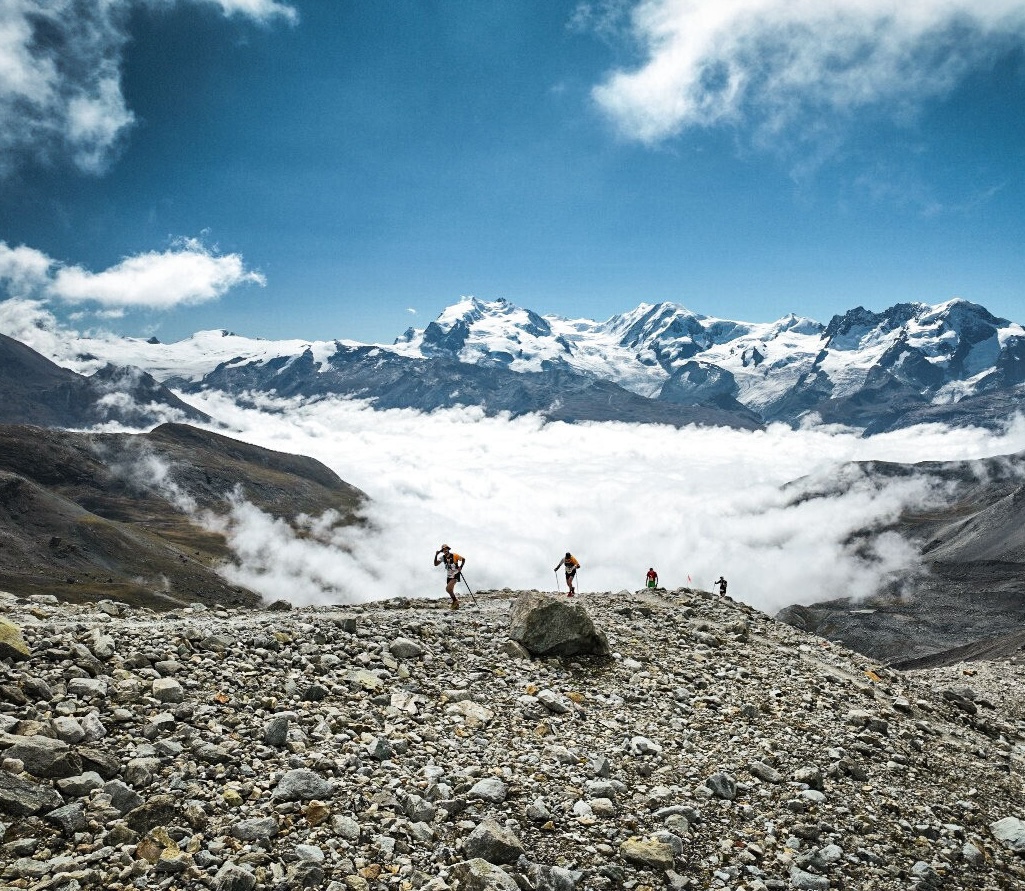
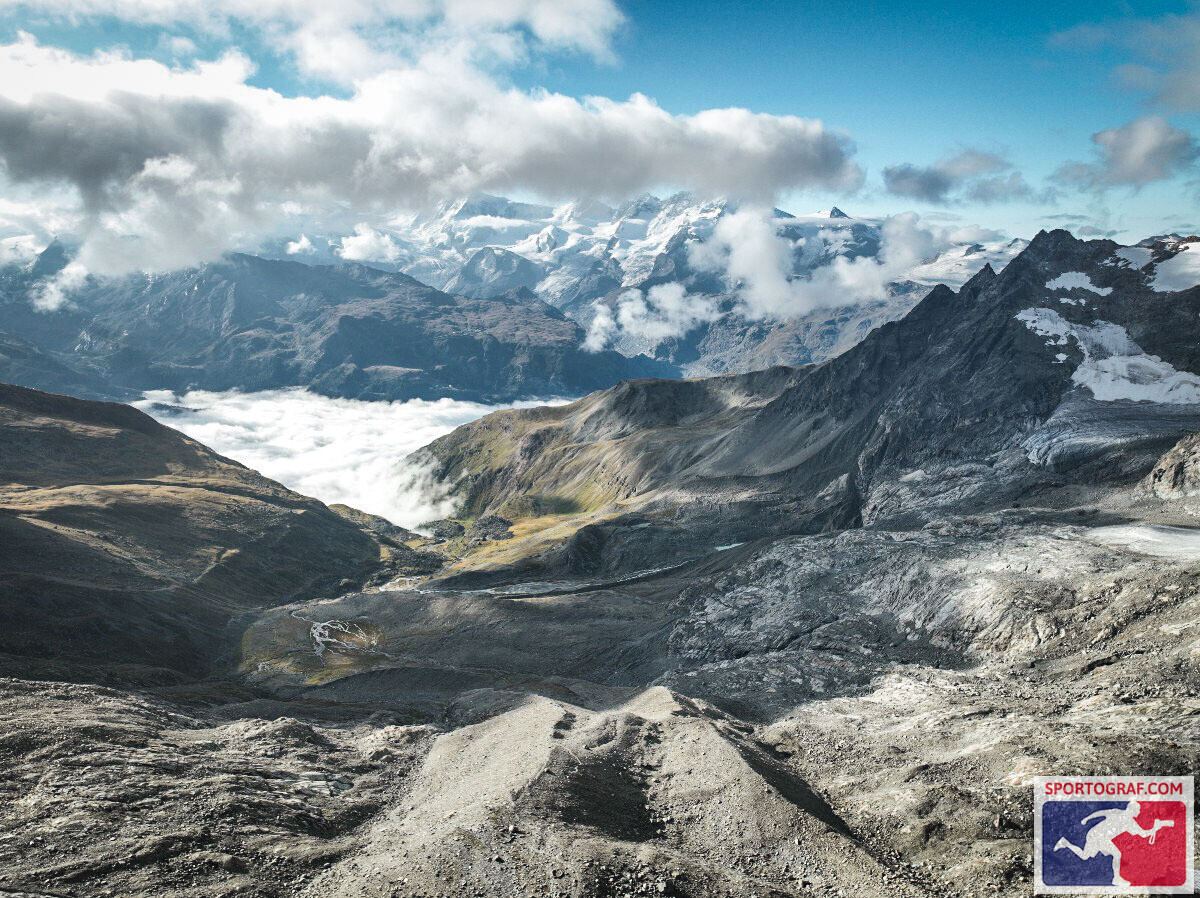
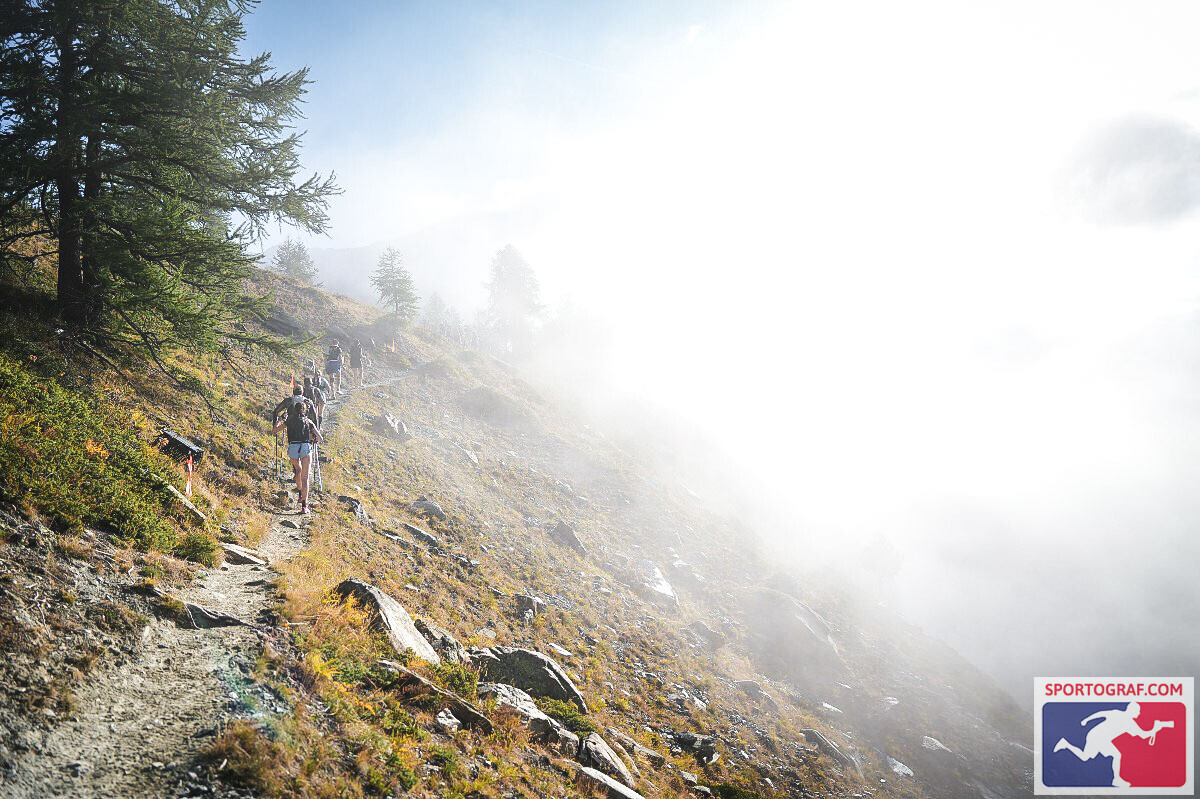
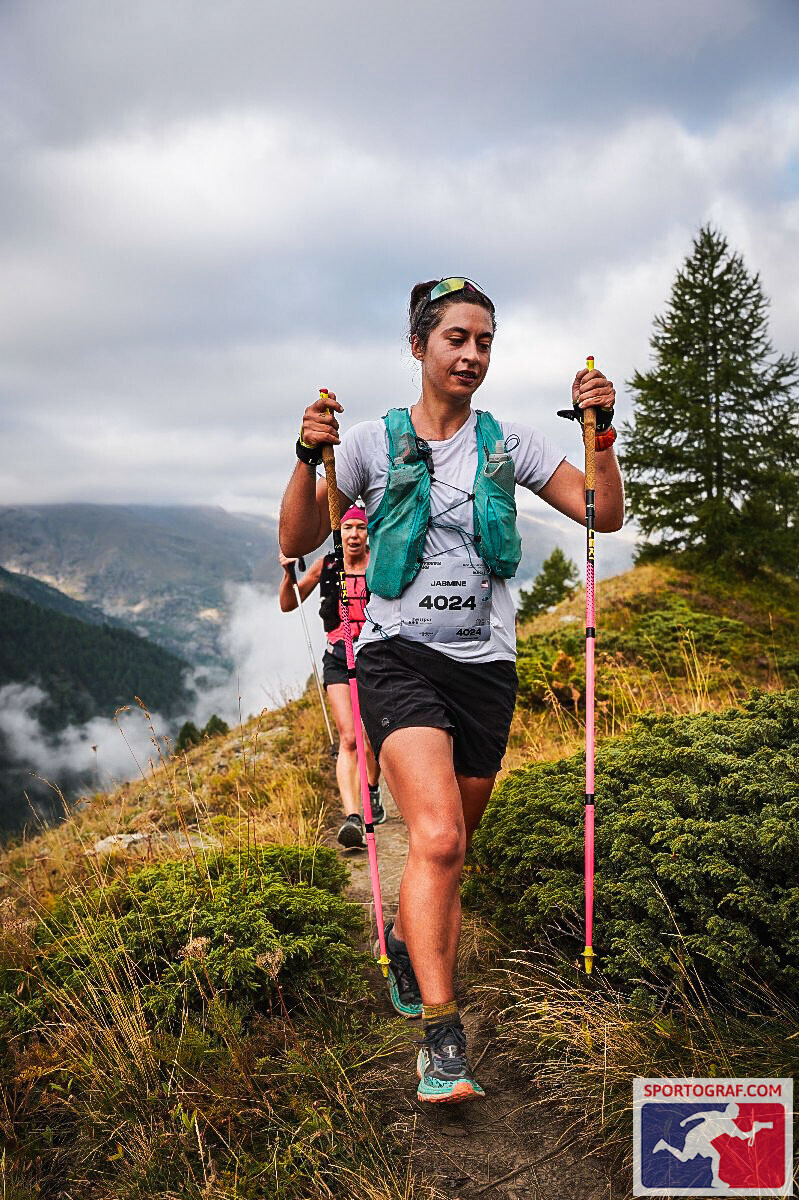
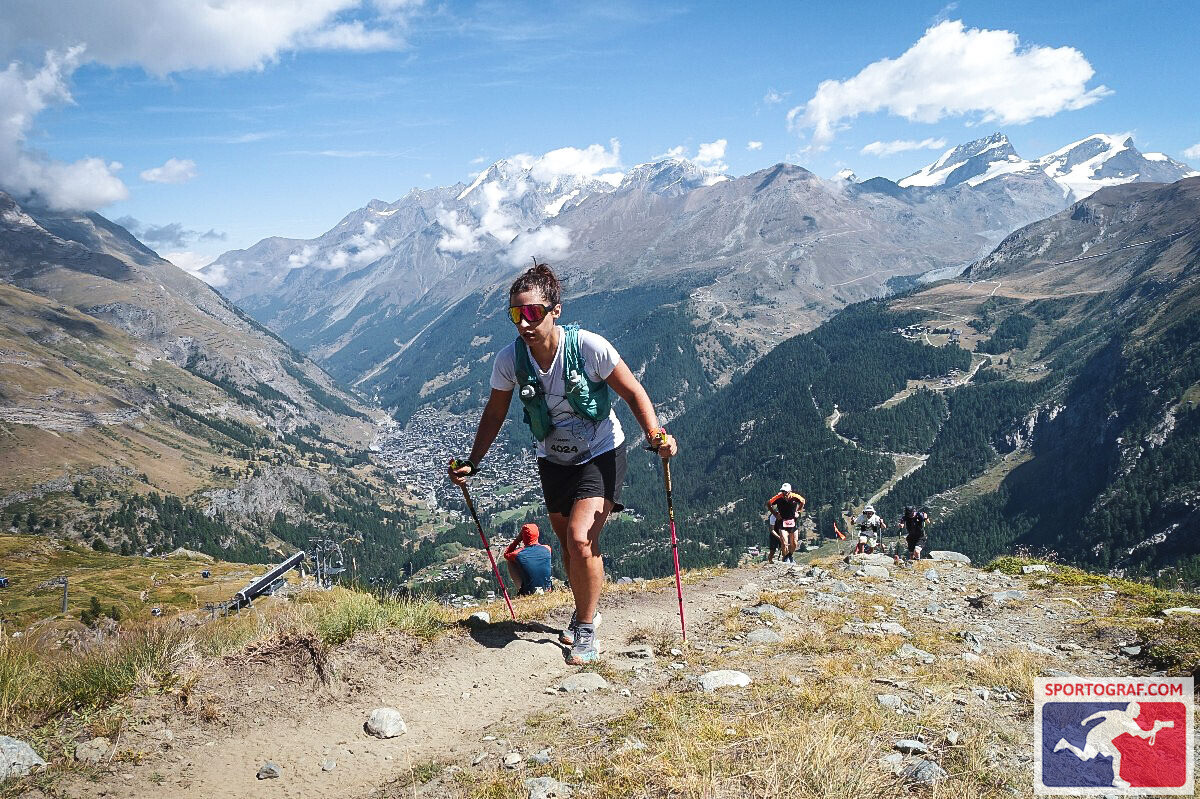
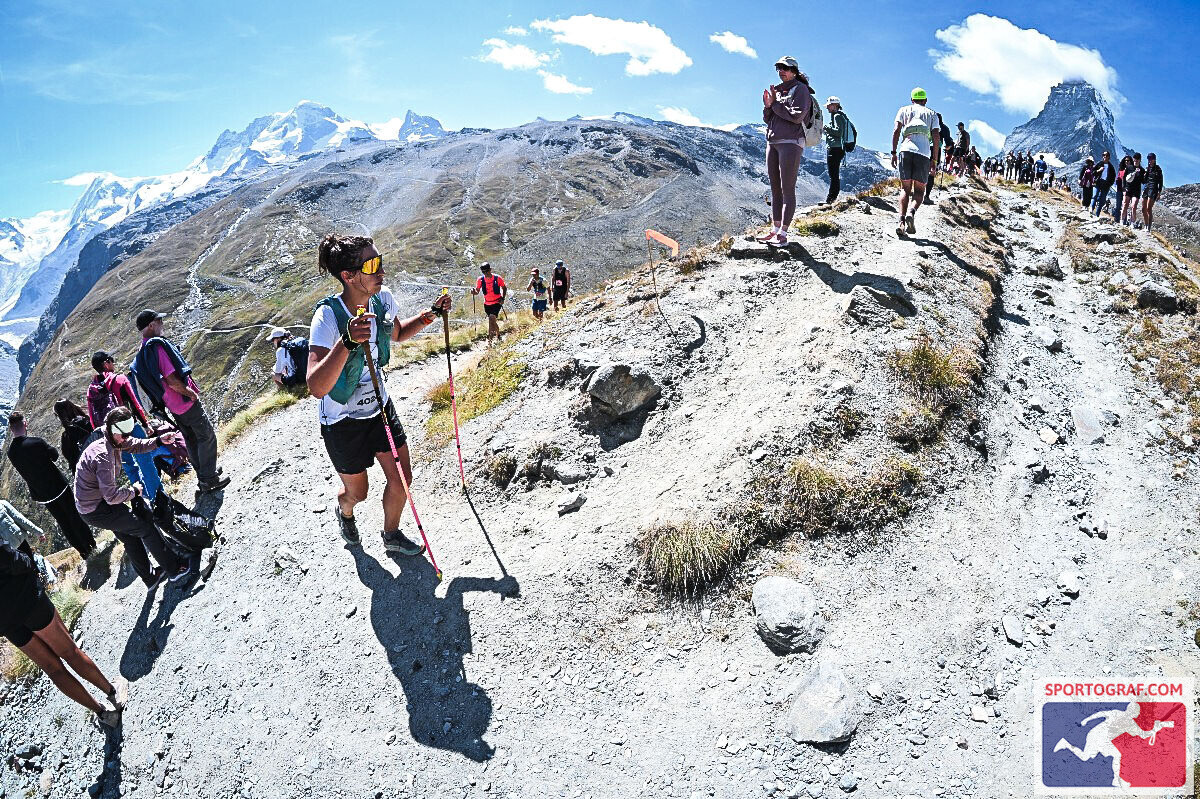
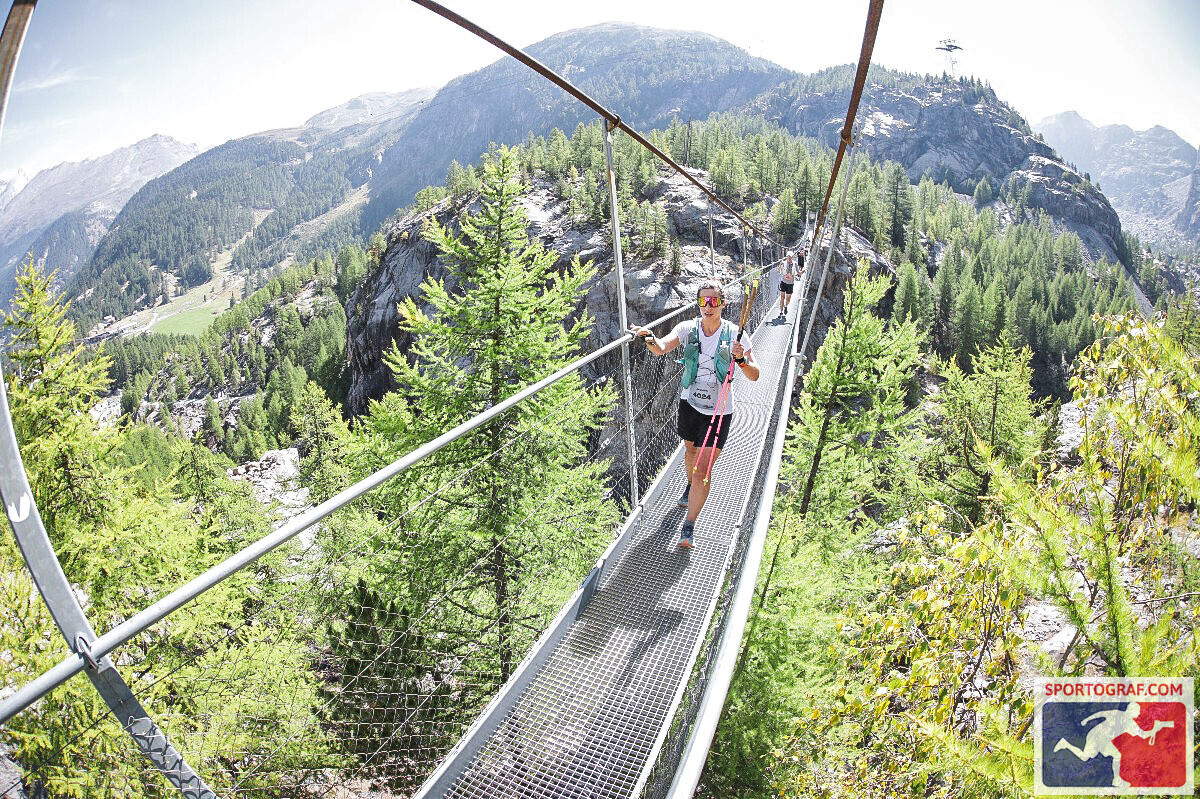
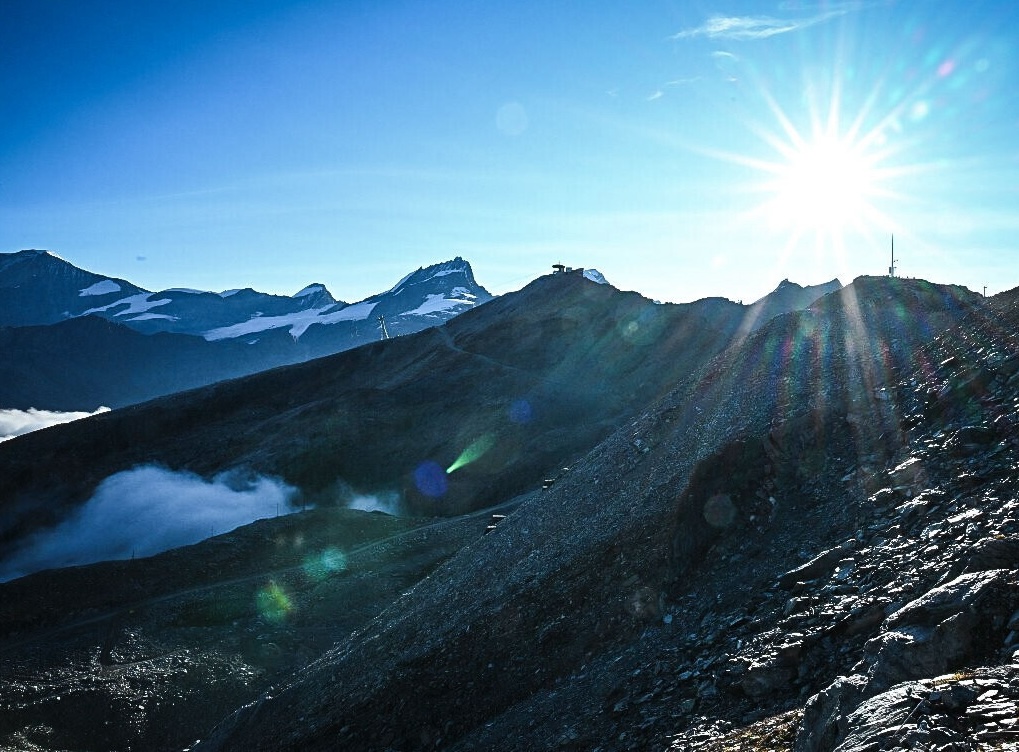
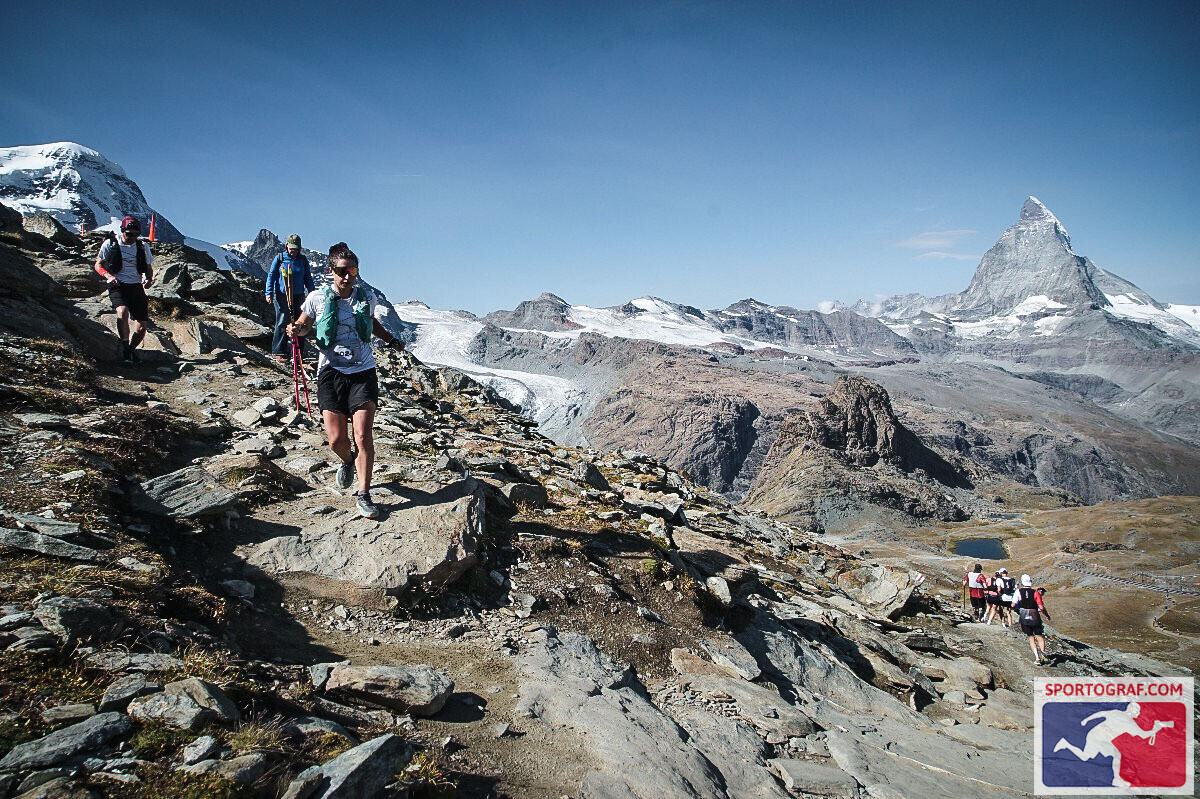
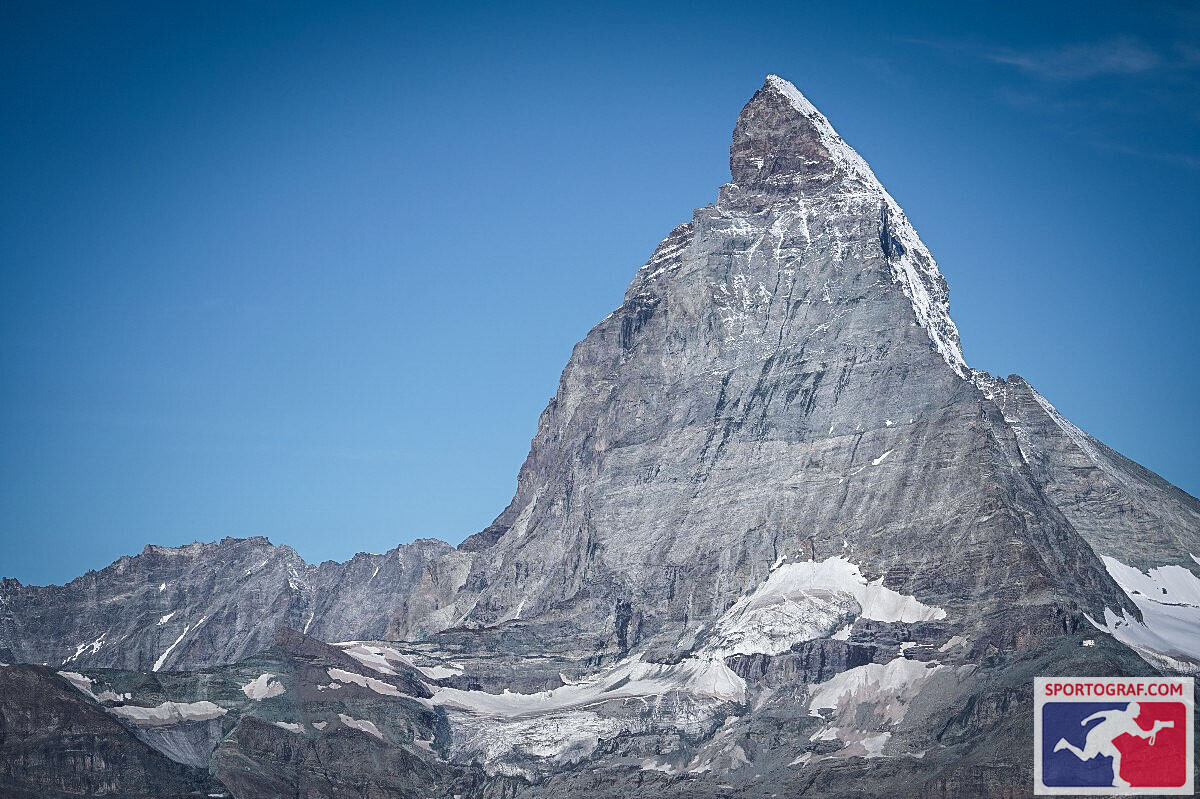
Just a few short days after TMB came the Matterhorn 50k, where I lined up beneath the shadow of one of the most iconic peaks in Europe. The race wound through ridges and moraine, lungs straining in the thin air while the pyramidal giant stood always in view. Every summit was hard-earned (approximately 11k ft of elevation gain and equal loss), every descent wild and fast, and in the end I crossed the finish line with a body emptied but a spirit sharpened.

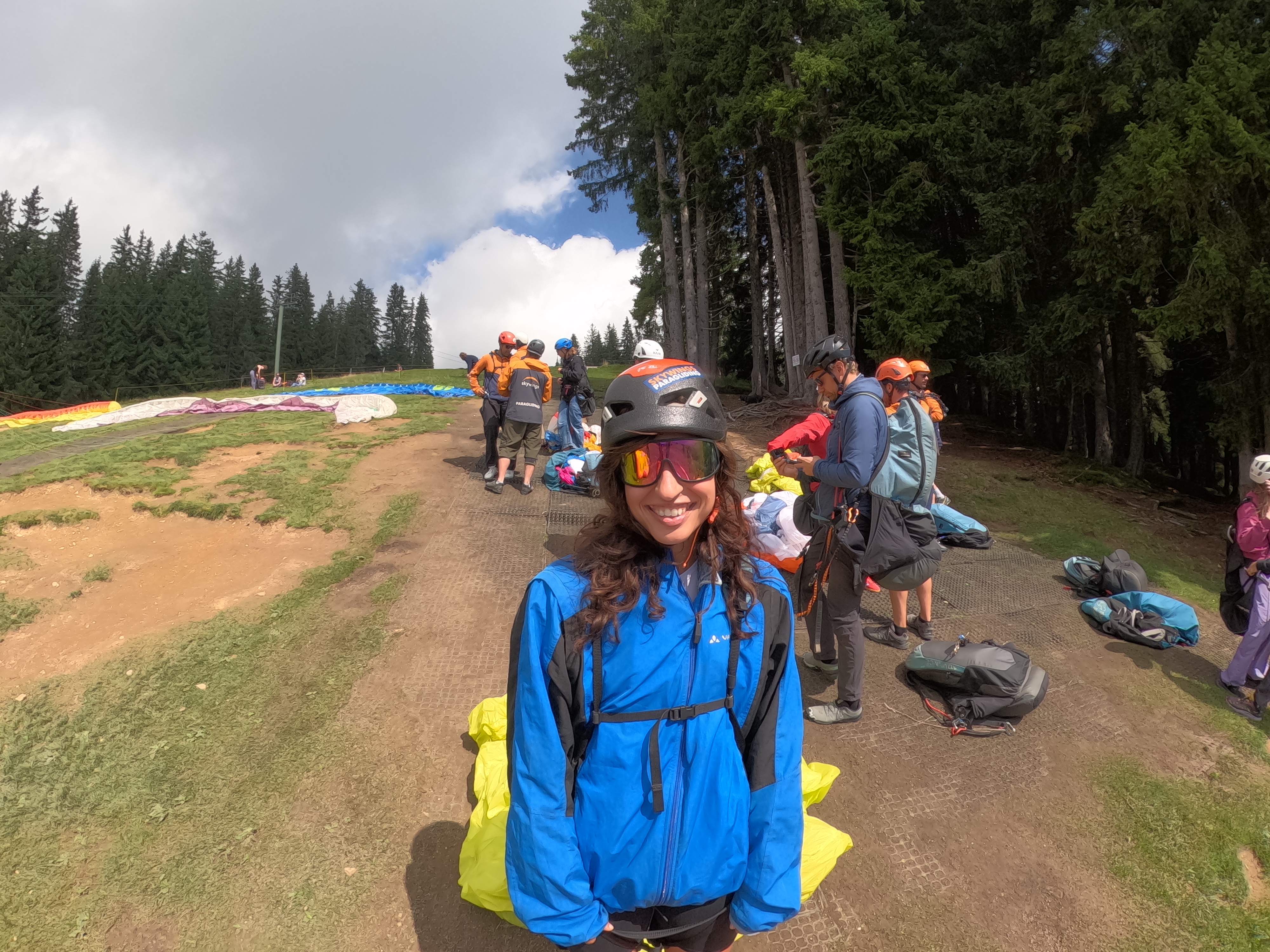
And perhaps the most unexpected flight of all, the day after my 50k, was paragliding with my labmates Rebecca and Pulkit. We ran down a green slope until the fabric lifted, and suddenly the earth fell away. The valley opened beneath us, rivers flashing silver and fields spread like a quilt. For a few minutes, there was no weight at all—only wind, lift, and laughter that seemed to scatter into the sky itself. Paragliding was on a list of things I wanted to do before leaving Boulder, but unfortunately never got around to doing it! I have been skydiving before and paragliding seemed like a more sustainable and connected way to explore.
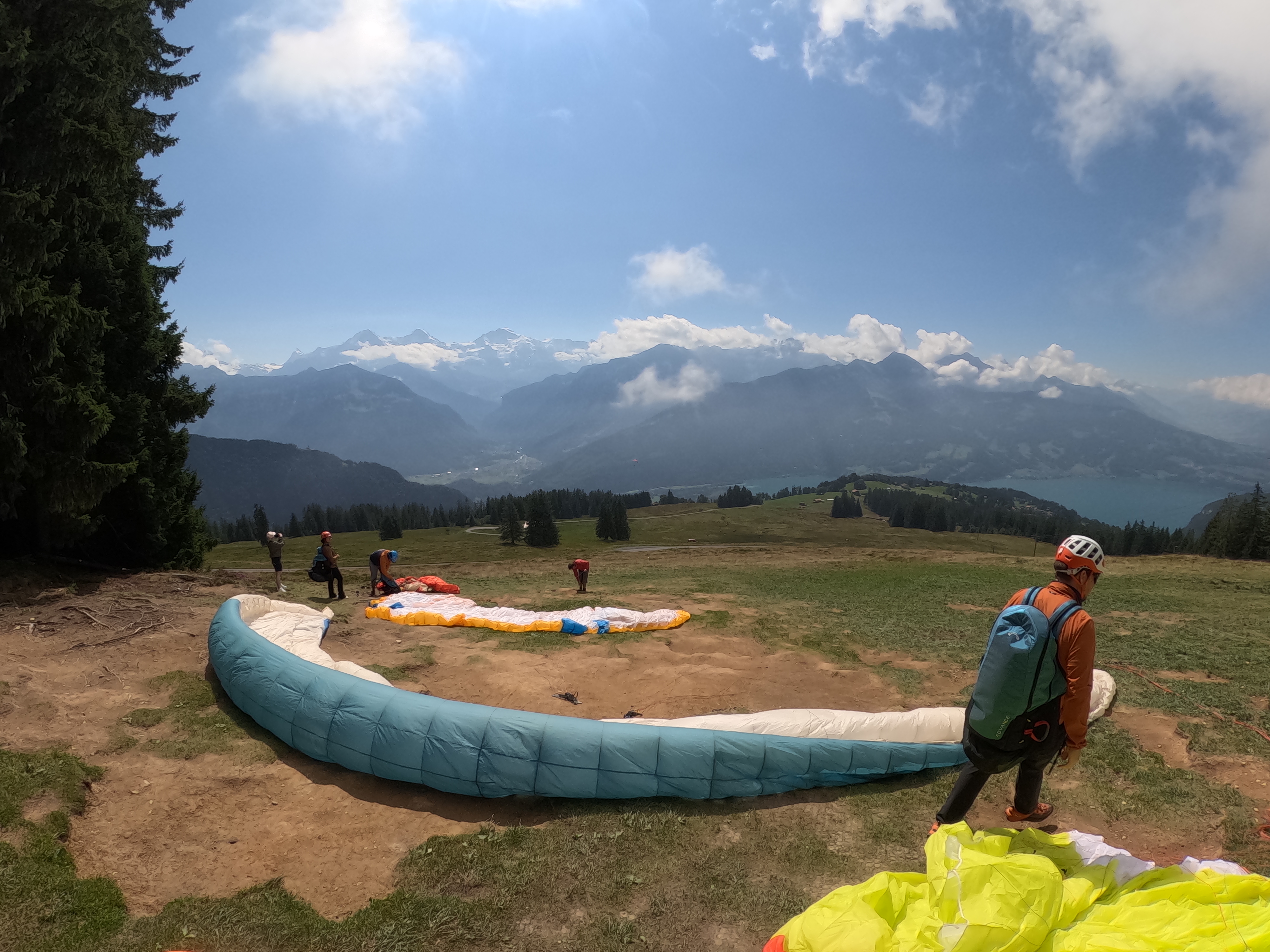
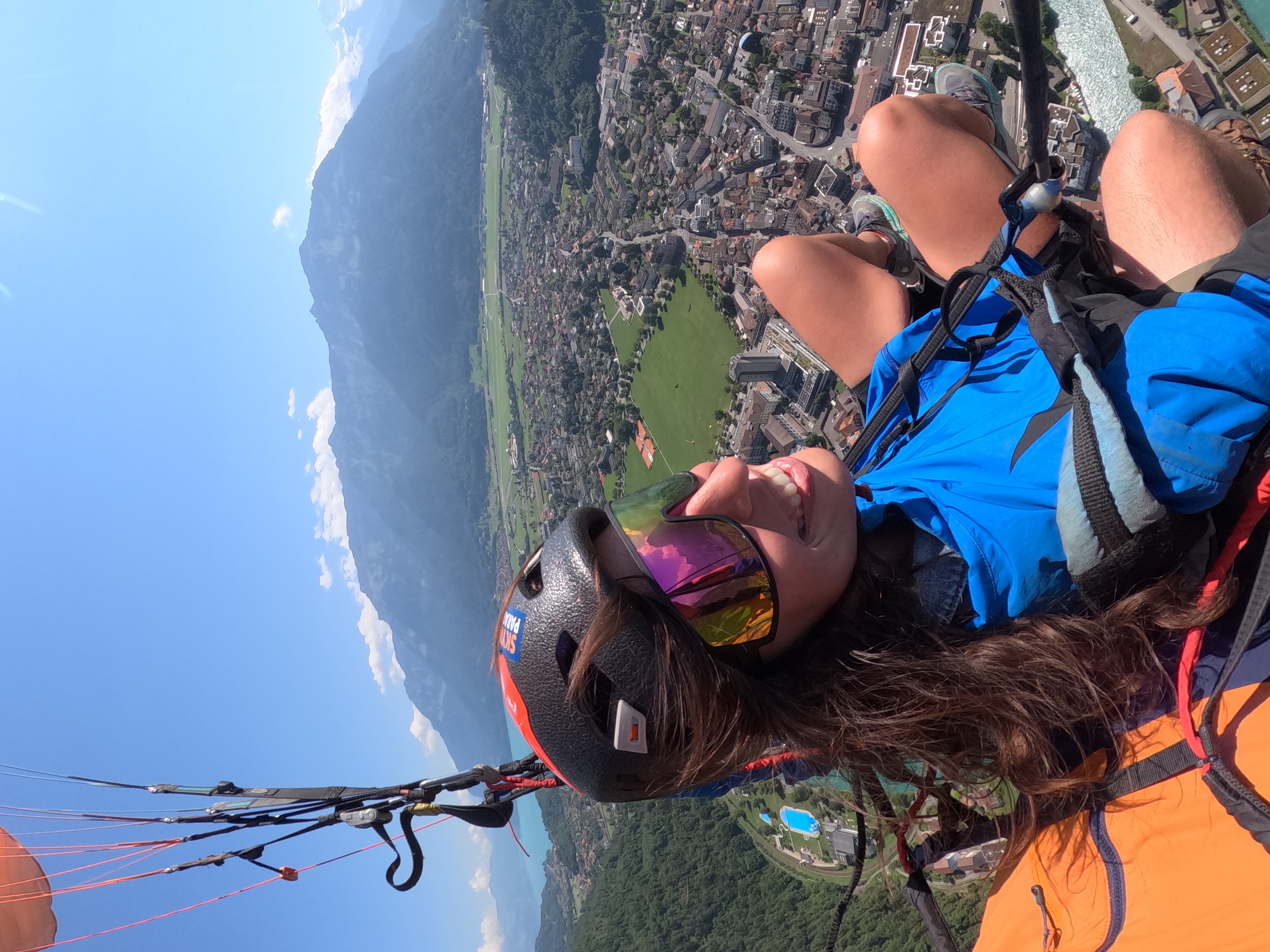
These moments in motion, from the solitude of a rainy run to the shared wonder of flight, are what balance the long hours of technical study. They remind me that resilience is not only about systems but also about people—their bodies, their bonds, their willingness to keep moving forward no matter how steep the climb.
Why This Matters
Switzerland’s energy transition must navigate a narrow path:
- Ensure reliability in a more volatile climate.
- Preserve environmental values in sensitive alpine landscapes.
- Maintain public trust in a time of infrastructure hesitancy.
Only by embedding climate extremes into grid planning, and evaluating their technical and policy implications, can Switzerland lead Europe toward a secure, sustainable, and resilient electricity future.
This work embodies a pioneering spirit, not just maintaining grid reliability, but reimagining it through the lens of resilience, ecology, and equity. The same spirit that drives me into the high mountains is what drives this research: to seek out the limits, to prepare for uncertainty, and to find strength in adaptation.
I sign off having just completed a lunch swim in the lake with my dear friend and labmate Pulkit, properly tired but excited for more adventures to come!
If you’d like to explore more:
- My labmate Jara and I are hiring a Masters Thesis Student: Masters Thesis Posting
- Swiss Federal Office of Energy – 2050 Strategy
- Swissgrid Data Portal
Until next time.
-Jasmine