Between Stone and Sea: A Journey Through Norway's Living Myths
Hei hei, fra landet der trollene hviler i fjellet og vinden hvisker gamle sanger.
After writing about Amsterdam — its bikes, water, and careful resilience — I thought Norway might come with clarity. Or at least light. But it arrived not with joy but with silence.
I landed with plans that had fallen apart at the last minute. Cities only made it louder. Oslo and Bergen passed in a blur of brostein, kalde måltider, og altfor mye himmel.
The Sculptures of Grief
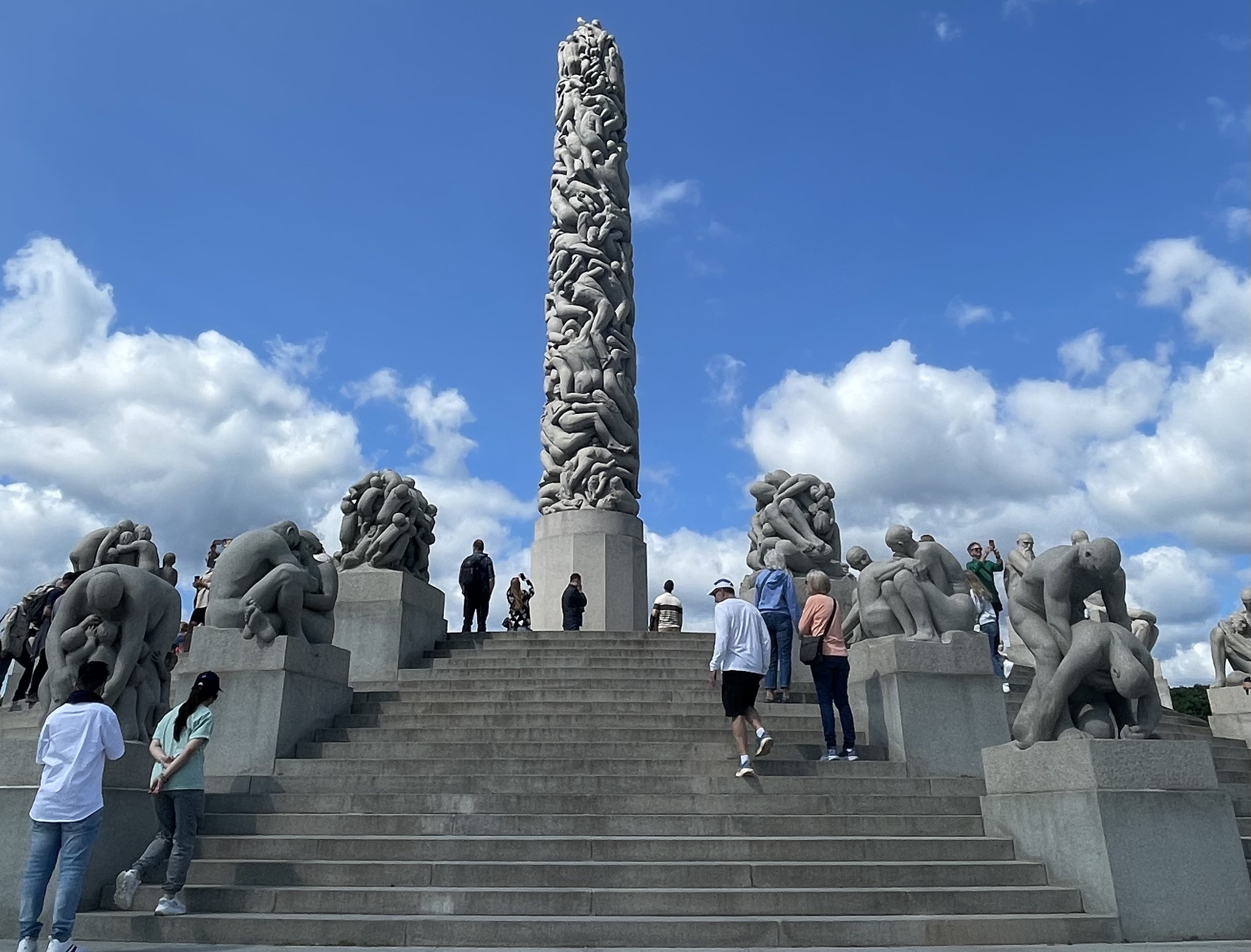
In Oslo, I wandered through Vigelandsparken, where granite and bronze bodies rise from the grass in postures of reaching, collapsing, and clinging. The park — the largest sculpture park in the world created by a single artist — is the life’s work of Gustav Vigeland. Between 1924 and 1943, he carved over 200 human forms into permanence, each one wrestling with love, conflict, birth, aging, and loss. The centerpiece, Monolitten, a tower of entwined figures climbing endlessly upward, said everything I couldn’t. These weren’t idealized bodies — they were raw, tender, and weighty. Grief among them didn’t feel out of place. It felt understood.
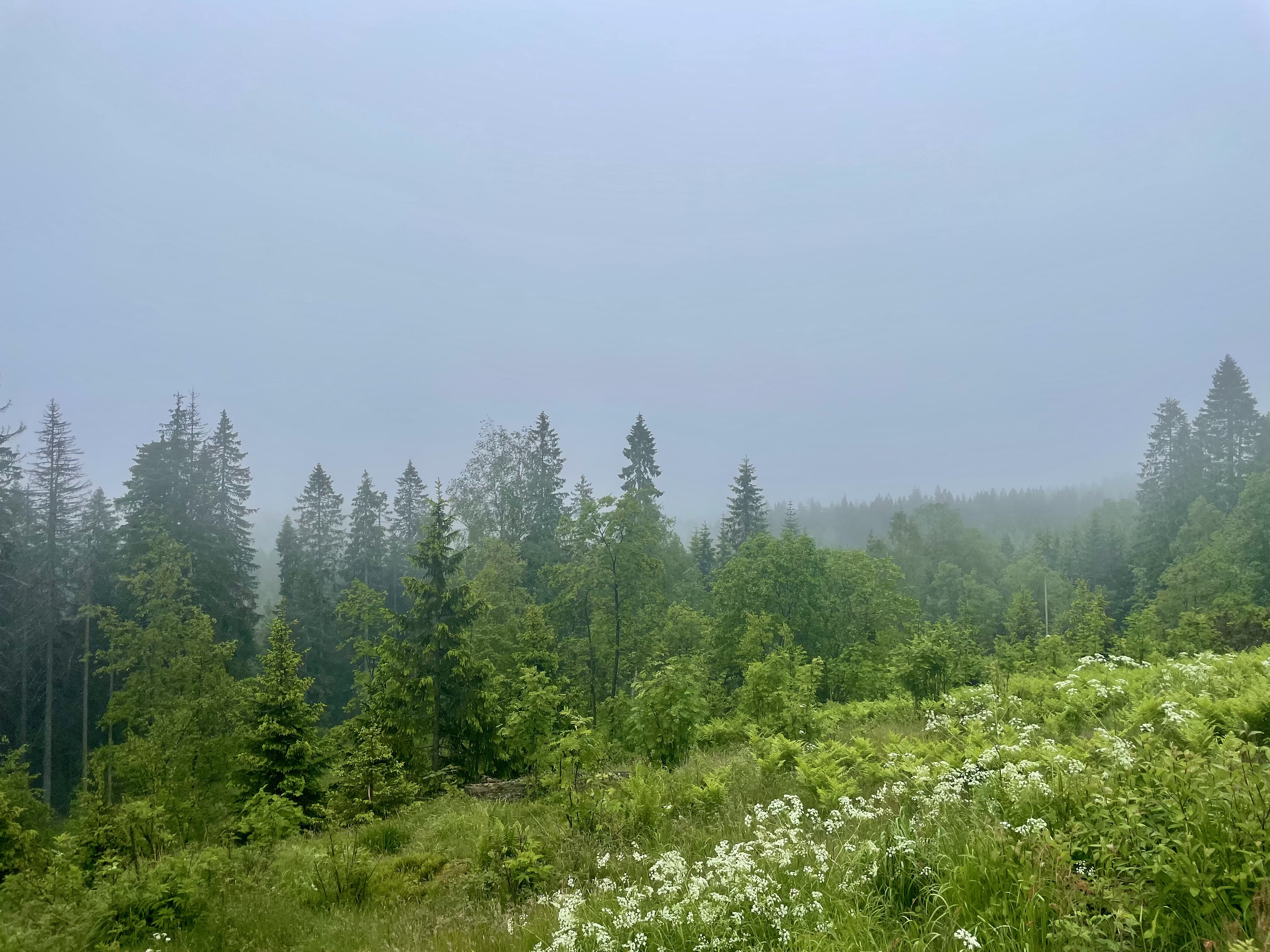
Running in the forests around Oslo, I felt the pulse of ancient stories beneath my feet. The legend of the Huldra — a beautiful, mysterious forest spirit with a hidden tail — seemed to watch from the shadows. She is said to enchant travelers but also warn them: respect the wild, or risk losing yourself to it. In those woods, where light filters softly through towering trees, the Huldra felt less like myth and more like a reminder of the deep, living power of nature — something I’m learning to honor, especially as the world around us changes.
Where Earth Meets Sky
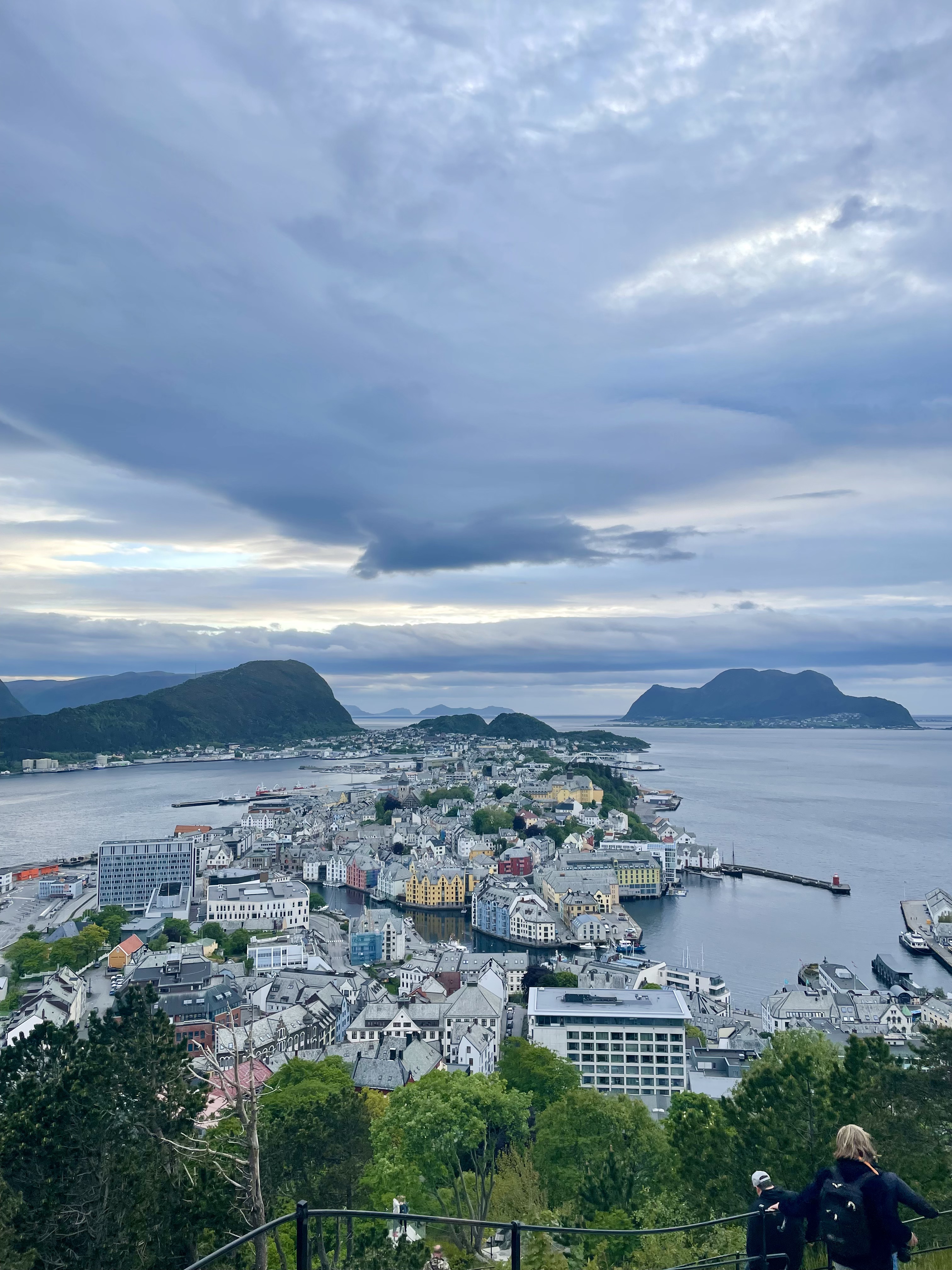
Then I moved west — to the fjords, where the earth has been carved open by time and ice.
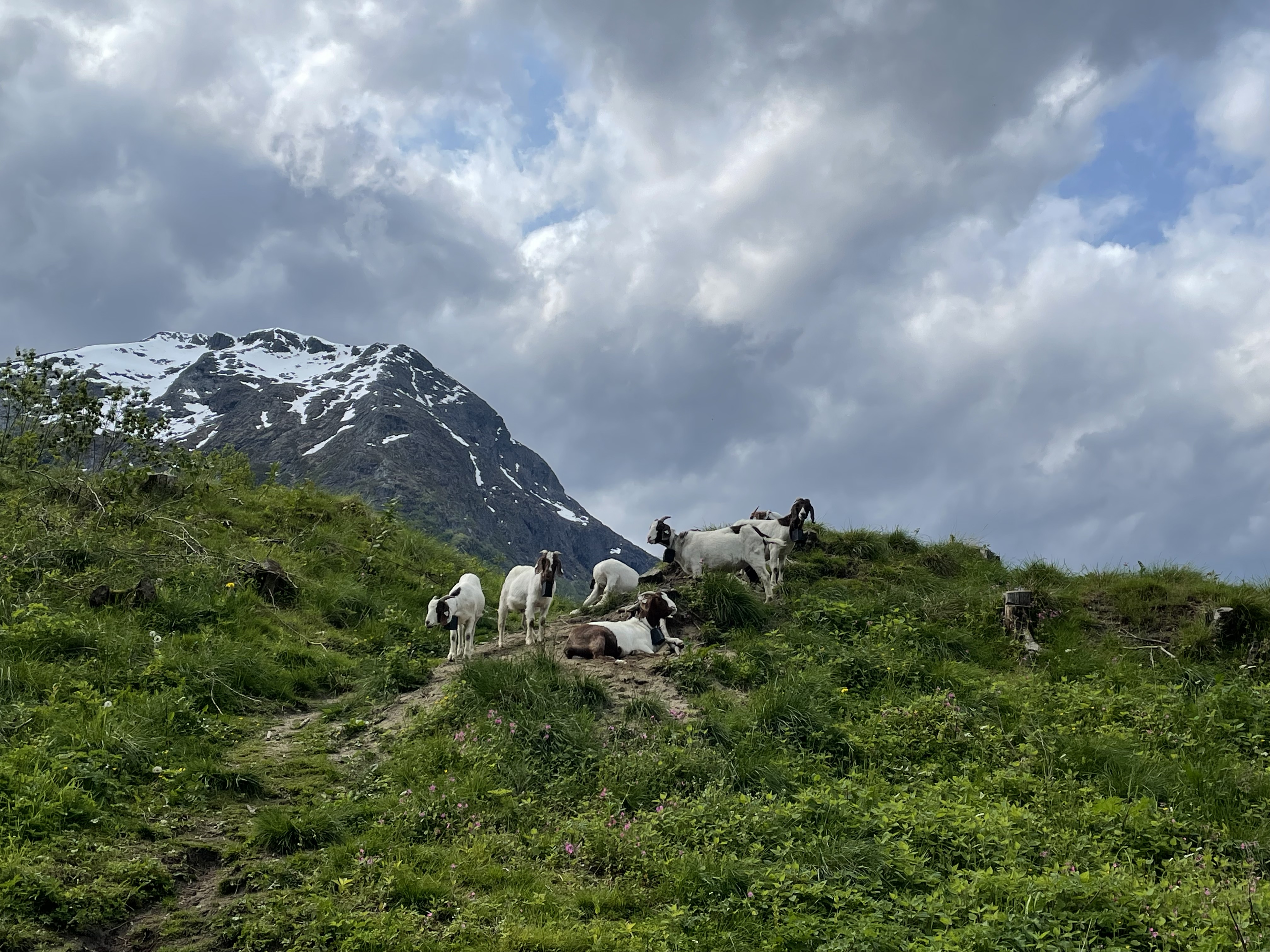
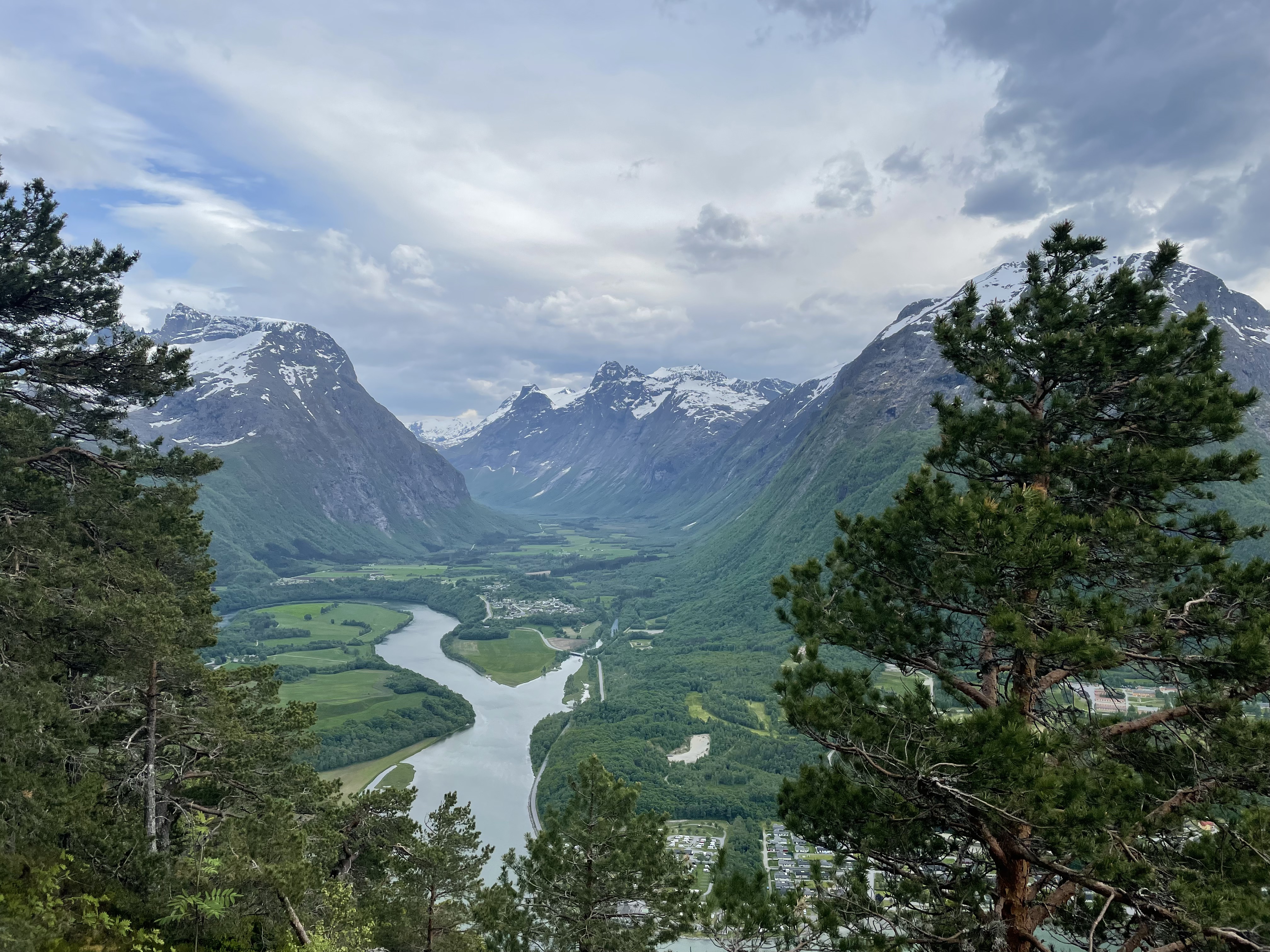
In Norvøya, I watched the clouds fall into the water, low and slow like breath returning to the body. Everything there feels ancient and echoing. The air smells like salt and rock and something older than language. The silence isn’t empty — it hums. Åndalsnes was gentler than I expected. It’s a place where mountains fall into rivers and fjords curl around the town like folded hands. I ran the Romsdalseggen and among the mountains, with a surprise visit from local goats who felt like guides.
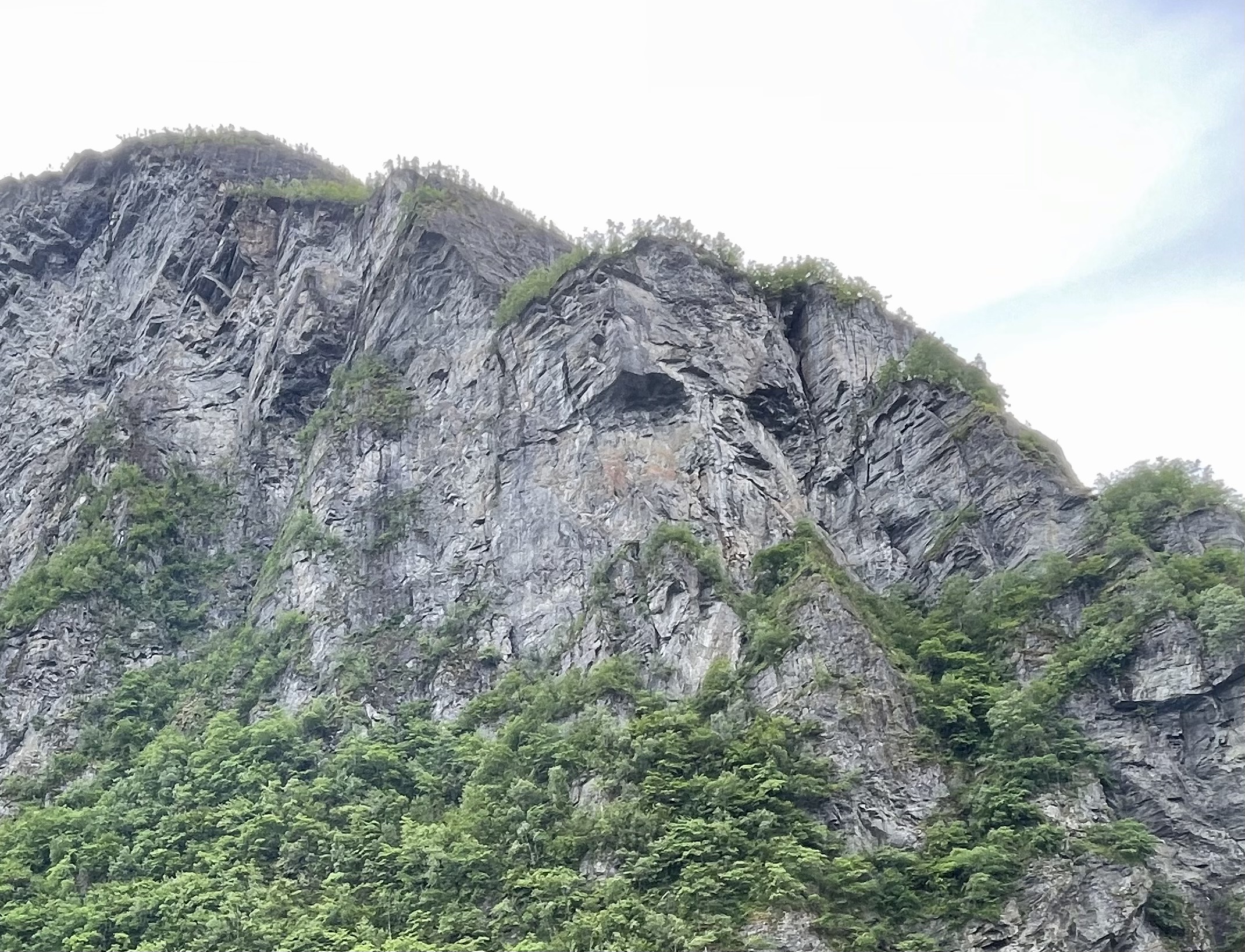
The fjords themselves feel like a testament to ancient engineering — nature’s own masterwork shaped over millennia by ice and water, carving deep channels and towering cliffs with relentless precision. It’s a reminder of how forces, both visible and invisible, sculpt our world, much like the grids and circuits I study in my work back home. Standing there, amidst stone and sea, I see the parallel: whether human or natural, engineering is a story of resilience and adaptation, of creating paths through complexity and uncertainty.
Energy and Contradiction
And here, Norway’s relationship to energy systems is also written into the landscape. Vannkraftverk — hydropower stations — nestled deep in the mountains harness the force of falling water, clean, quiet, and powerful, a kind of modern echo of the glaciers that carved this place. Transmission lines stretch across fjords like thin veins, pulsing with renewable electricity that powers much of the country. It made me think of the future we’re trying to build — one where energy flows in harmony with nature, not in opposition to it.
But the story is more complicated. Norway is also one of Europe’s largest exporters of naturgass — natural gas, much of it drawn from the continental shelf in the North Sea. The revenue supports many of the country’s social programs, even as the emissions fuel warming elsewhere. It’s a paradox I couldn’t ignore — standing in a place so shaped by deep time and slow forces, while knowing that fossil fuels still stitch together the fabric of modern life. The natural gas industry, vast and powerful, is a reminder of how intertwined our energy systems remain with the old ways, even as the world around us pushes for change. It’s not something I support — the climate crisis demands urgent transitions — but it’s part of the story here, part of the silence and the reckoning.
The Spine of Ancient Creatures
Then I came north.
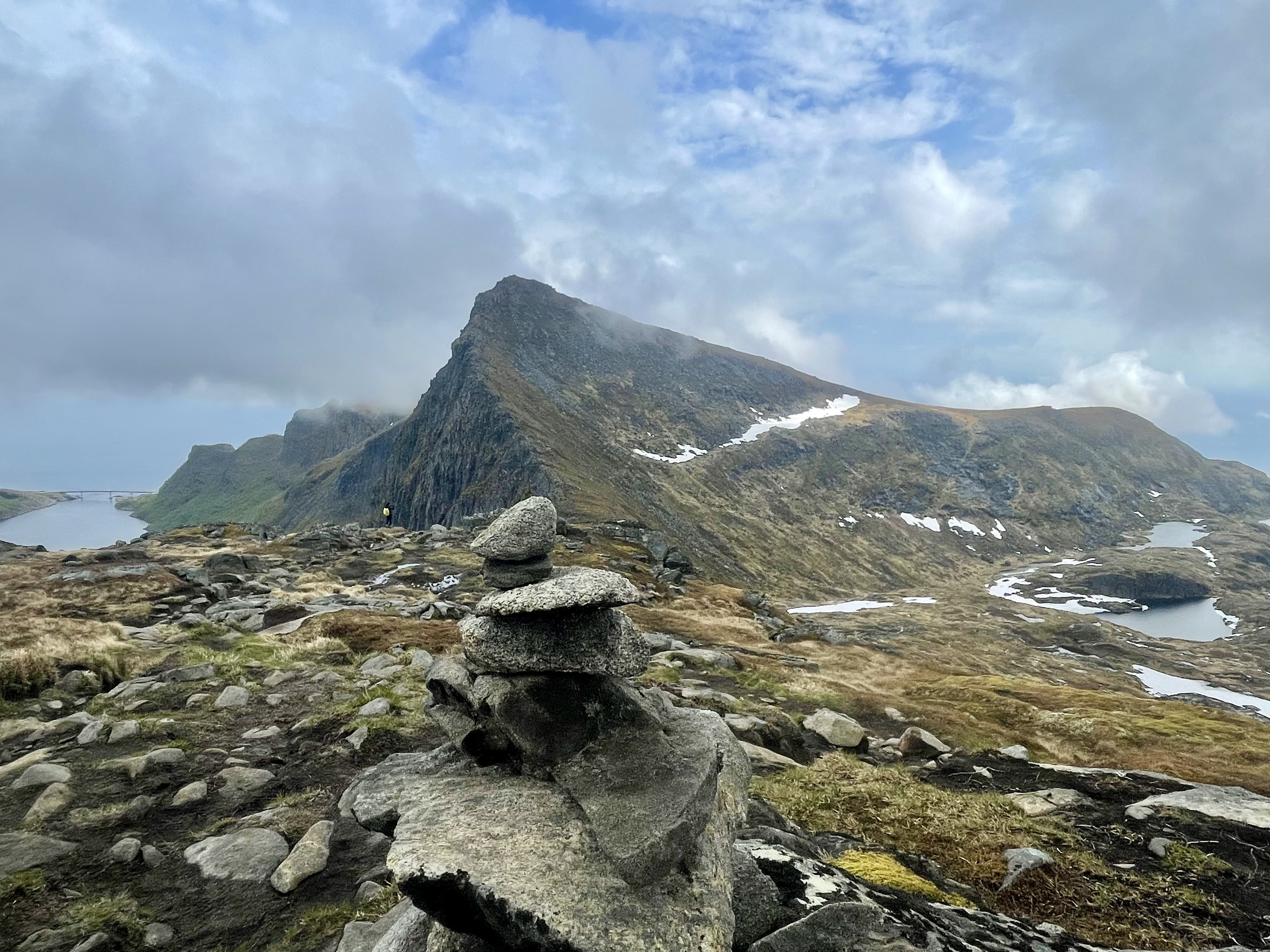
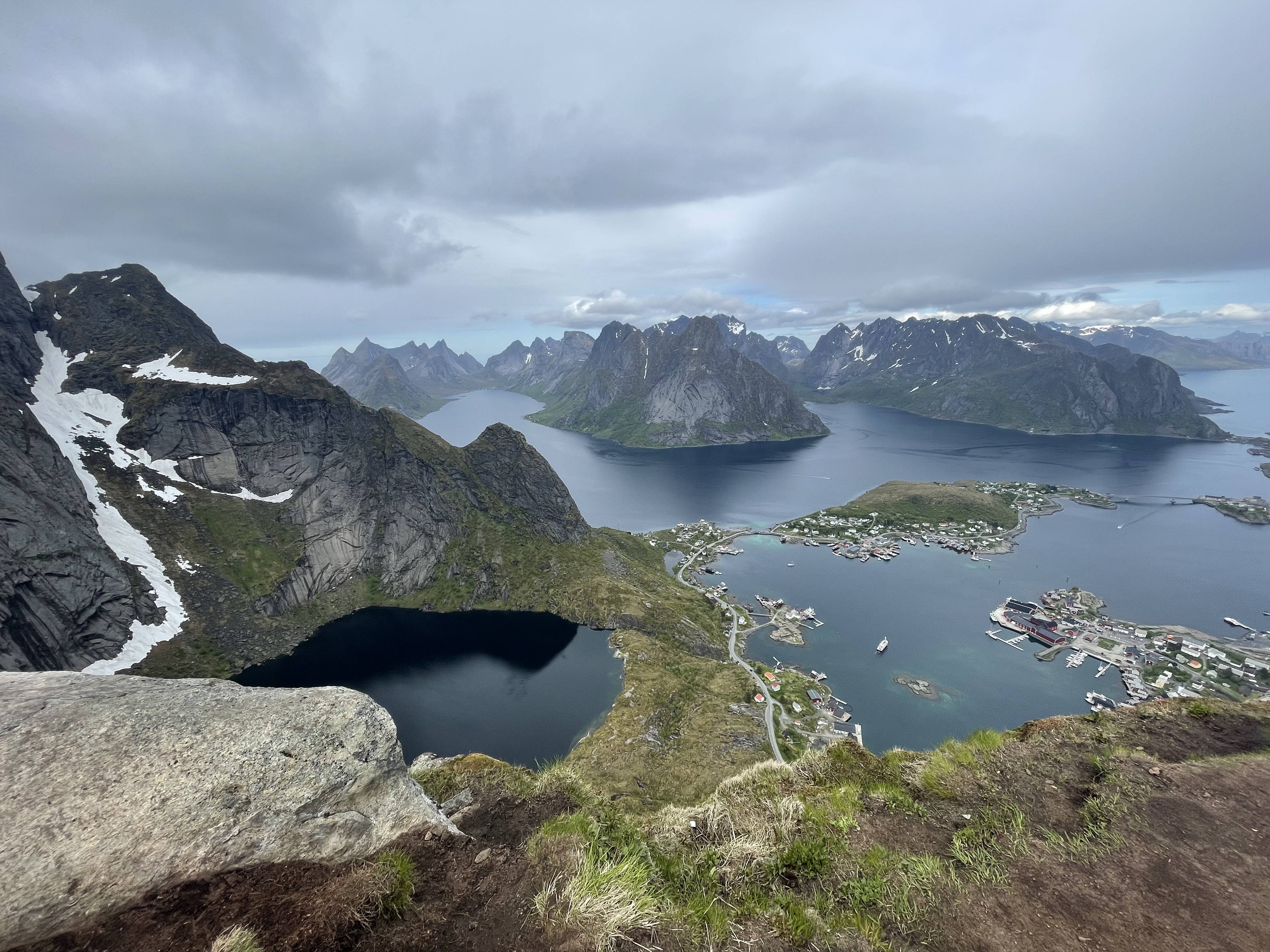
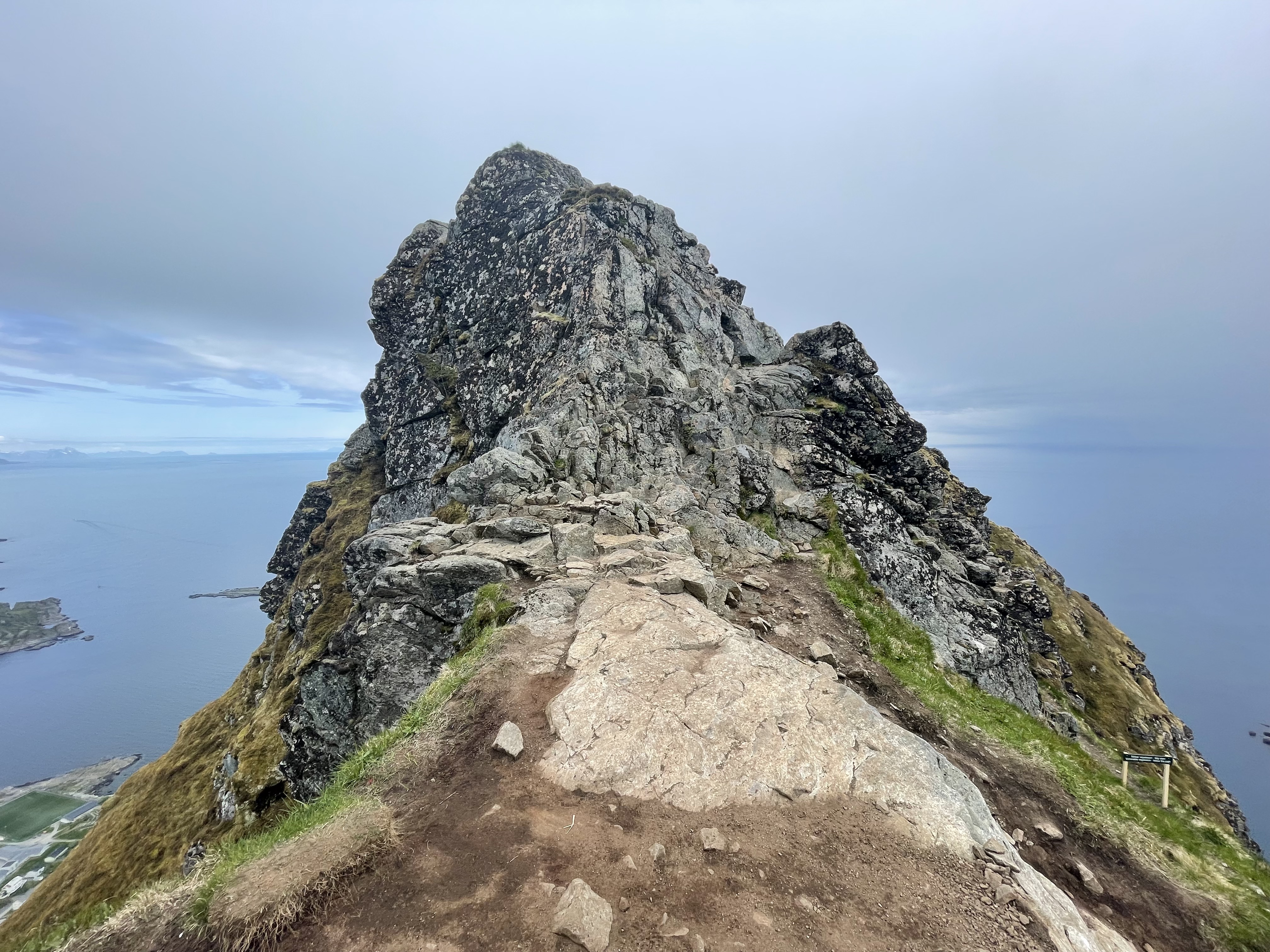
The Lofoten Islands rise from the sea like the spines of some sleeping creature. Jagged and indifferent, they don’t try to soothe you. They just exist — ancient and wild — and somehow, that steadiness makes room for all the feelings I’d tried to outrun.
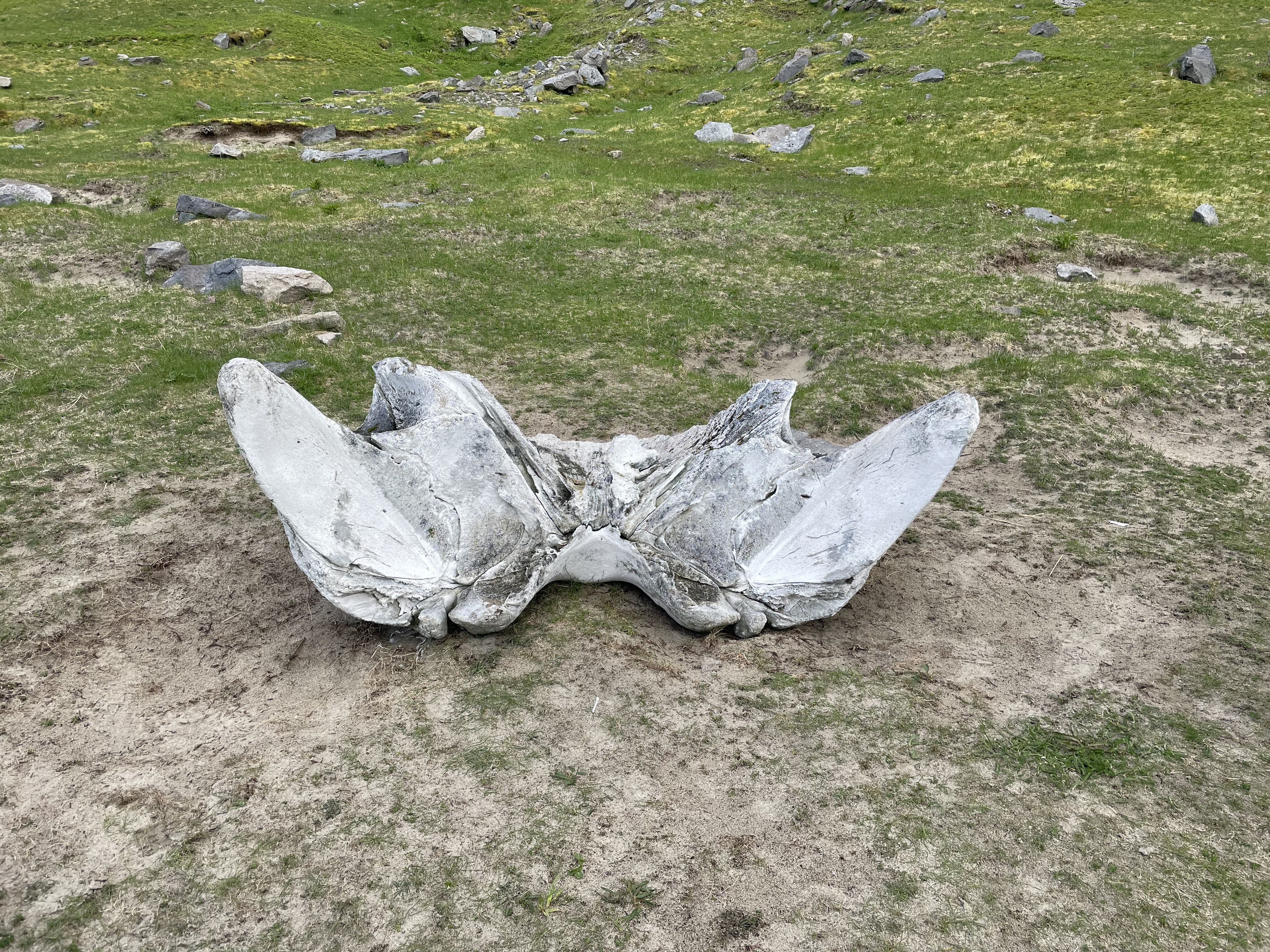
The norrøne sagaer whispers through these lands, where the lines between myth and reality blur like twilight. Trolls — not the mischievous caricatures of children’s stories, but vast, primeval beings of stone and shadow — are said to haunt these mountains and forests. According to old tales, trolls shun the sun’s light, turning instantly to stone if caught by dawn. Many believe the jagged peaks themselves are trolls frozen mid-stride, petrified by the morning sun as punishment or fate. In centuries past, these stories served as warnings and lessons: respect the wilderness, honor the old ways, and fear the untamed. The trolls embody the raw forces of nature — powerful, inscrutable, and eternal.
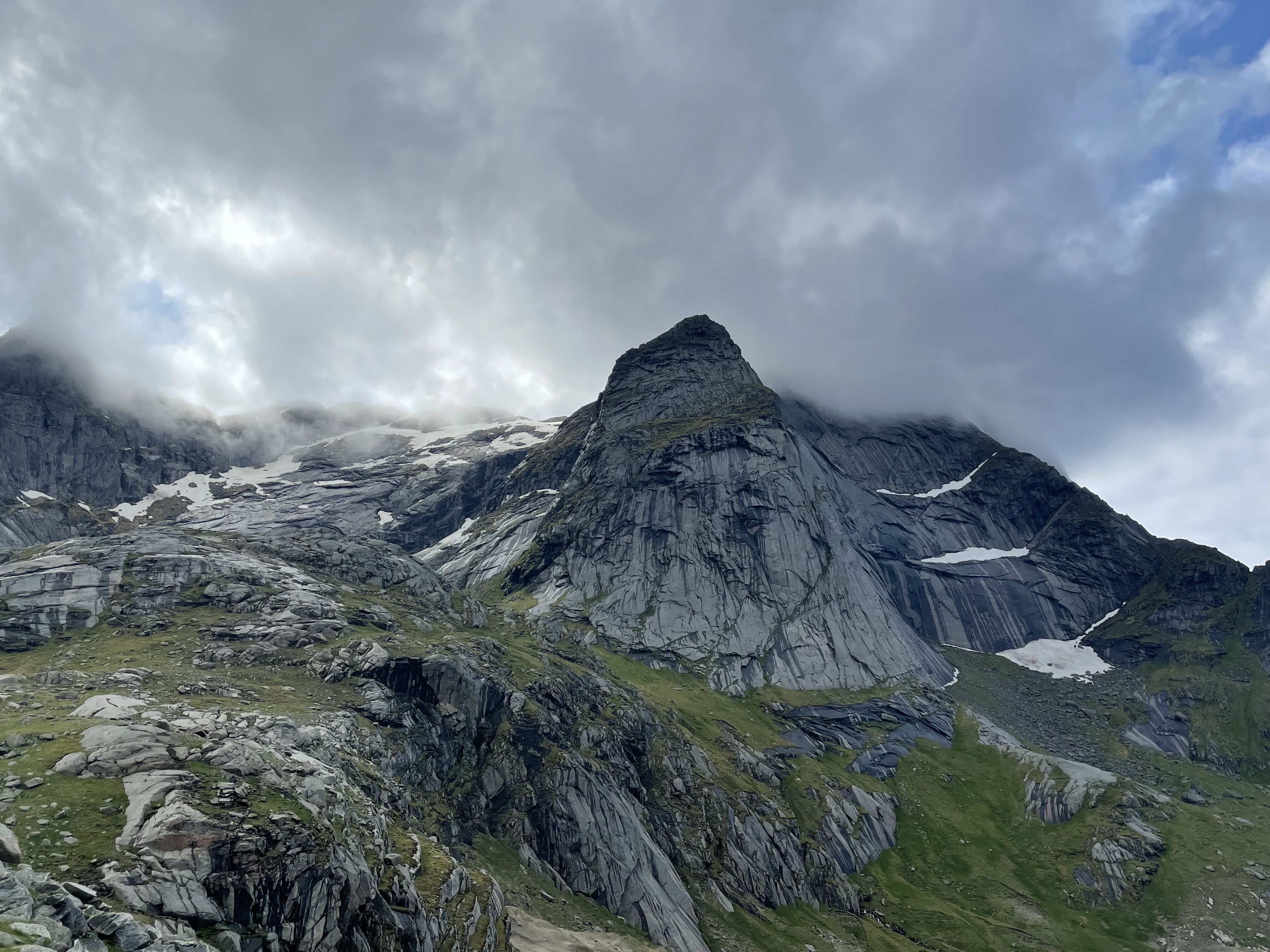
Shaped by ice and ocean, glaciers carved the islands during the last Ice Age, their valleys smoothed and gouged, their cliffs split by frost and time. What you see today — the sharp silhouettes, the hidden beaches, the fjords tucked between mountains — is nature’s slow and brutal poetry. It’s hard not to think of all this when I run— the way the rocks lean like shoulders, the way shadows stretch long and crooked in the low Arctic light. There’s something comforting about it: Something ancient. Something still standing.
Layers of Memory
But this land holds more than a myth. I didn’t learn as much as I should have about samisk historie before coming. But once here, the silence made me listen differently. And I began to understand that this place isn’t empty. It’s layered — with presence, resistance, and memory. The Sámi people — the Indigenous caretakers of this northern land, whose presence stretches back thousands of years. They have lived in relationship with the rhythms of reindeer, wind, and snow long before any borders carved up Scandinavia. The Sámi believe in a land alive with spirits — where mountains remember, and rivers carry songs. Their joik, a haunting, melodic form of singing, doesn’t describe a person or place but evokes it — as if calling the soul of a memory into being. Being here, in this place of slow light and old stone, I feel the truth of that: that places have spirits, and some of them are still singing.
Connections in the Wild
On the ferry to Lofoten, I met three friends from Oregon. We discussed trail running and climate change, as they also had careers related to sustainability. There’s something sacred in those small, unexpected conversations — when people show up just enough to remind you that you’re still here. Still human. In Reine, we went to the only pub, where a curious mix of Viking music and American country played as live music rang through the whole town until 2 am. Later in the week, we had a fire by the beach where we joined friends from France around a bonfire — celebrating one of their birthdays. The warmth of the fire, the crackle of the flames, and the rough voices singing old songs somehow made the islands soften, if only for a moment.
On one excursion, I met two women on the trail — strangers until we weren’t. We traded stories and snacks, laughter slipping easily between us. They gave me a ride back to the place I was staying, and we exchanged information. Hitchhiking around the islands felt like stepping into a story — the kindness of strangers, the rhythm of small roads winding between wild landscapes, the unpredictability of the journey itself. Each ride was a thread weaving me deeper into the fabric of this place.
It was near these fjords that I saw a family of spekkhoggere (Orcas) slicing through the water — their sleek black bodies breaking the surface with effortless grace. Watching them move so powerfully and freely was like witnessing a secret pulse of this wild place, a reminder of life thriving beneath the stillness.
Under the Midnight Sun
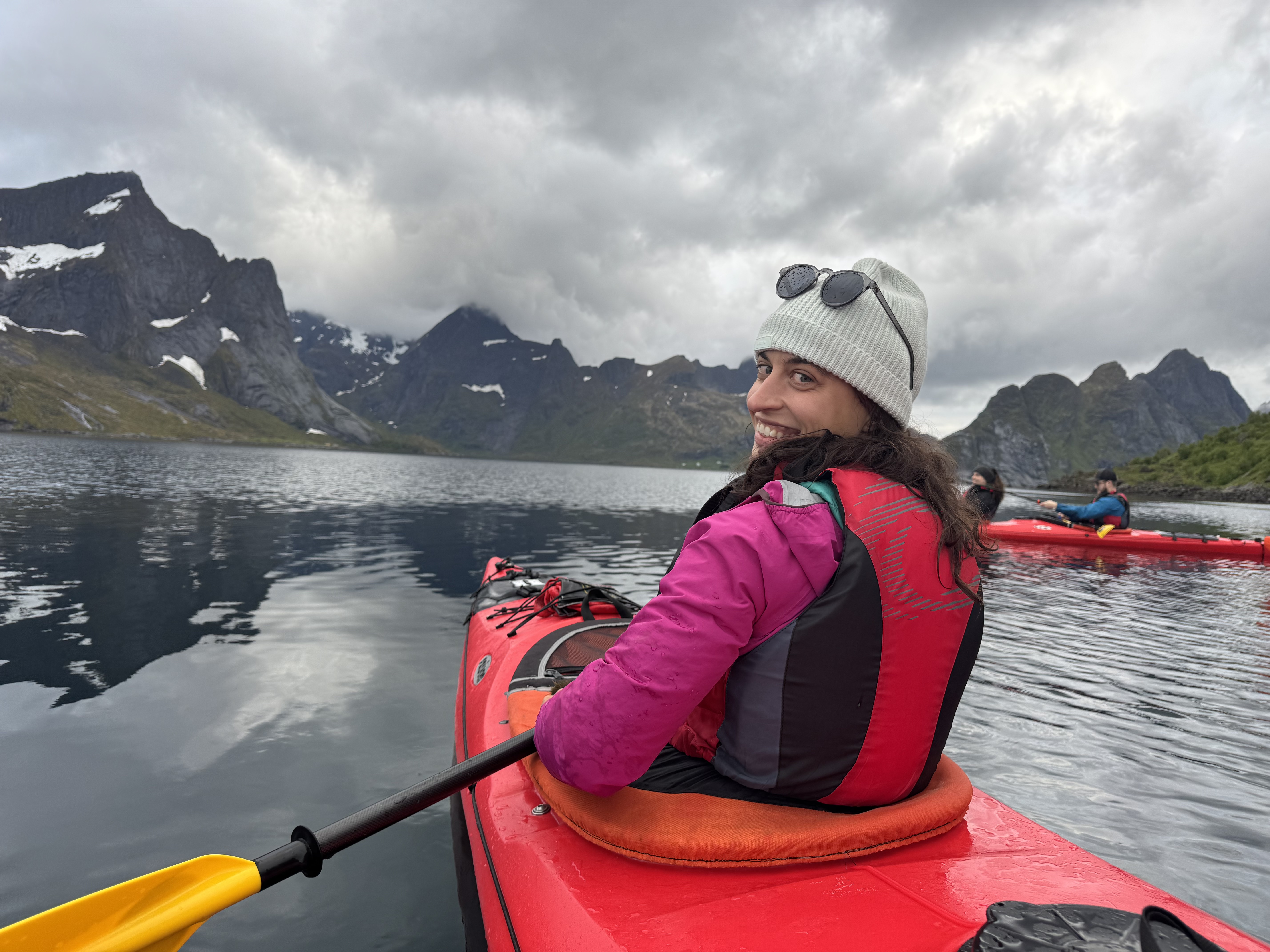
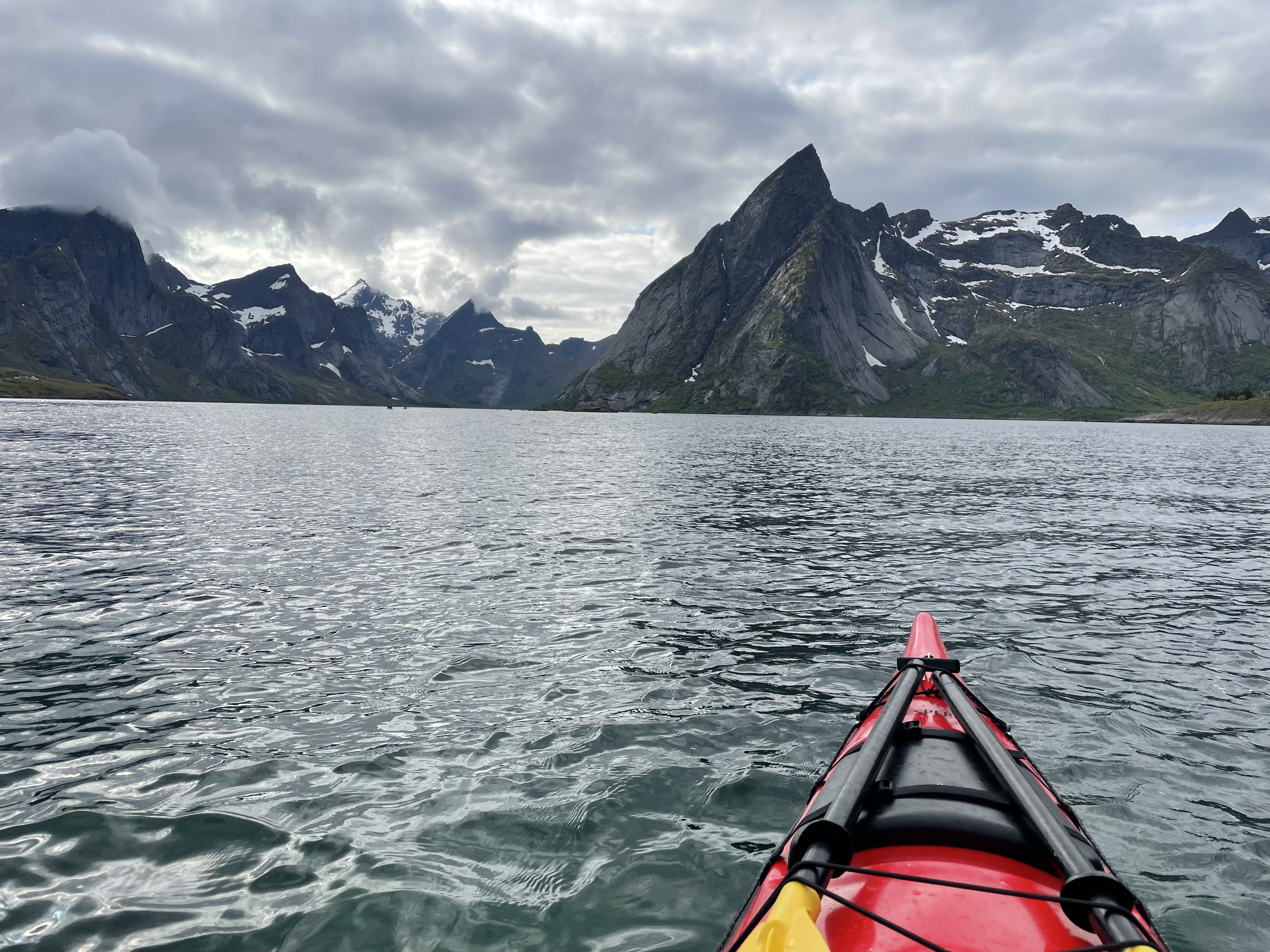
I kayaked under the midnattssol (midnight sun)— pale gold light spreading across the fjord like silk. The silence was vast, the water like glass, and for a few moments, I was just arms and breath and movement. And it was enough.
At one pause, we pulled ashore on a stretch of sun-warmed rock. Our guide reached into the sea and offered us two kinds of seaweed — one called havets druer, which burst like tiny bubbles between my teeth — fresh, clean, almost playful. The other was dark and earthy, with the richness of a forest floor, something deep and truffle-like that lingered at the back of the tongue. I tasted them both slowly, as if they might tell me something. And maybe they did. That the sea gives us both sharpness and softness. That even the strange things, the ones we aren’t used to, can still nourish us.
A Changing Land
I went for a longer paddle the next day — to a national park only reachable by boat. I talked with the kayaking guide about how life has been changing there. Climate change is reshaping even places as remote and rugged as Lofoten. The islands, once defined by their sharp seasonal rhythms, are now experiencing warmer winters, reduced snowfall, and shifts in marine ecosystems that have sustained communities here for generations. Torsk — cod, the backbone of the local fishing economy and culture — are migrating farther north as ocean temperatures rise, disrupting centuries-old fishing patterns. Glaciers on nearby peaks continue to shrink, and the thawing of permafrost destabilizes mountain slopes once thought immovable. Even the midnight sun, once a symbol of Arctic constancy, now arrives with a quieter urgency — a reminder that even the most ancient landscapes are not immune to human-caused change.
This turned into an 8-hour trip and was mostly fueled by Kvikk Lunsj — literally “Quick Lunch” — the Norwegian version of a Kit-Kat bar. There was brunost too, sweet and strange. While drinking Solbærtoddy (warm, sweet blackcurrant juice mixed with hot water) with the kayaking crew, I thought to myself — “Det er et godt øyeblikk” — Northern Norwegians say this when something small and beautiful catches their breath. It means, “This is a nice moment.”
Departure
Tomorrow, I leave Norway.
This wasn’t the trip I planned.
But maybe trolls never planned to become mountains, either.
Now, I’m setting off to a rugged land of fire and ice, where an old friend waits — ready for whatever stories await us there.
Máttaráhkká, eatnigiella bártni,
Gávnnat mu vuodjiluvvon,
Juoigat mu sielu, ja gávnnat mu eallin.
Álddagat mu beaivvi, ja duolvaid mu earádallat.
Lea ollu maid diehtit, mu birra, ja mu gaskkas.
(Mother Earth, child of the language,
Grant me understanding,
Cleanse my soul, and grant me life.
Guide my days, and the paths of my footsteps.
There is much to know, about me, and around me.)
Sámi prayers and joiks (traditional songs) are not just religious expressions but ways to call upon the spirits of the land, honor ancestors, and maintain a sense of identity and resilience in the face of colonization, forced assimilation, and cultural erasure. The prayer shared — invoking Máttaráhkká, a powerful goddess and protector in Sámi mythology — reflects this profound connection. Máttaráhkká is often regarded as the “Mother Earth” figure.
—Jasmine