The Land Still Breathing: Iceland in Motion
Halló og velkomin til lands elds og íss
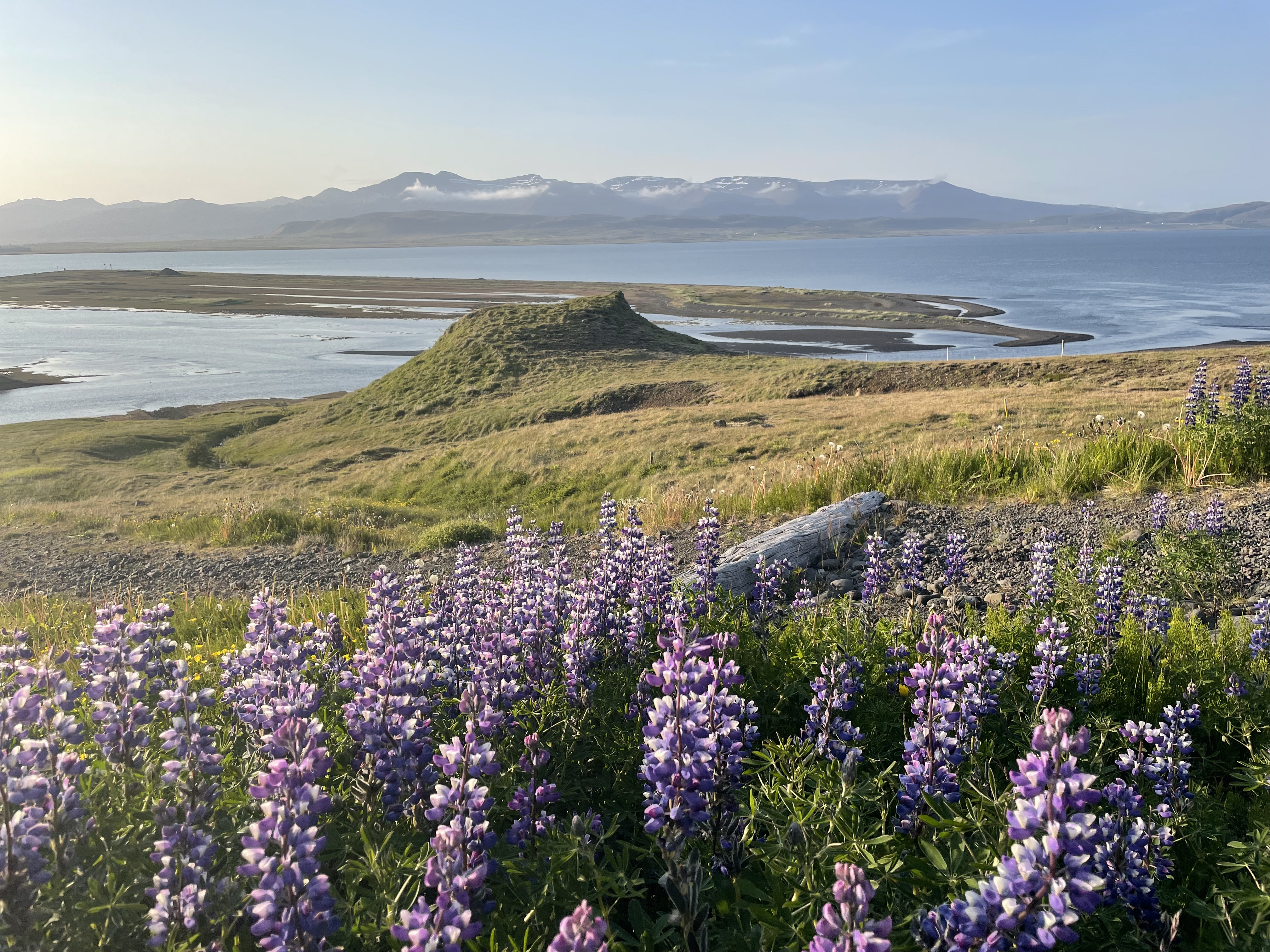
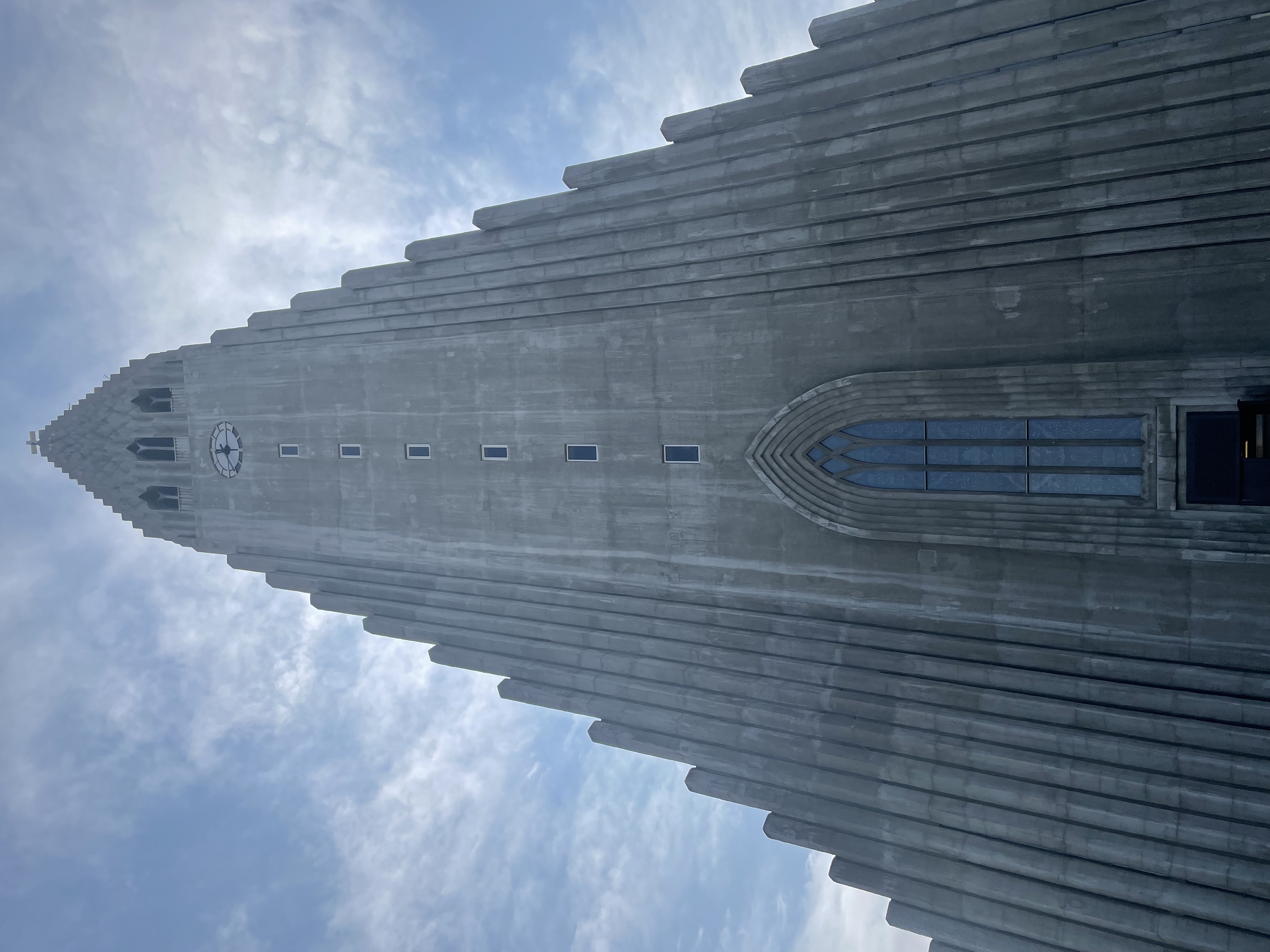
I arrived in Reykjavík alone, the weight from Norway still folded quietly inside me. The city’s sharp wind and narrow streets felt like stepping into a story—playful and alive, layered with history and the hum of something waiting beneath the surface._
Reykjavík: Beginnings and Contrasts
My first day in the city was a study in contrasts. After wandering the streets under a gray sky, I visited the Þjóðminjasafn Íslands—the National Museum of Iceland. Inside, time folded over itself—ancient artifacts and modern stories blending into one. From Viking swords and wooden longhouses to delicate tapestries and everyday objects, the museum told the island’s story with quiet reverence. It struck me how this land had been shaped by people who knew how to hold both hardship and hope at once.
Later, I sought out the hot springs just beyond the city. In those steaming pools, where earth and sky blurred and the wind carried whispers of distant glaciers, the warmth seeped deep, thawing threads I hadn’t known were still taut.
Into the Highlands
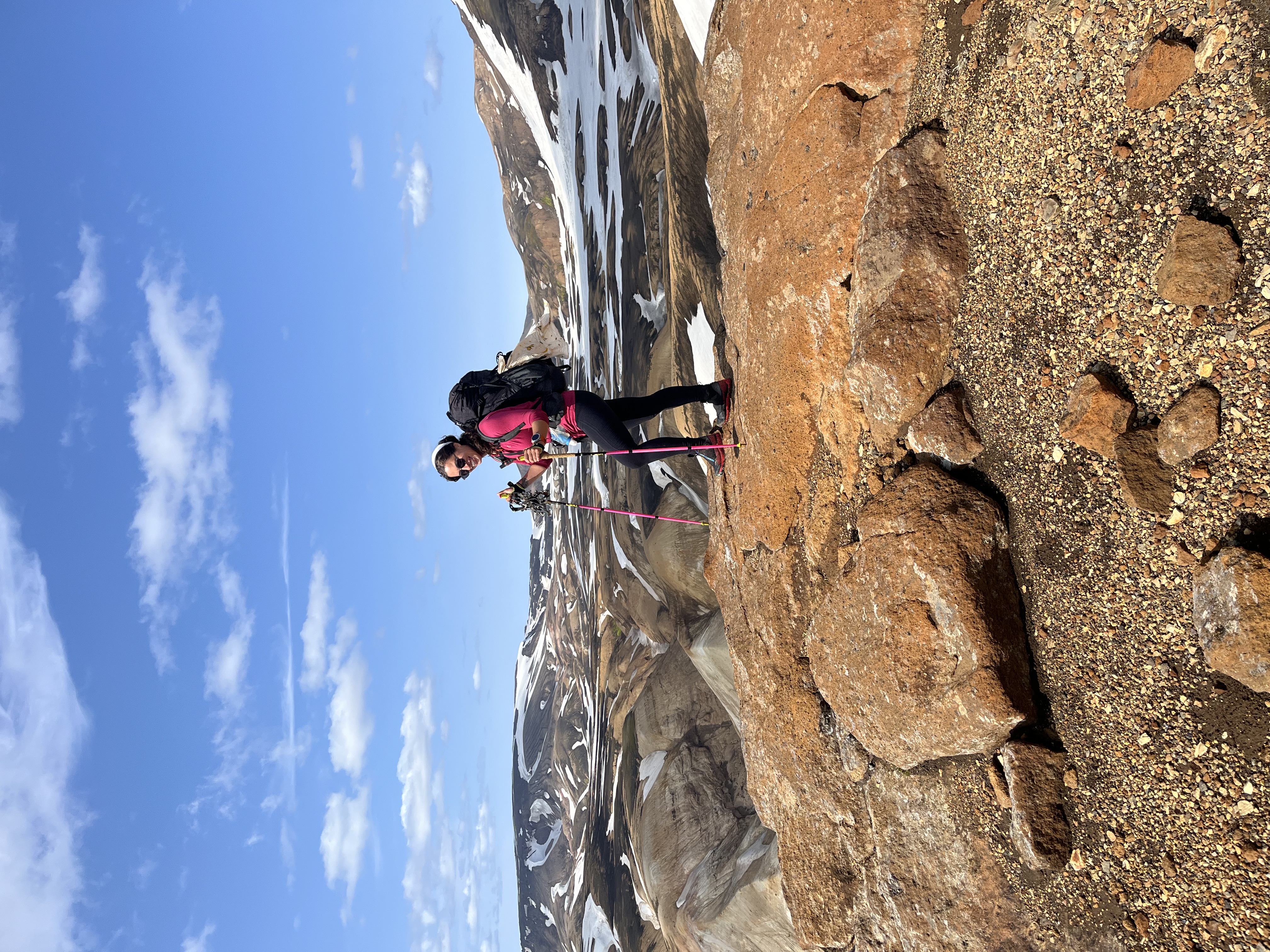
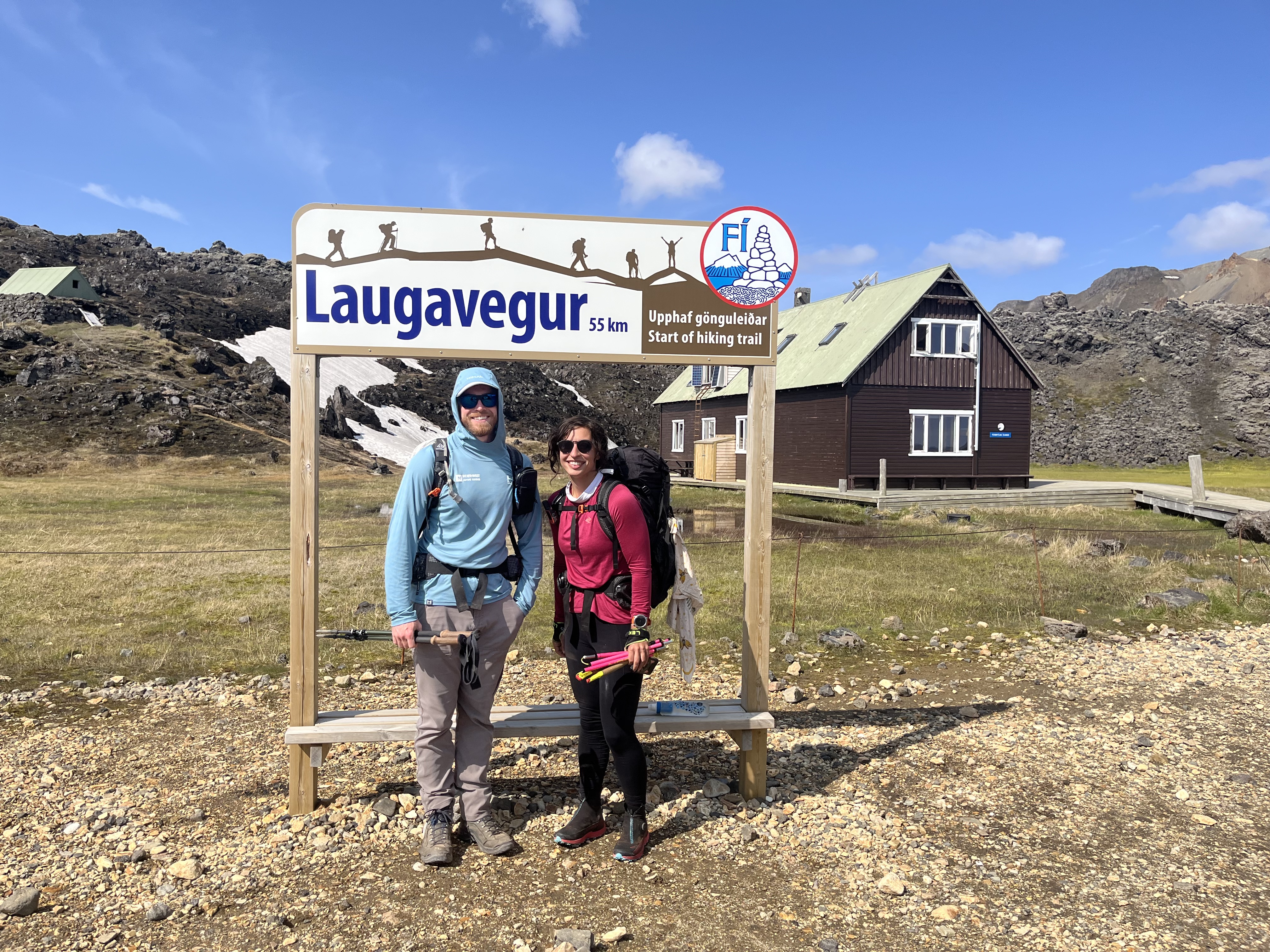
The next day, Kyle joined me—a friend of mine for many years from CU Boulder.
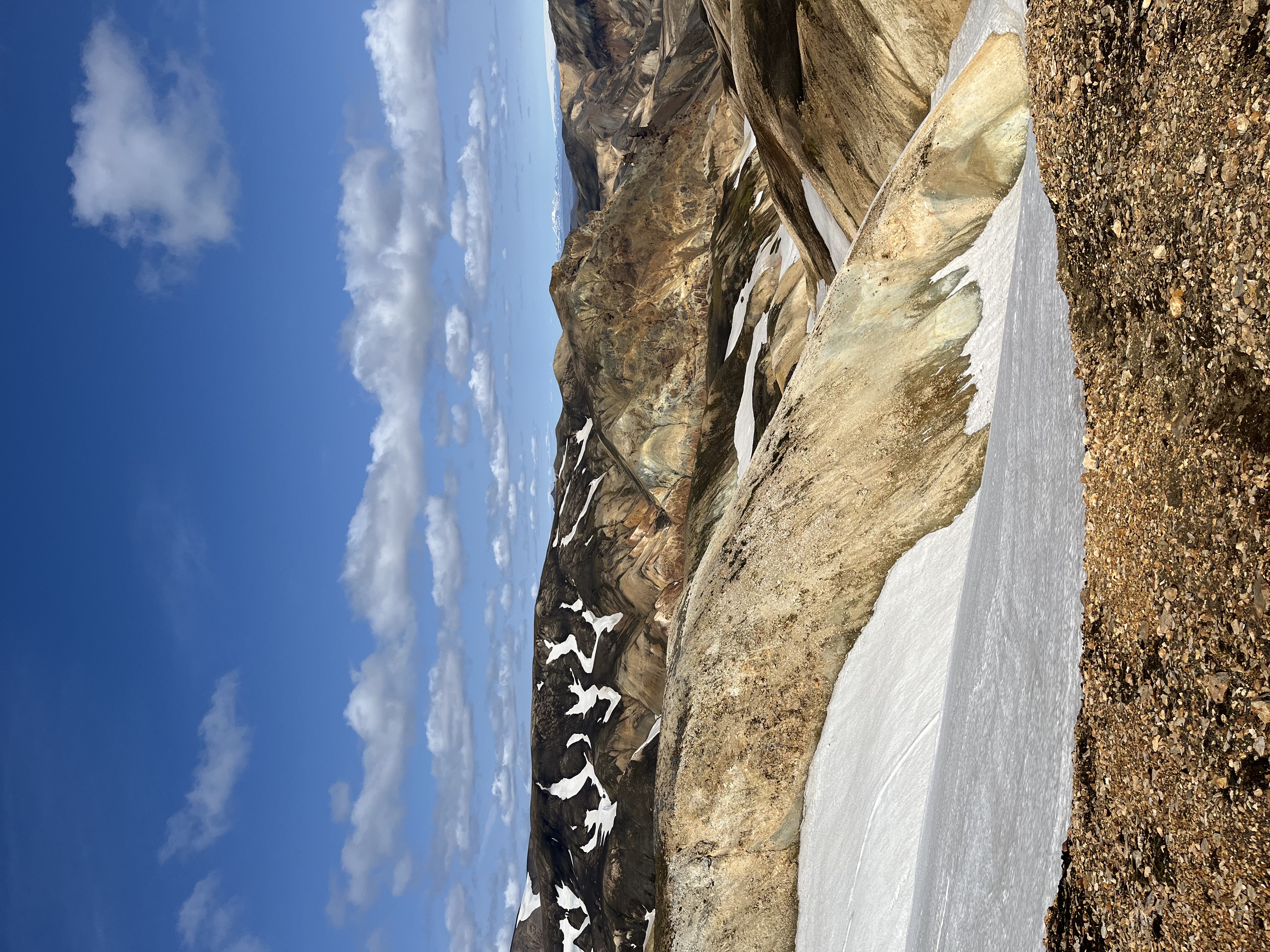
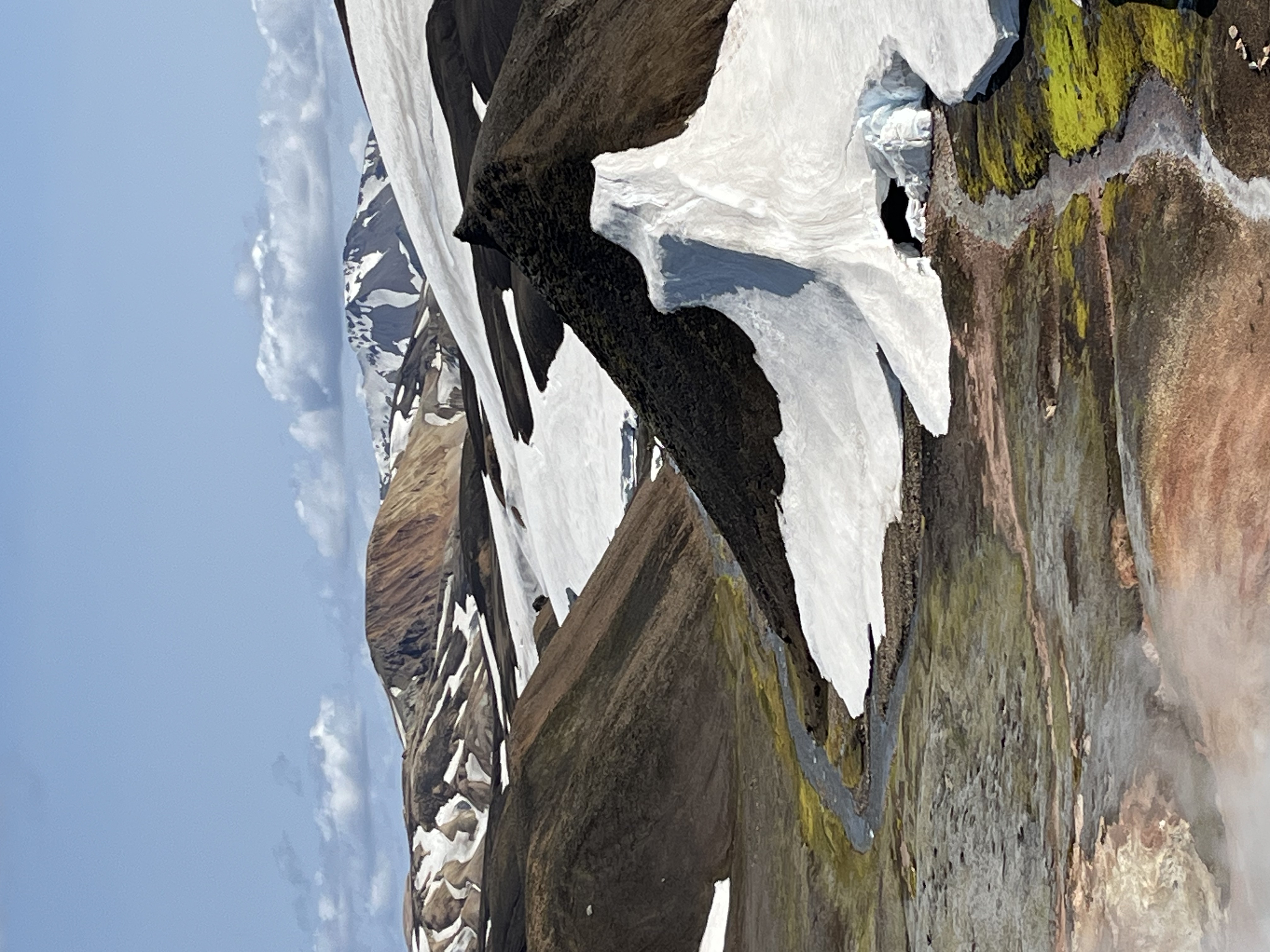
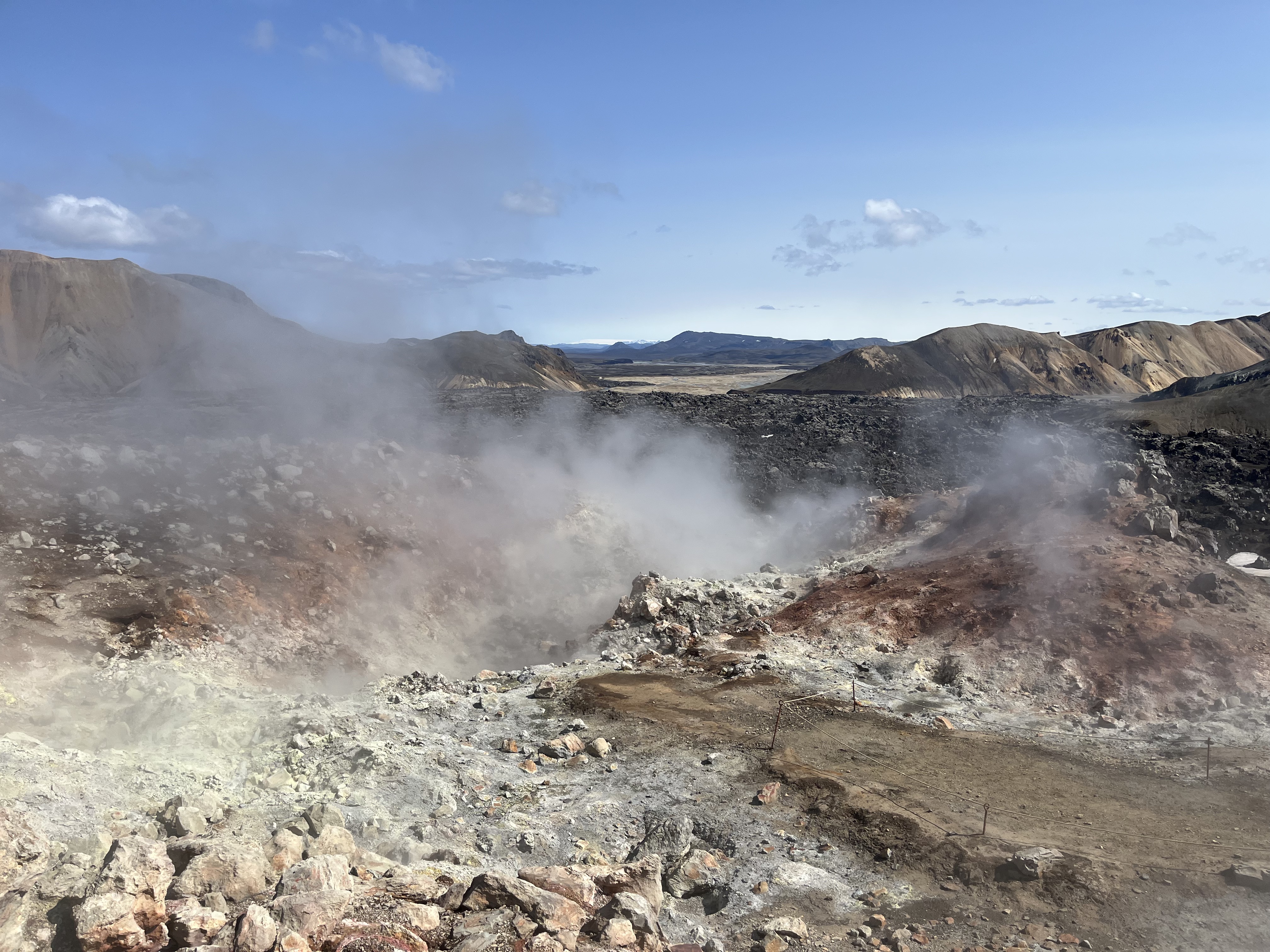
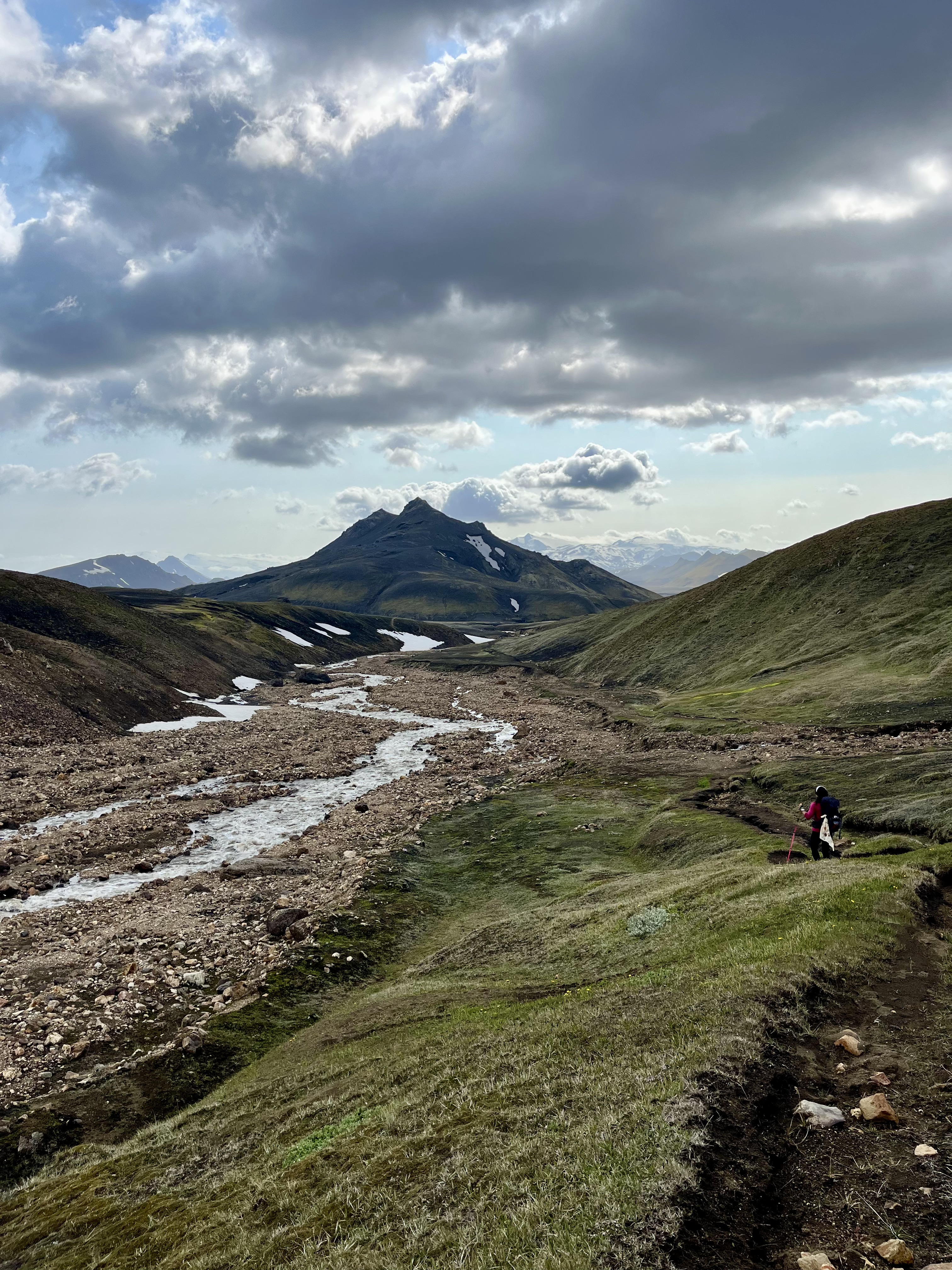
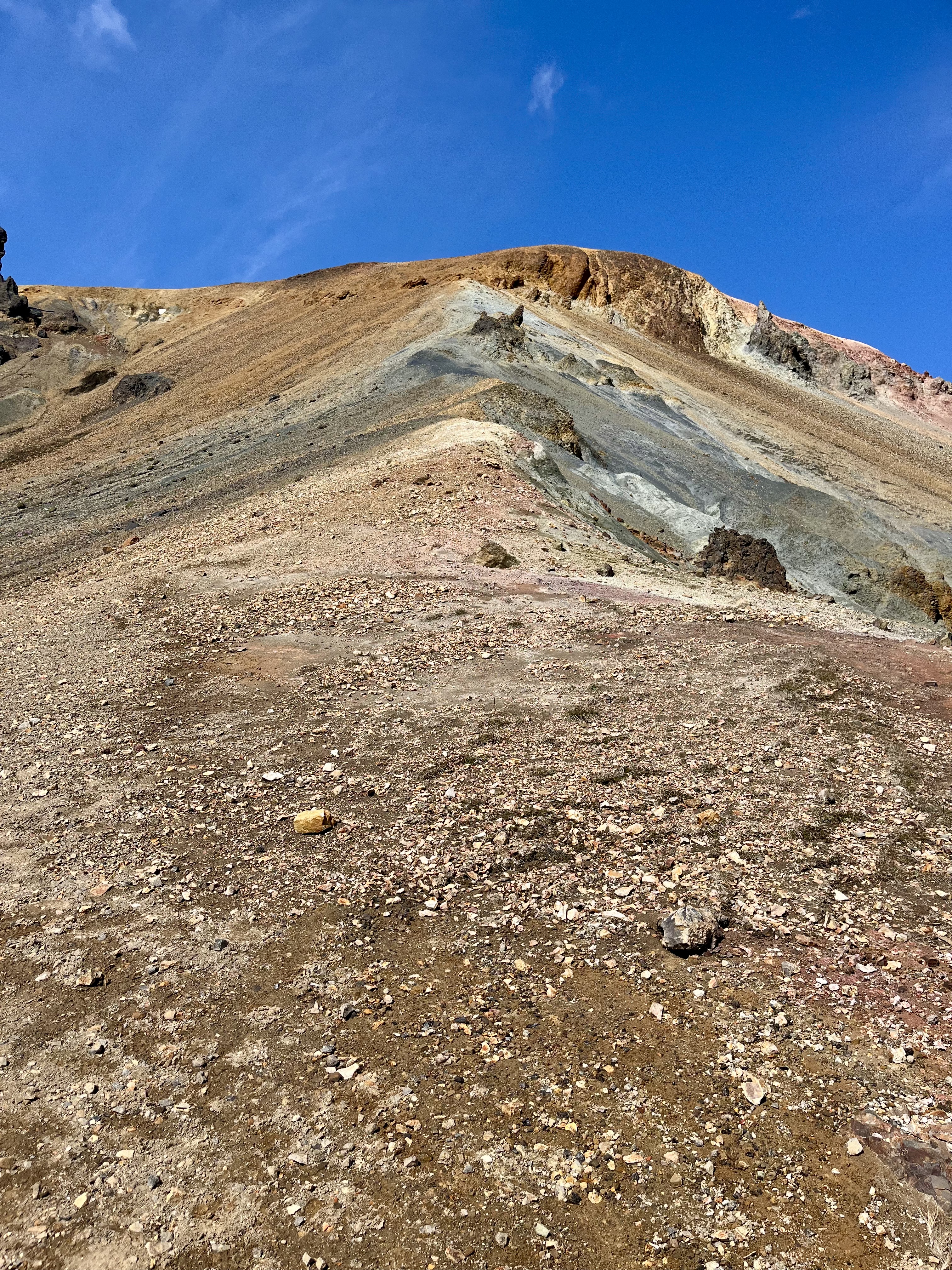
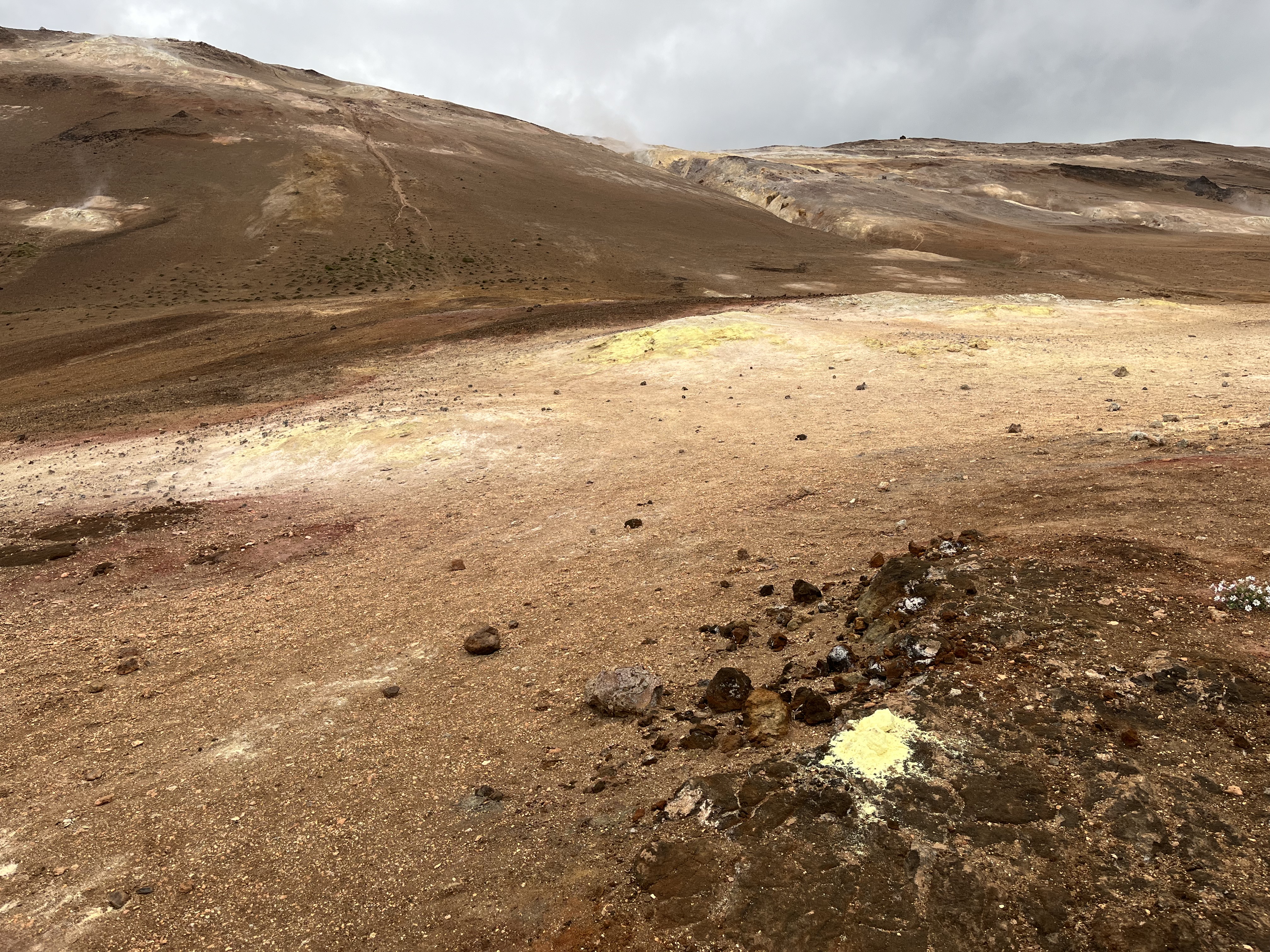
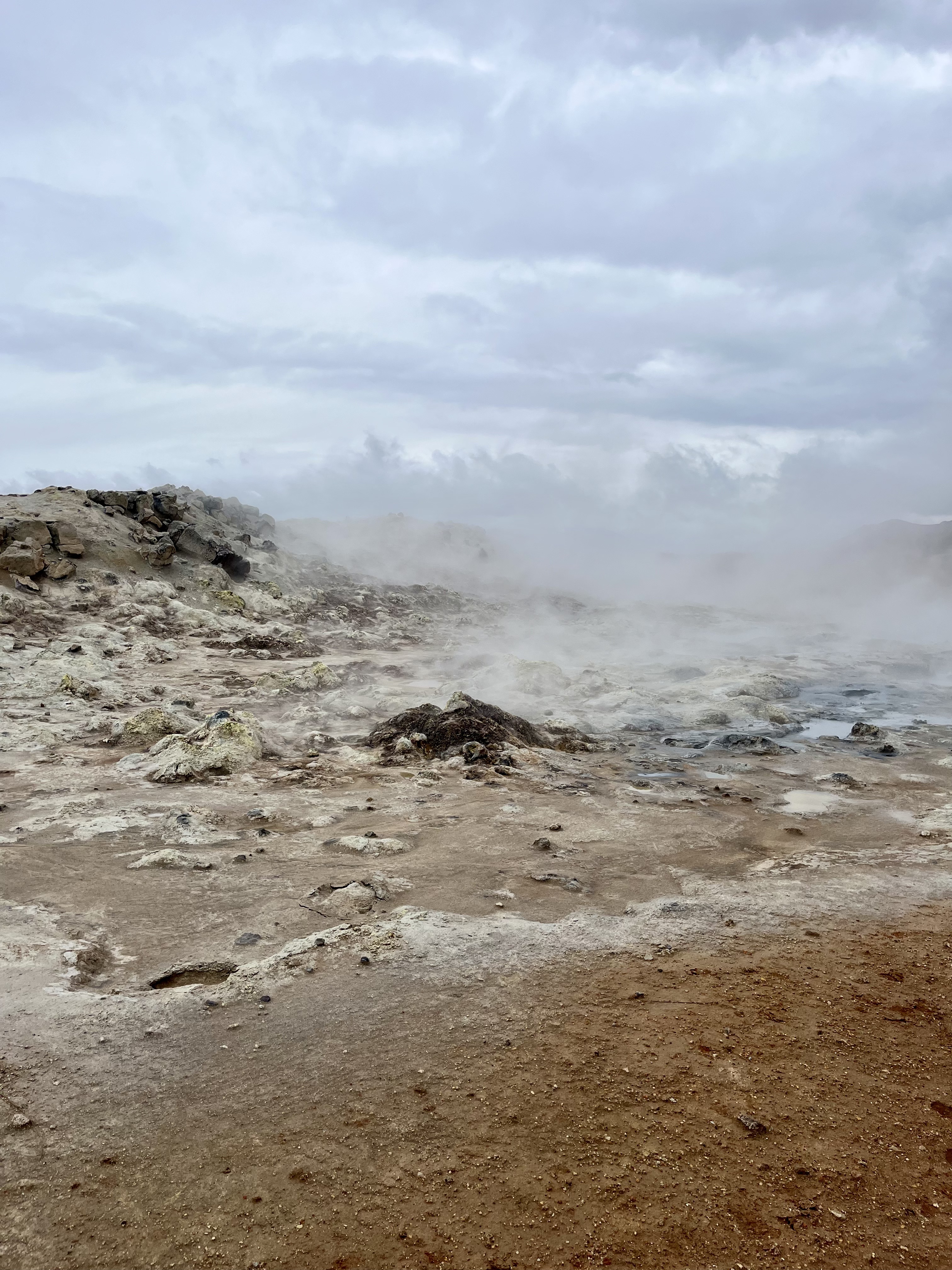
We backpacked the Laugavegur, carrying our days on our backs through rainbow-streaked rhyolite mountains, moss-soft valleys, and steaming, sulfur-stung earth. Some moments, fog rose from lava fields like breath; other moments, the sun split open the sky and the world turned to gold and silence.
There’s something ancient about backpacking—as if your body starts to remember things your mind forgot.
But this ancient beauty is growing precarious.
The icefields we walked beneath have thinned. Some rivers we crossed now run faster, swollen with jökullbráðnun—glacial melt. Patches of snow that once lingered through summer had vanished by early July. Even as I marveled at the clarity of the air, the stillness of remote valleys, I knew the silence held a warning:
Ísland er að hlýna. Iceland is warming—faster than most of the planet.
Van Life and Vanishing Edges
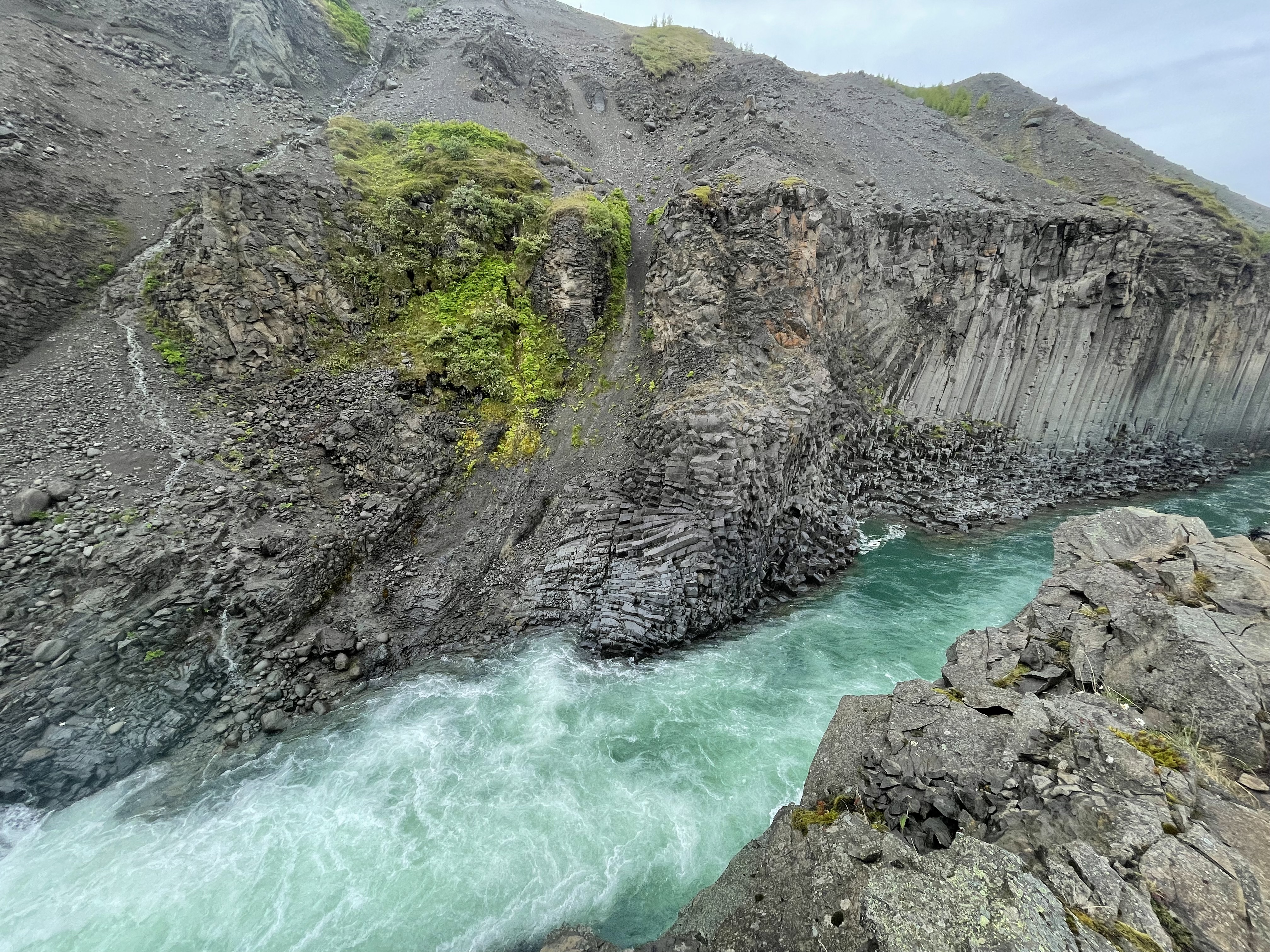
After the trail, the van became our home—a steel cocoon rattling around the island’s wild edge. We traced the coast like a fingertip over a map, watching the land shape-shift around us: fjords folding into mountains, cliffs dissolving into black sand, the sea always just at the edge of hearing.
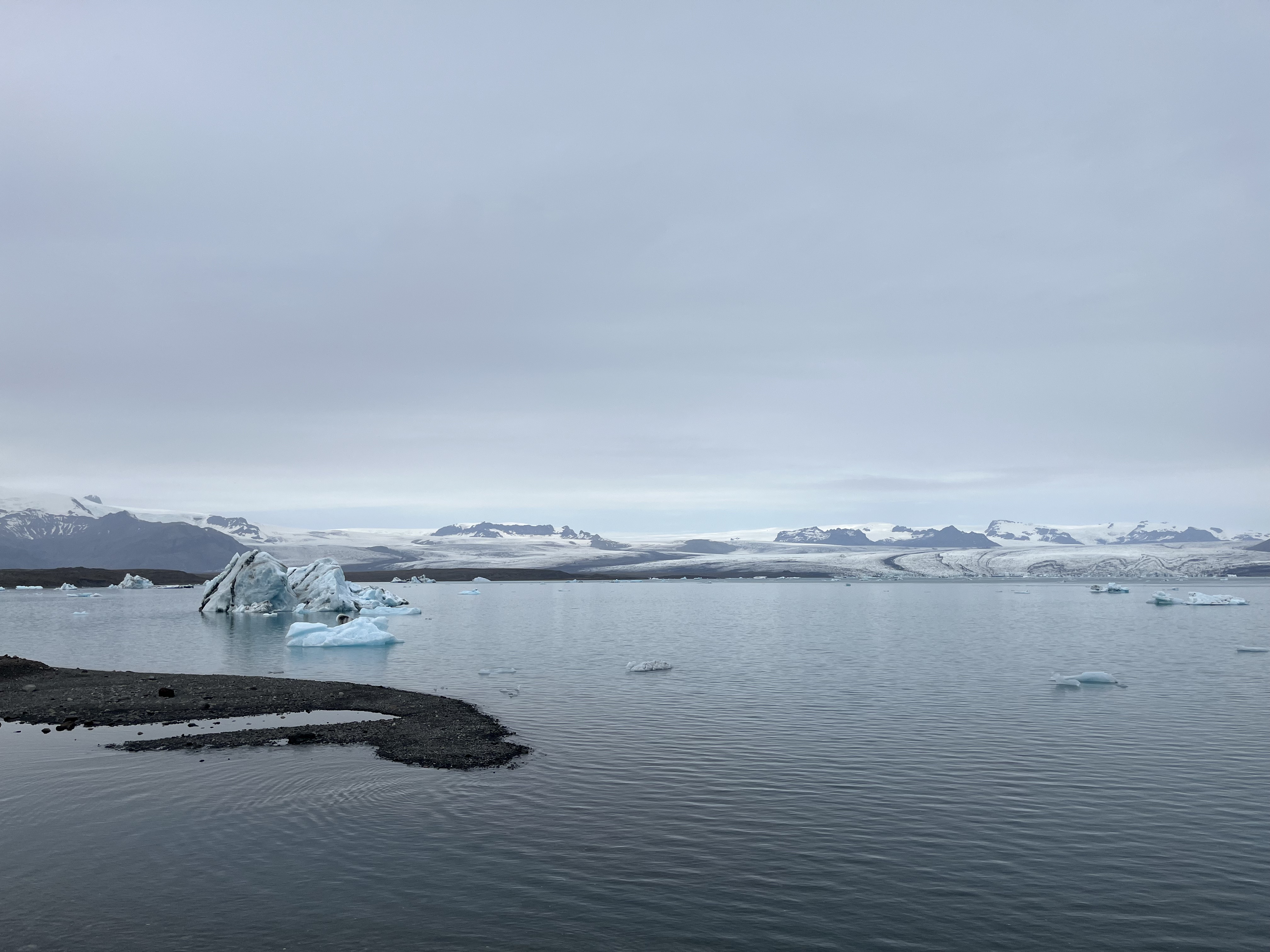
We hiked to the Horn in Hornafjörður, where the glacier leans into the ocean like a sleeping giant made of light. But even this giant is shrinking. Local signs tell you how much the ice has receded in just the last decade. These measurements don’t lie—every year, the line moves higher.
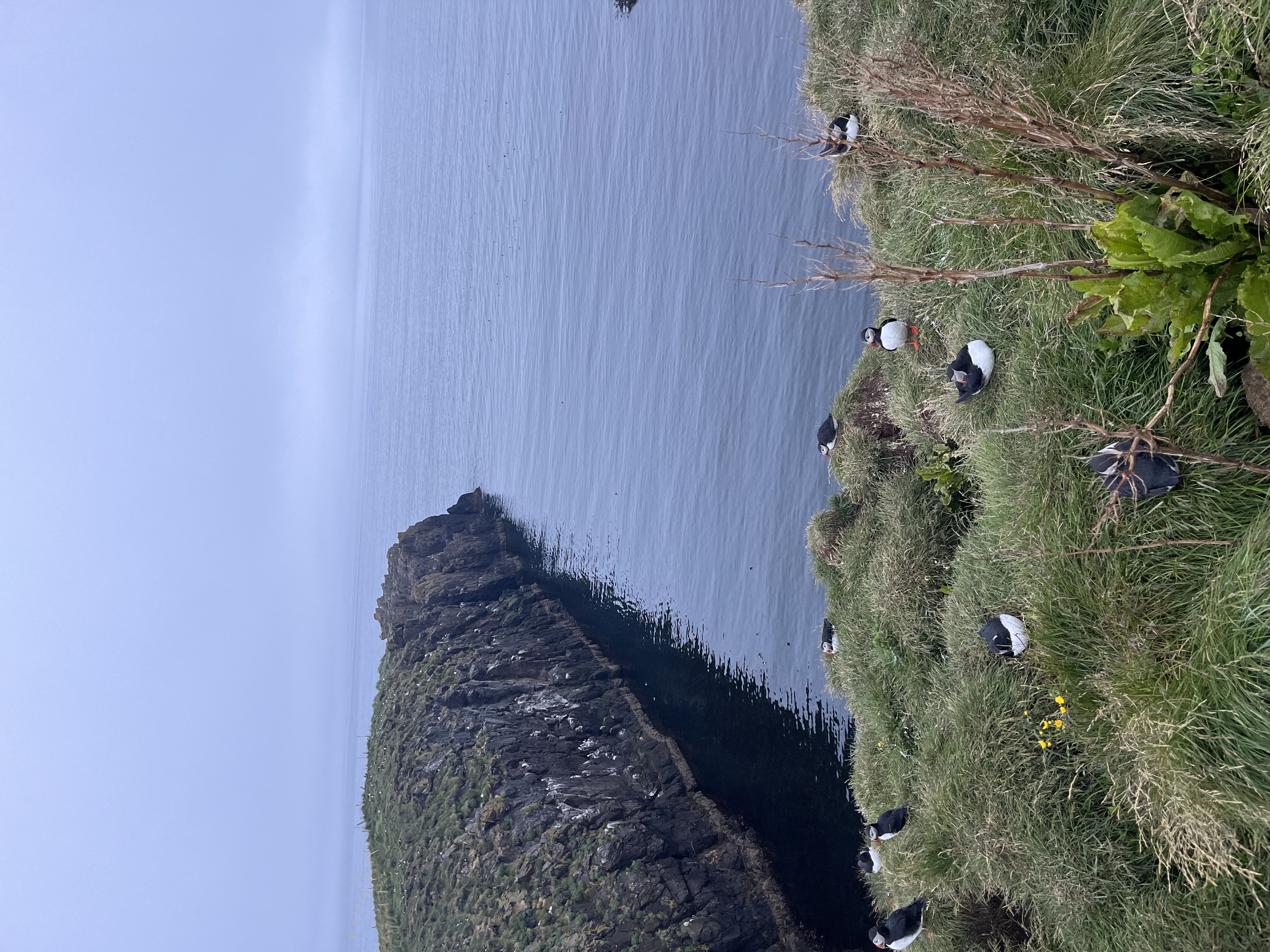
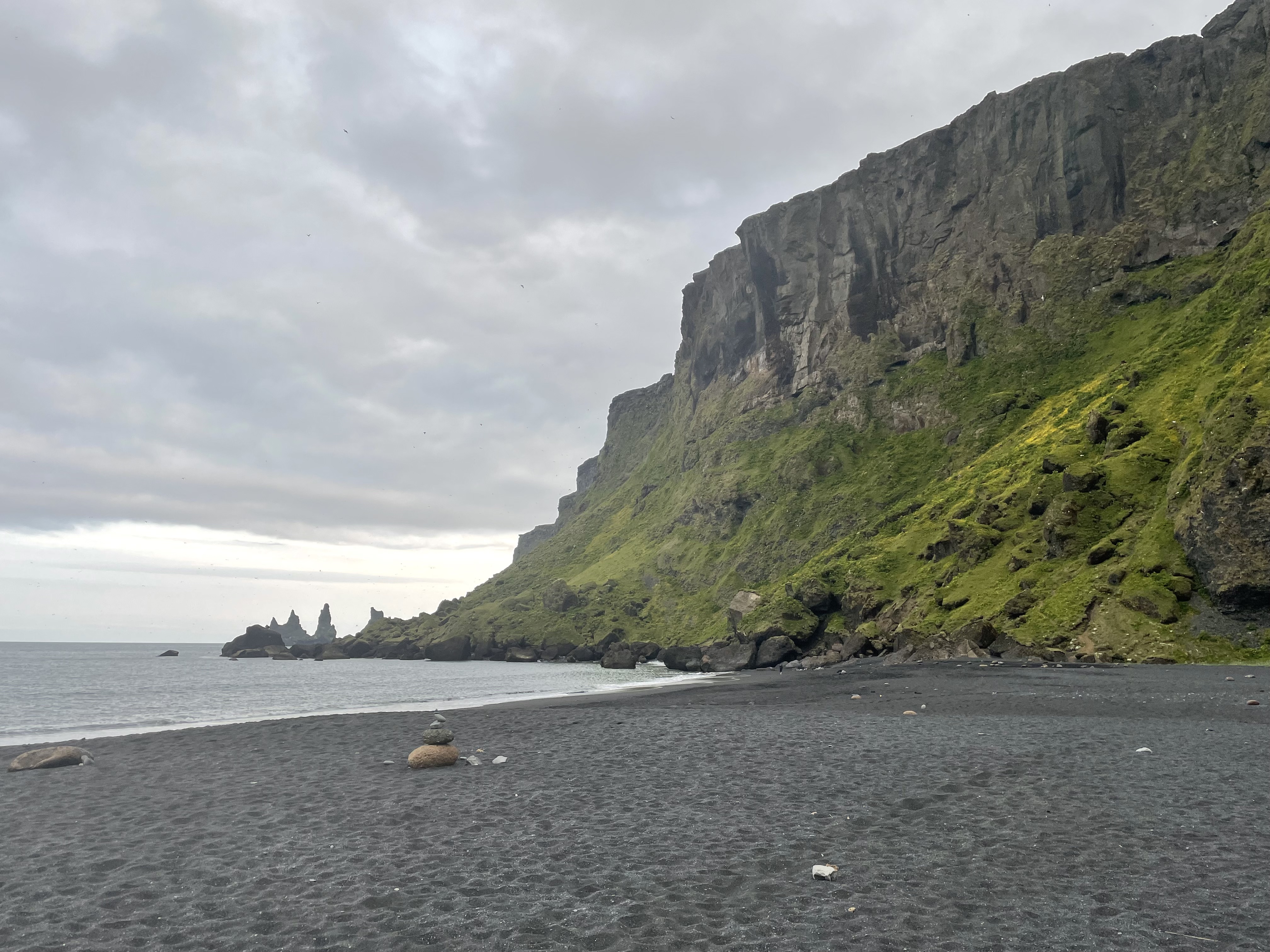
We walked on beaches the color of ash and watched puffins skim the sky like flying commas—though we later learned their colonies have struggled, the ocean warming faster than their food can adapt.
Even wonder has its undercurrent of grief.
The Quiet Places
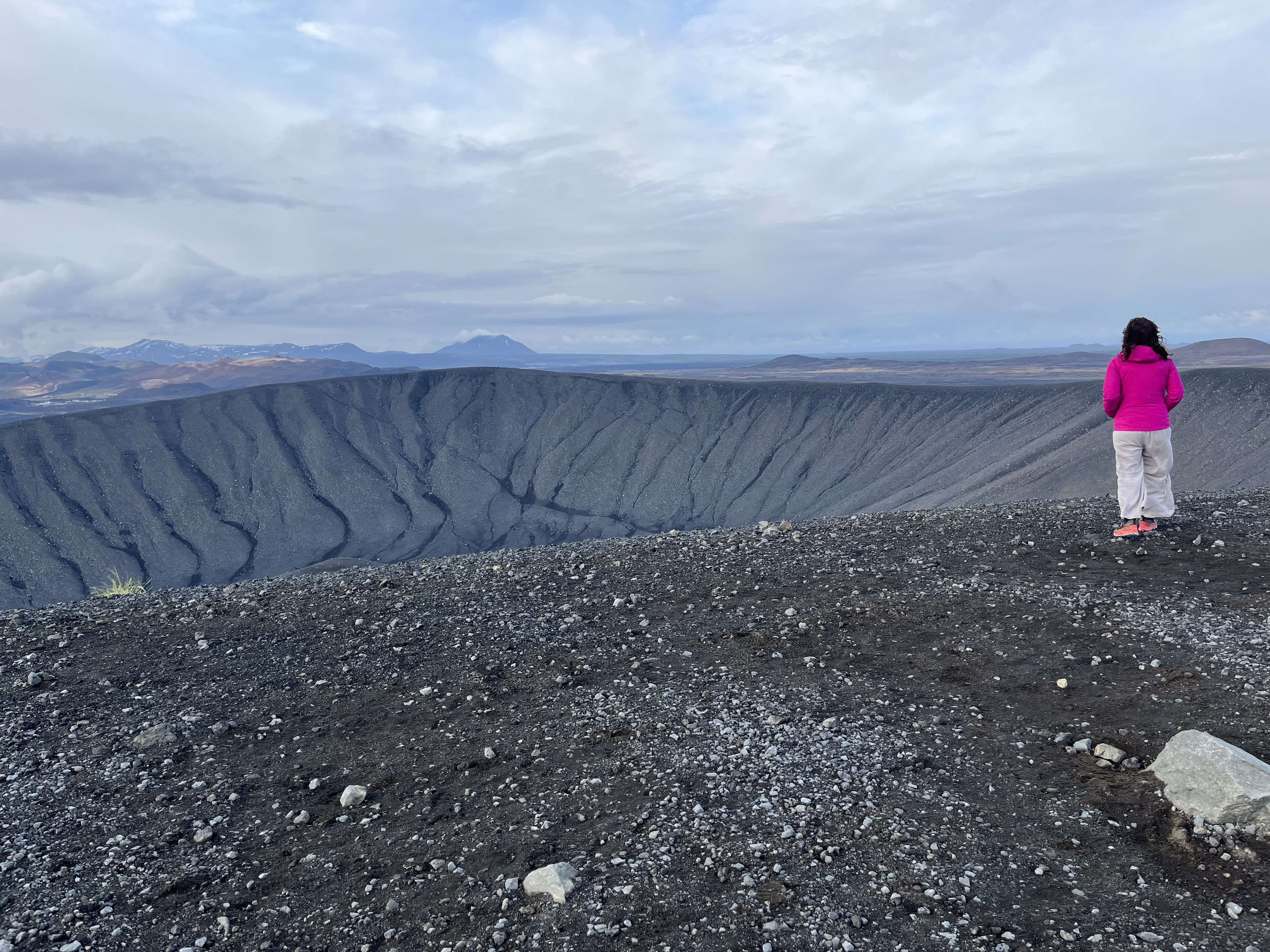
We wandered Fljótsdalshérað, where the land stretches wide and green, and sat quiet in hot springs tucked into hills like secrets. In Skútustaðahreppur, we climbed ancient craters and watched the wind dance across the lake, all shimmer and hush. Some days the wind blew strange—hot and dry from inland, carrying dust where it once carried rain.
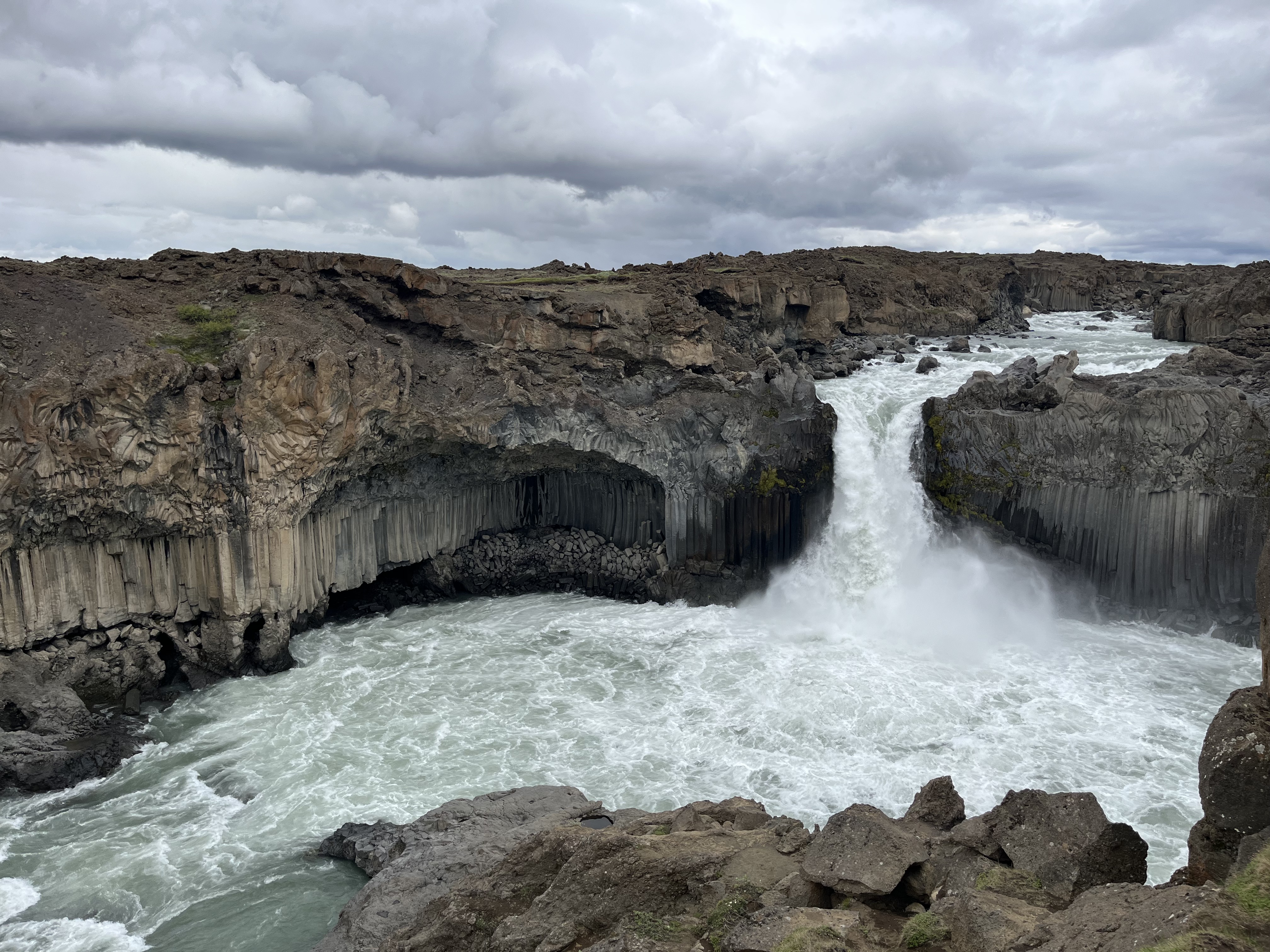
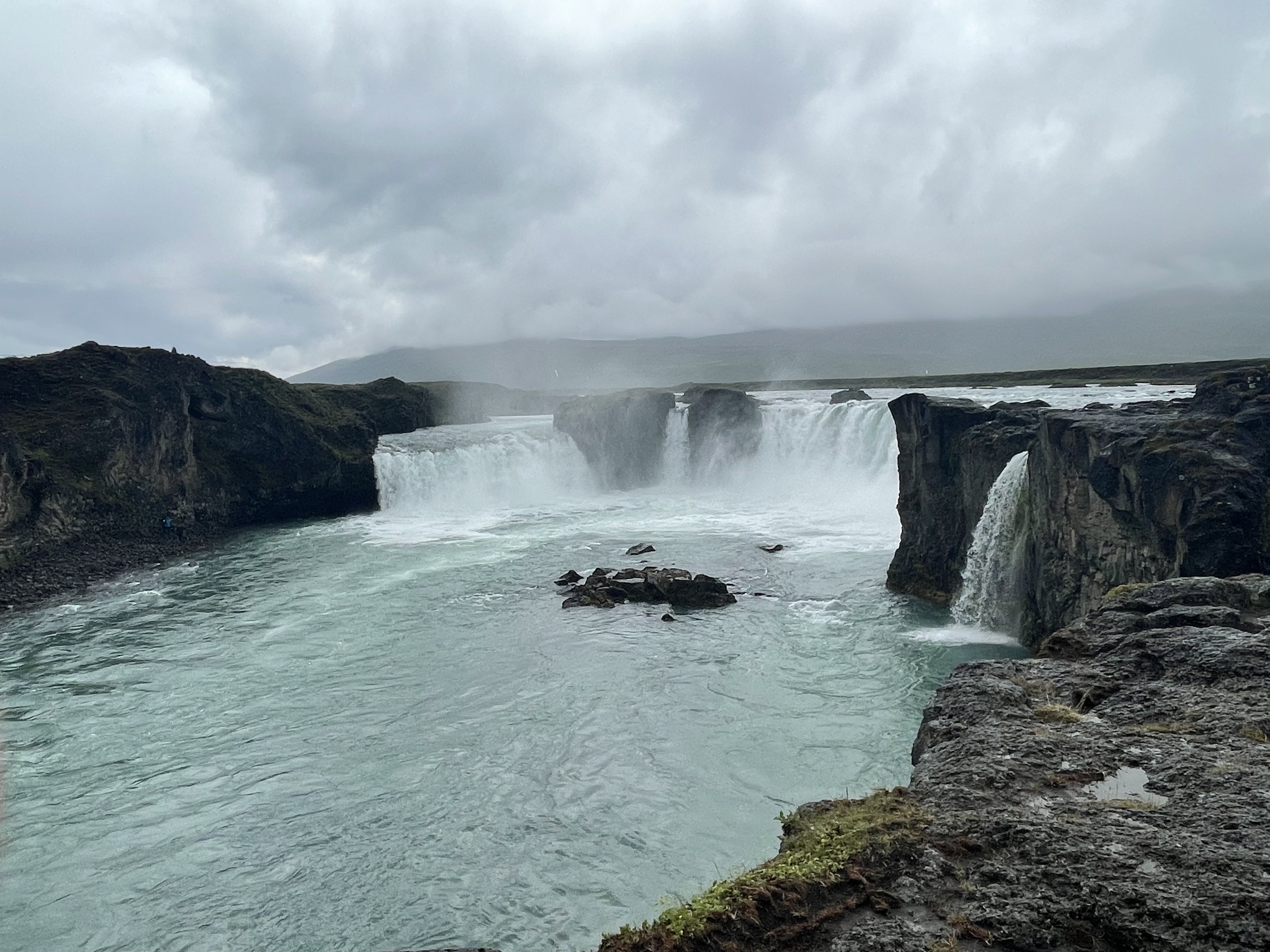
At Fosshóll, waterfalls spilled like silver thread from the cliffs. We didn’t talk much there—just stood and listened, the way you do when something speaks a language older than your own.
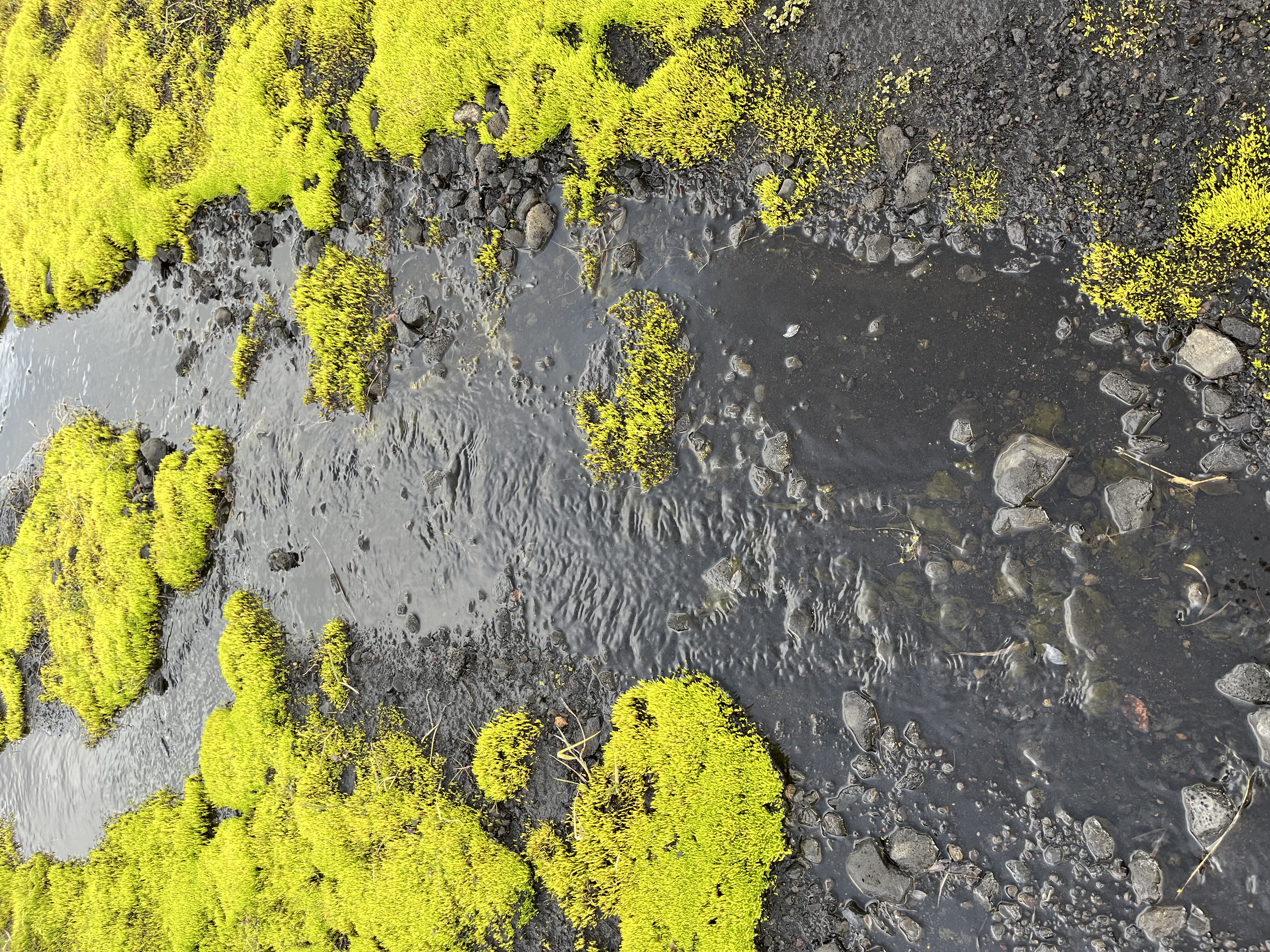
Heat Beneath the Moss
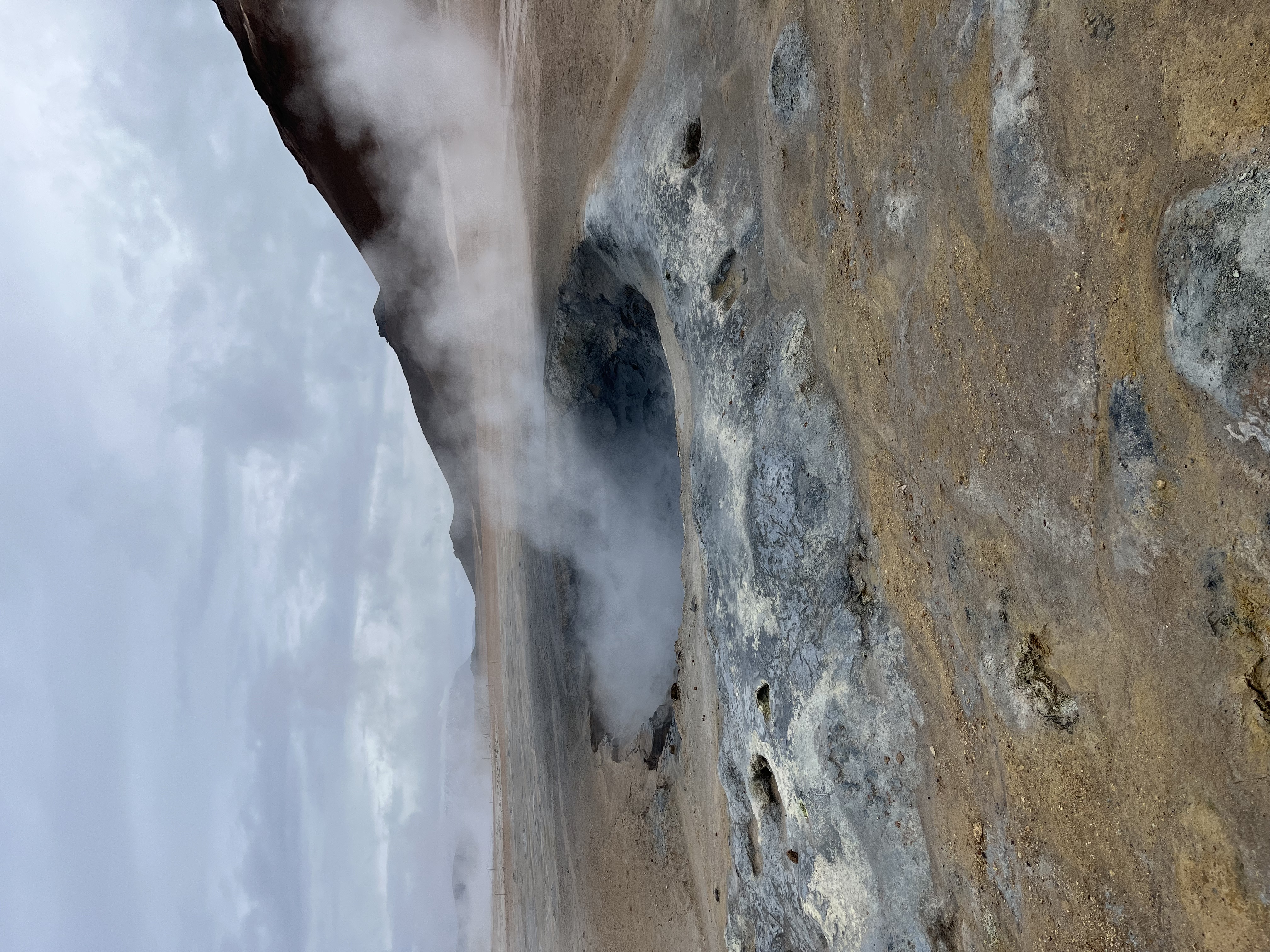
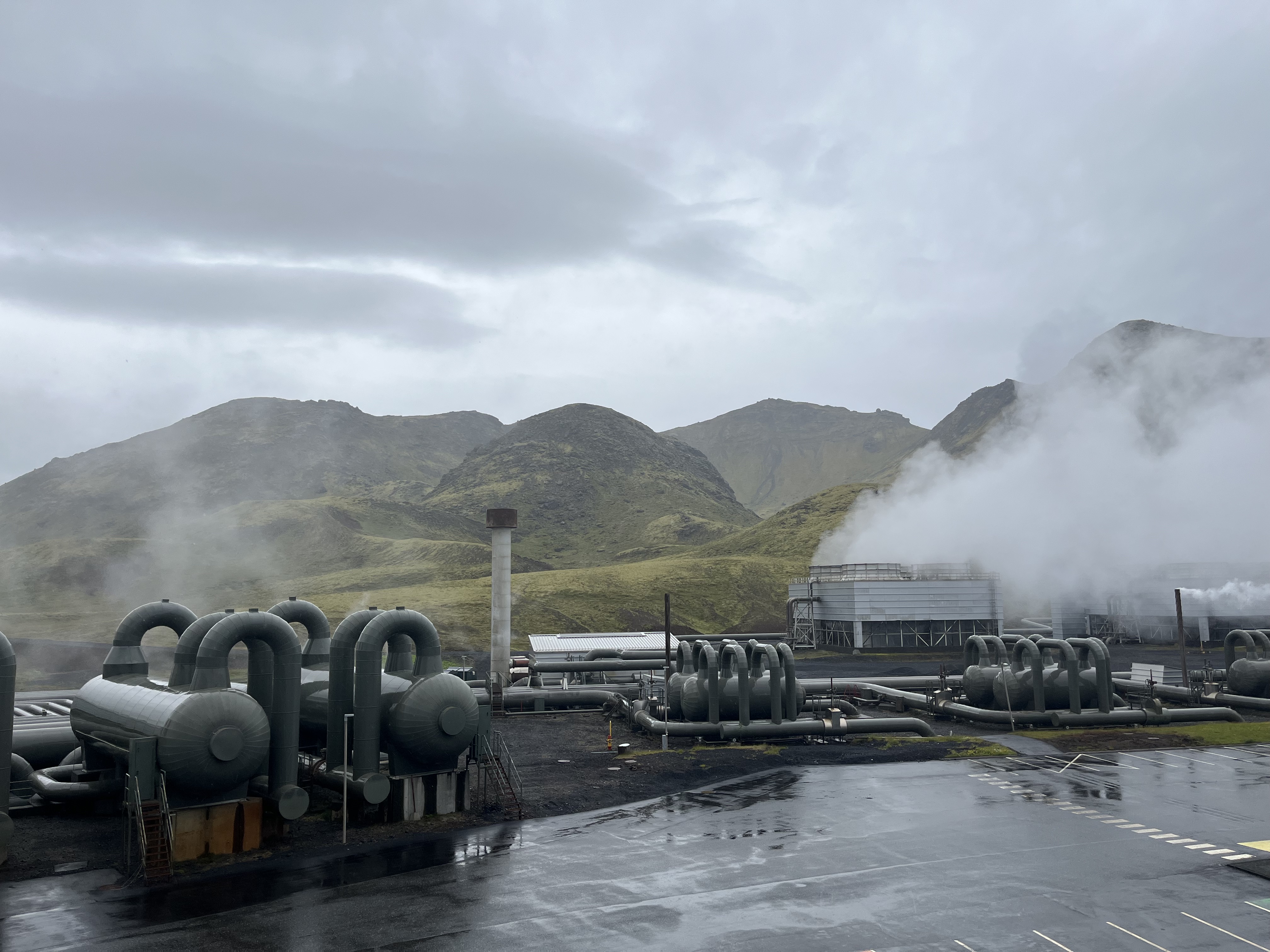
We stopped at a geothermal plant museum—an intersection of wilderness and design that felt strangely reverent. Beneath Iceland’s moss-covered skin, the tectonic plates breathe heat into the ground, and engineers have learned to catch it. Water is drawn from deep within the earth, superheated, spun into electricity, and then returned to its source.
A closed loop. Clean. Quiet. Beautiful in its simplicity.
Geothermal power heats homes, sidewalks, and greenhouses. In Iceland, sustainability doesn’t feel aspirational; it’s woven into the rhythm of living.
And yet the land is changing. Glaciers like Vatnajökull are retreating. Freðmýrar (permafrost) is melting. The roads buckle from thaw, ecosystems shift. Weather patterns stutter between extremes—flóð, þurrkar, óvenjulegur vindur (floods, droughts, freak winds). What once was frozen is now fragile.
This place sits on a fault line—literal and existential—and still, it leans forward with curiosity and care.
Hidden People, Living Land
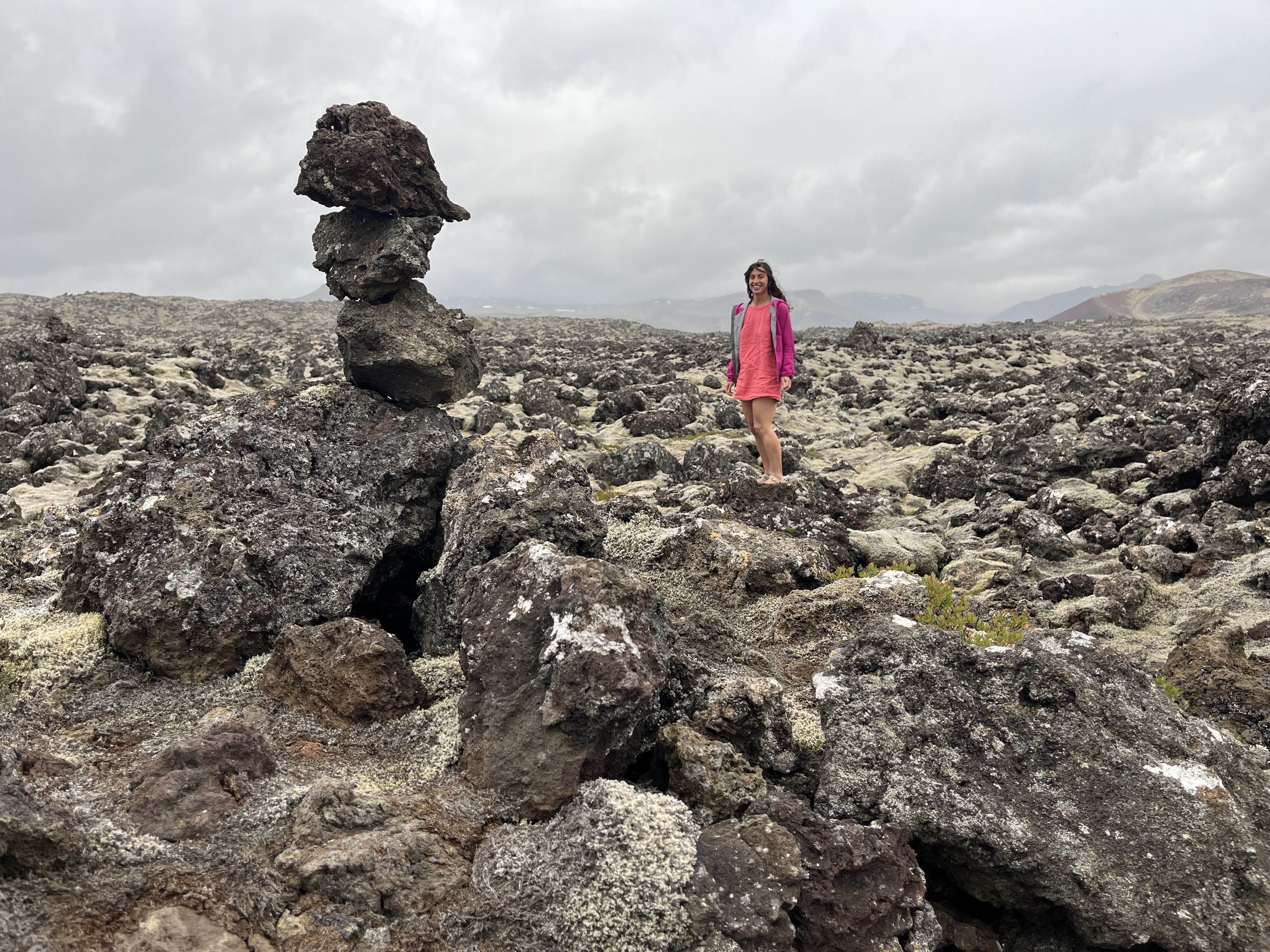
But the stories here are older than the science. In moss-covered lava fields and roadside boulders, people still leave offerings for the huldufólk—the hidden people. Icelandic elves, they say, live in rocks and cliffs, unseen but fiercely protective. Roads have been rerouted to respect their dwellings.
Whether you believe in them isn’t the point—the reverence is real. The land here is alive.
Just as we listened to the earth hiss quietly beneath us, it often felt as if the ground was breathing. I remember one geothermal valley where steam rose from the earth like a ghost’s sigh. Another day, we climbed a crater rim and watched shadows stretch long across the water.
Ísland hreyfist alltaf. Iceland never sits still.
Even its stillness is movement. Even its silence is speaking.
What Remains
Iceland, a rugged land of fire and ice, brought a soft recalibration. A learning to live without clenching.
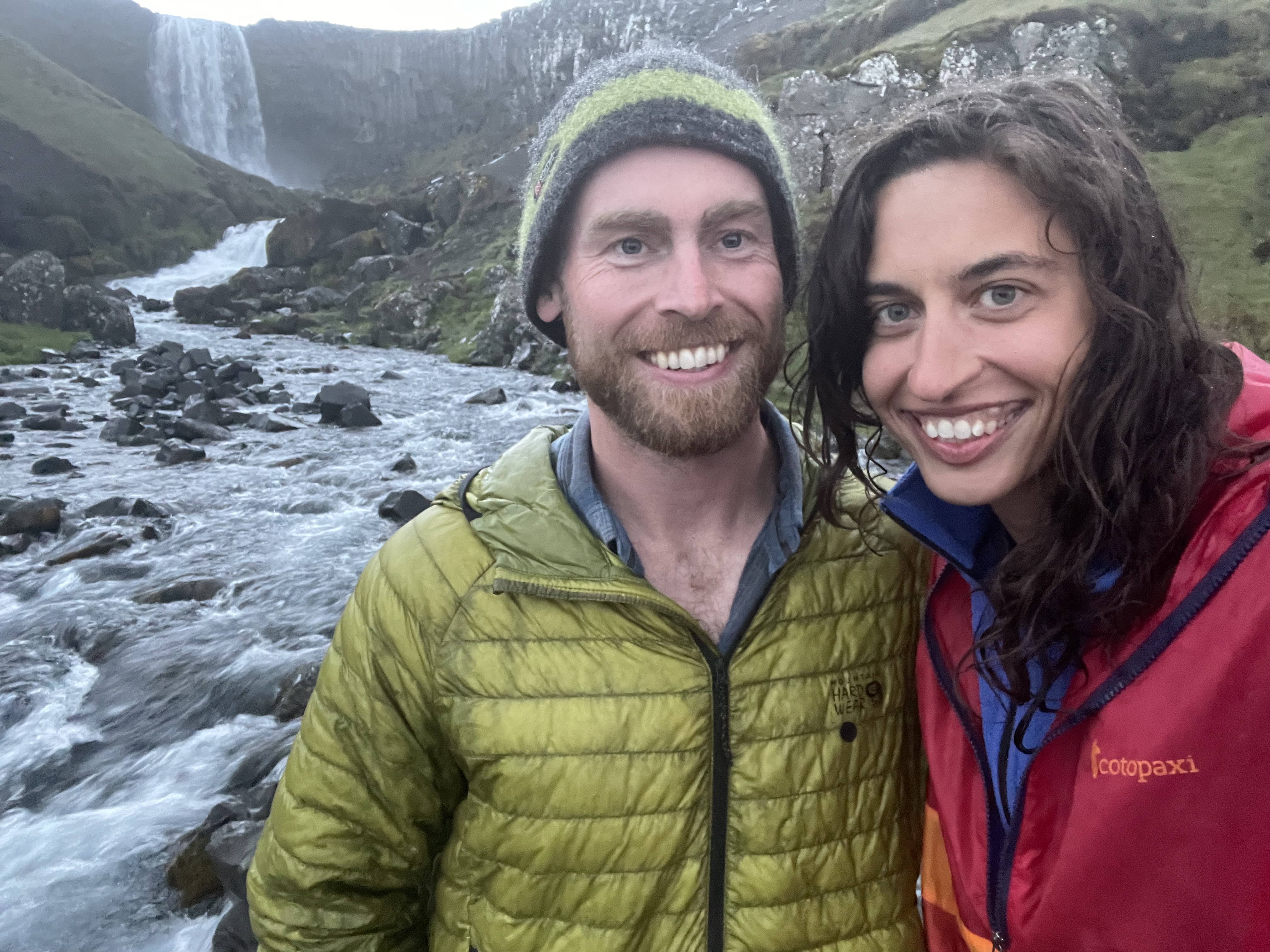
The laugh of a friend beside me in the van, the smell of sulfur and coffee, the hush of moss underfoot—these were the things that mattered.
There’s something steady in having someone to share the vastness with—not to fill it, but to walk through it beside you. The kind that makes space for joy.
Maybe that’s what Iceland offered me: proof that the world can be wild and kind at once. That you can carry ache and still taste wonder. That some landscapes don’t ask you to let go, but simply invite you to keep going.
Ó, Guð vors lands! Ó, lands vors guð!
Vér lofum þitt heilaga, heilaga nafn!
Úr sólkerfum himna hvar sólgyllt er ský,
sem himinstjarna skín yfir lönd og höf.
Vér bugumst með lotningu, ljómandi guð,
með ljósi og friði sem frá þér hljóm.
(O, God of our land! O, our land’s God!
We praise thy holy, holy name!
From the solar systems of the heavens,
where golden clouds glow,
like a star above land and sea you shine.
We bow in reverence, O radiant God,
with light and peace that flows from you.)
Written in 1874 by Matthías Jochumsson and set to music by Sveinbjörn Sveinbjörnsson, this poem is both a prayer and a patriotic hymn. Its reverent tone reflects the Icelandic spirit — humble before nature, devoted to peace, and proud of its place beneath the northern skies. Though a national anthem, “Ó, Guð
-Jasmine